
My Mother's Corn Chowder, and the Way I Make It Now
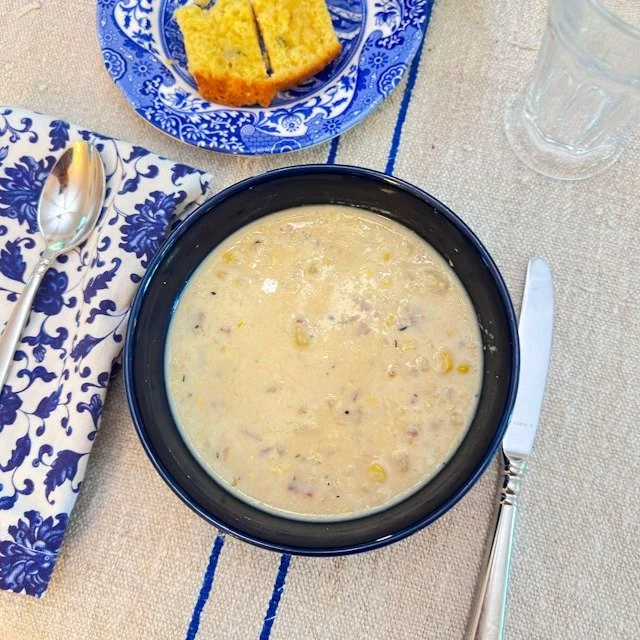
A lighter roasted corn chowder without heavy cream or flour, thickened naturally with fresh corn and potatoes. Plus, how to freeze the rest of the season.
My mother never wrote this recipe down. She cooked it from memory, for eight children, and it existed nowhere except in her memory.
I made it from memory as well, though mine is a different kind of memory. Hers was the memory of standing at the stove. Mine is the memory of sitting at the table.
What I inherited was not just the recipe but also the gathering at our dinner table, sharing a meal that we all loved.
She thought carefully about what she was feeding us, at a time when very few people were thinking about it at all. Vegetable oil was understood to be the better choice then, so she used it. Salt pork was how she flavored most things. Olive oil cost more than she was willing to spend on feeding ten people at a table. She was not limited by what she had. Ten people ate well on very little, and none of it tasted like economizing.
I use olive oil now, because we have learned a great deal about seed oils in the years since she was cooking. Turkey bacon in place of the salt pork. No cream, and no flour. She was working from the best information available to her, and I am working from the best information available to me. That is the thing that was handed down.
This is the third of her recipes I have put back together this way. The crêpes came first, then the berry compote, and now this.
Why This Corn Chowder Needs No Flour or Heavy Cream
Most corn chowder begins with a flour roux or a generous measure of heavy cream. This one begins with neither.
Some of the roasted kernels are blended with milk until they break down into a smooth pulp, and that mixture goes into the pot alongside the potatoes. Over a long, gentle simmer, the potatoes release their starch, and the chowder thickens on its own.
Nothing here stands in for cream. The corn does the work. The potatoes finish it. What comes out of the pot is lighter than a traditional chowder without tasting as though something has been taken away, and it still coats the spoon.
Why I Roast the Corn First

Of everything in this recipe, the roasting is the step I would not skip.
Roasting browns the corn and deepens its sweetness, and raw kernels will not give you that, no matter how long they simmer. It matters more here than it would in a richer pot. Without cream to carry the flavor, the corn must carry it instead.
Allow close to an hour once the corn has been roasted, cooled, and cut from the cob.
Roasted Corn Chowder Recipe
Serves 4
Ingredients
6 ears of fresh corn, husked
3 tablespoons olive oil, divided
3 strips of turkey bacon
½ cup yellow onion, diced
2 stalks celery, finely diced
1 teaspoon fresh garlic, minced
1 cup 2% milk - this is for mixing with the corn in the blender
2 1/2 cups of whole or 2% milk - set aside for the soup stock
1 - 2 cups of chicken or vegetable stock, divided
2 large potatoes, cut into small dice
Salt and freshly ground black pepper
How to Make Roasted Corn Chowder
Roast the corn
Heat the oven to 400°F.
Rub about 2 tablespoons of olive oil over the ears and season them with salt and pepper. Roast for 25 to 30 minutes. Check the corn at 20 minutes and give it longer if it has not begun to brown. Go by how it looks rather than by the timer. The corn should be pale brown from roasting.
Let the ears cool until they are comfortable to handle, then cut the kernels from the cobs.
I roasted eight ears and needed about four. Six should give you enough for the soup with a little extra, depending on their size.
Make the natural thickener
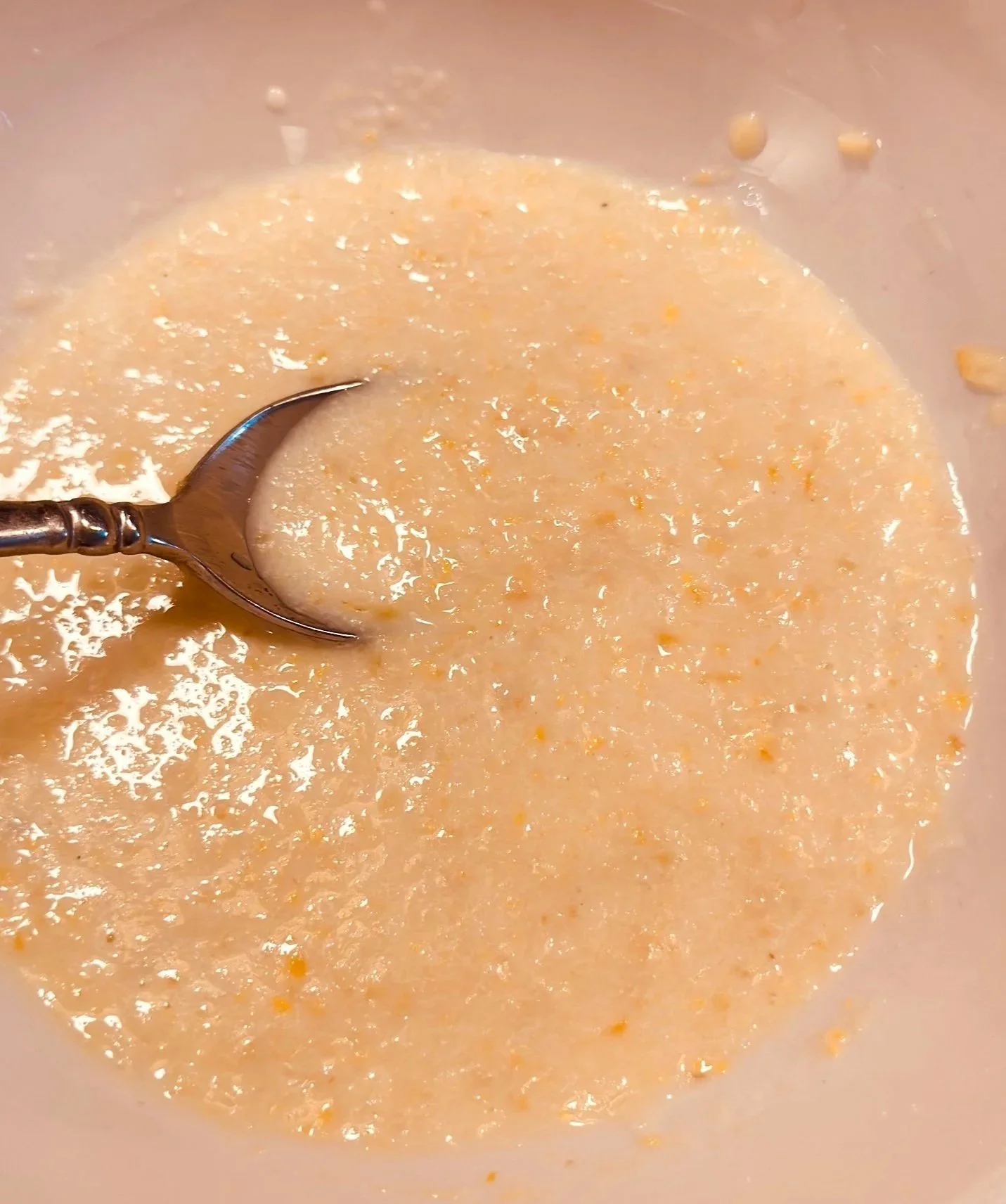
Place about a cup of the roasted kernels in a blender with the 2% or whole milk (depending on what you want to use), and blend until the corn breaks down into a smooth pulp.
This blended corn, together with the starch the potatoes release, is what thickens the chowder. There is no roux, and there is no cream.
Build the soup
Cook the turkey bacon in a deep, heavy pot until it is crisp enough to crumble. Remove it and leave the browned bits in the pot.
Add the remaining olive oil, then the onion and celery. Cook until the onion turns translucent, scraping up any bacon fat left behind.
Add the garlic and cook only until you can smell the aroma.
Pour in a cup of stock, the milk, and the blended corn together. Add another cup of roasted kernels and the diced potatoes. Crumble the bacon back into the pot. Season with salt and pepper.
Simmer and adjust
Simmer gently for about 45 minutes, until the potatoes are cooked through and some have begun to break apart, thickening the soup.
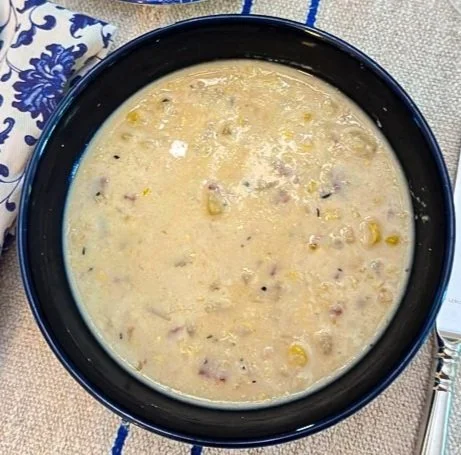
Add the remaining stock a little at a time until the consistency looks right to you. I added about another cup because I wanted more broth.
If you have kernels left over, stir some in at the end so they keep a little bite. How much corn belongs in the pot is a matter of taste.
Three Things Worth Knowing
Use a heavy pot. There is milk in this chowder from the beginning, and a thin pan makes scorching more likely.
The chowder thickens as it sits, and thickens again overnight in the refrigerator. Loosen it with a little stock when reheating.
The cornbread in the photograph comes from Chef Paul Prudhomme's Louisiana Kitchen, a book I return to often. I added fresh corn and jalapeño to mine. If you love Louisiana cooking, this recipe book is the best.
How to Freeze Roasted Corn Kernels
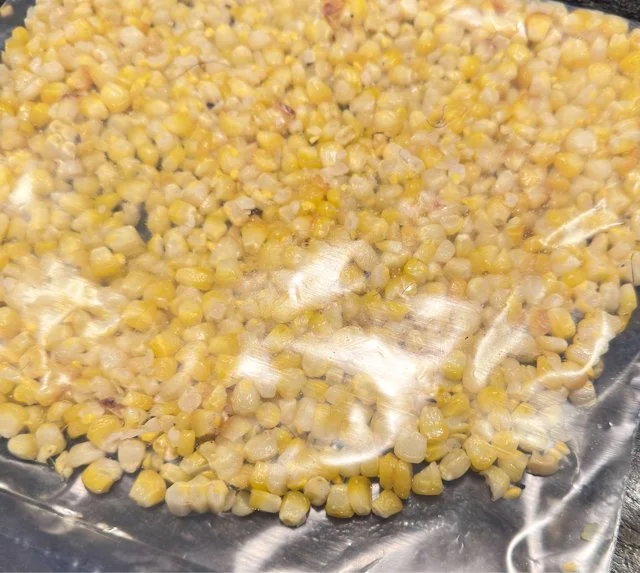
Corn is at the end of its season here, which means it is also inexpensive. This is the week to buy more than you need. I am going out to the farm for a few dozen ears.
The tested method is blanching. The ears are briefly boiled, quickly cooled, and the kernels are cut from the cob. The National Center for Home Food Preservation publishes the timing, and the reason it matters is that enzymes. Left alone, they continue working in the freezer and turn corn starchy and flat by midwinter.
Heat stops them.
I roast instead, which cooks the kernels through and gives me caramelized corn rather than plain corn to open in January. I should say plainly that I have found no one who has tested roasting for this purpose. The published storage times are all for blanched corn, and I am relying on the kernels coming out of the oven fully cooked.
Husk the ears and roast them at 400°F or cook them on the grill until tender and lightly charred. Let them cool completely, then cut the kernels from the cobs.
Pack the kernels into freezer bags, press out as much air as you can, and lay the bags flat. Cooling them completely first is the step that cannot be skipped. Warm corn sealed in a bag will steam itself.
I use mine for eight to ten months. They go directly from the freezer into soup or stew, already cooked and browned. That browned flavor is the point of them, which also means they are not the bags to reach for when you want plain buttered corn.
Frequently Asked Questions
Can corn chowder be made without heavy cream?
Yes. This corn chowder uses 2% milk and evaporated milk rather than heavy cream. Blended roasted corn and potatoes give the soup its body.
How do you thicken corn chowder without flour?
Blend some of the roasted corn with milk before adding it to the pot. As the chowder simmers, the blended kernels and the potatoes' starch thicken the broth without a roux.
Why roast corn before making chowder?
Roasting browns the corn and concentrates its sweetness. In a cream-free chowder, that browned flavor does most of the work.
Can you use frozen corn?
Yes. Frozen roasted corn at the end of summer can go directly into the pot. If you are using ordinary frozen corn, roast or sauté it first to bring out some of the browned flavor this recipe depends on.
How long does frozen corn keep?
Blanched corn retains its quality for roughly 8 to 12 months at 0°F or below. I use my roasted corn within eight to ten.
Closing Reflection
There is a particular loss that comes with a recipe no one wrote down, and it has very little to do with the food.
A soup like this one exists only for as long as someone remembers what it tasted like. It lives in the people who ate it, and there were eight of us.
So I cooked it. I wrote it down. And I made the changes so that the information we have now asks for. What was handed down was never the recipe. It was the attention.
May your kitchen be a place where the old recipes are remembered, and where the people who made them are remembered with them.
Design with the Heart™
À bientôt,
Mary
The linens and serving pieces used at my own table are available at The MERZE Boutique.

