The Design Eye™ Summer 2026 | What You Already Own
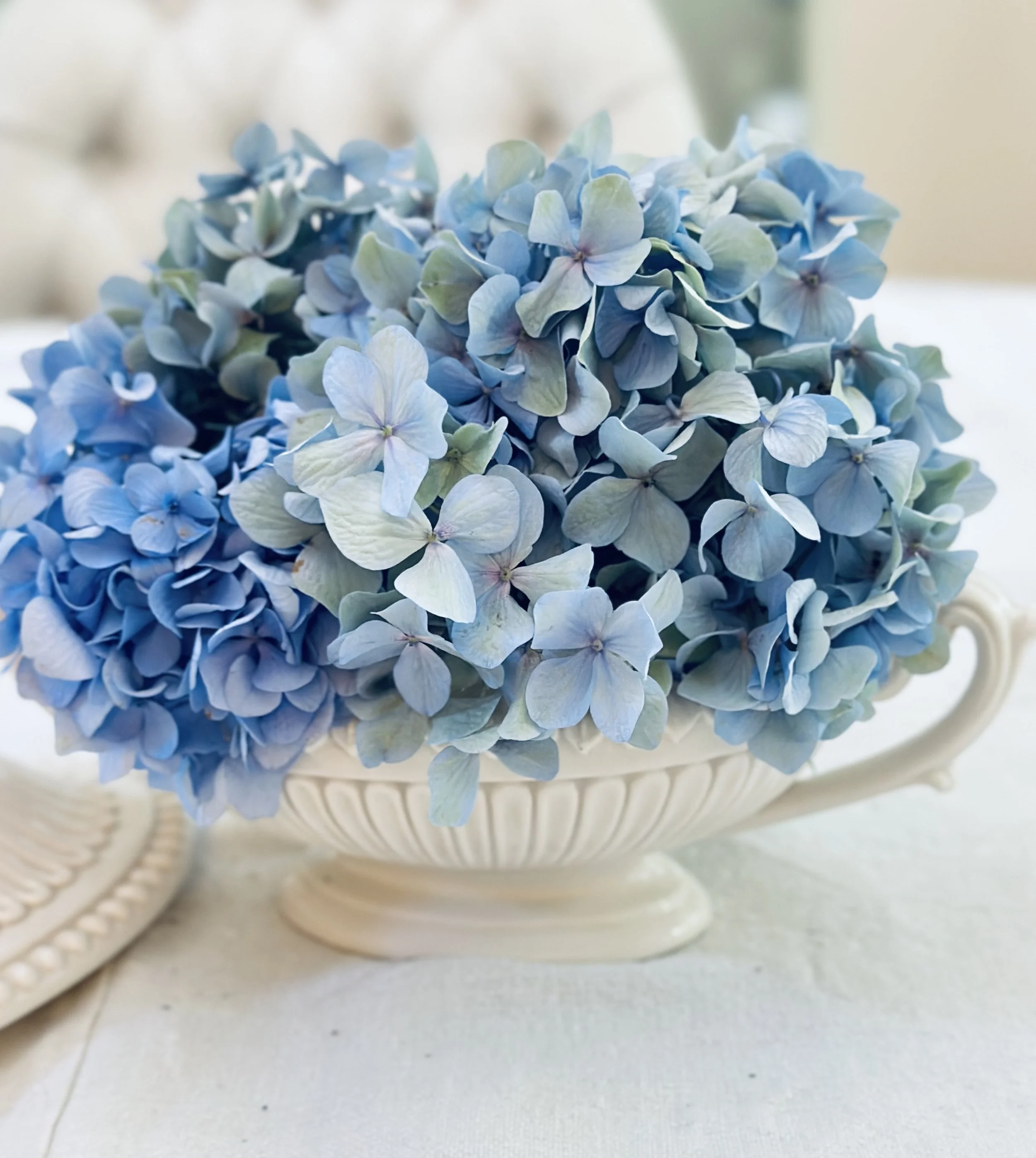
The centerpiece on my summer table is a soup tureen, which is not a vase and was never meant to hold anything but something hot carried in from the kitchen, and it has not done that particular job in this house even once. I filled it with hydrangeas I had cut that morning, and it became the loveliest thing in the room, and I have been thinking about why ever since.
Look in Your Own Cupboard First
So many of us believe we have to go out and buy the right thing, and I believed it too for years, but the right thing is very often already sitting in the house.
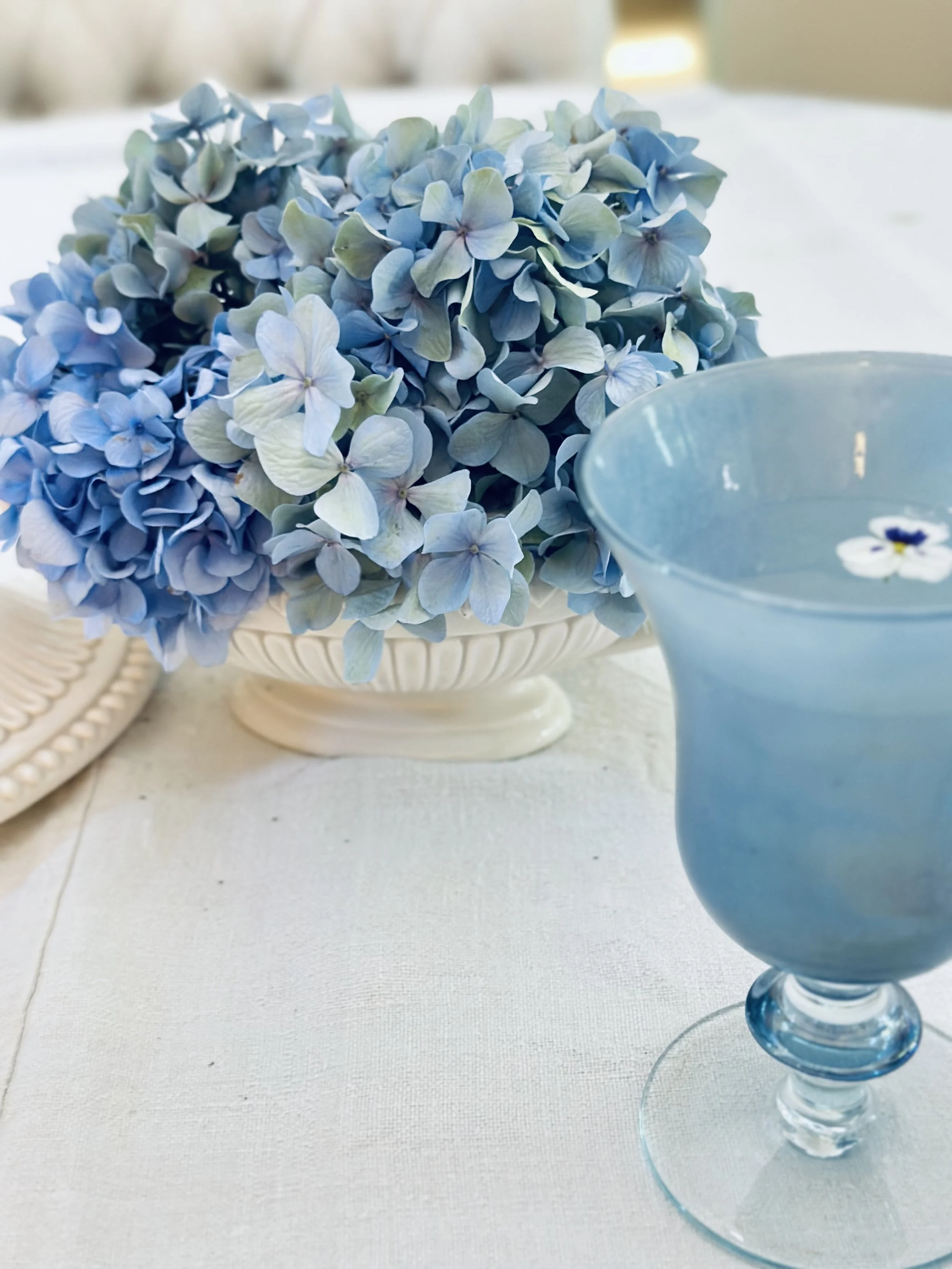
The one I use in summer is not old at all. It is cream and fluted and perfectly ordinary as tureens go, and it holds one generous handful of hydrangeas and sits low enough that nobody has to look around it.
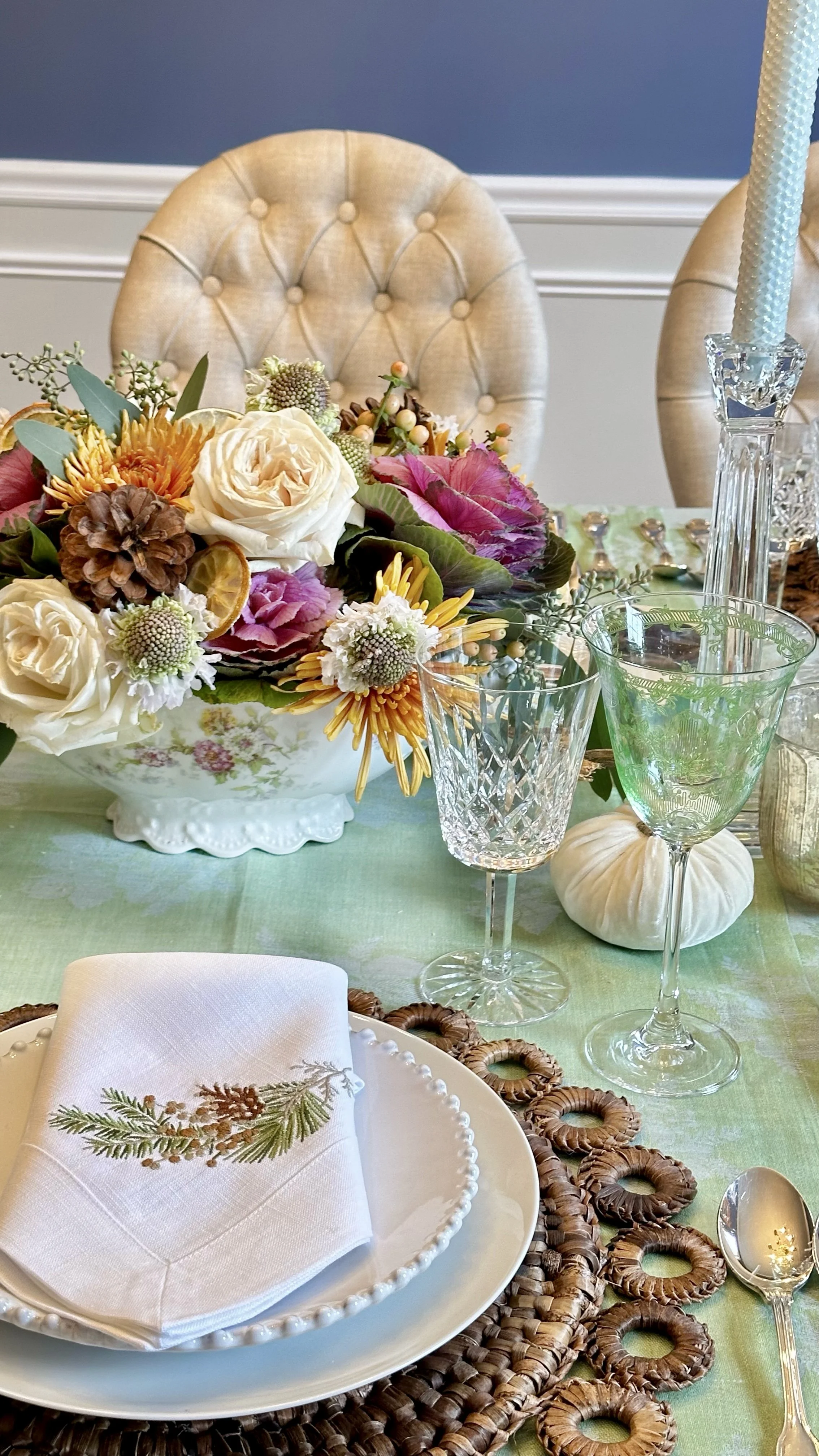
The other one is a hundred years old, and the rest of its pattern is long gone, every plate and cup and saucer of it, so that this single piece is all that survived of a set somebody must have loved a great deal. By any sensible reckoning, it should have gone along with the others. Instead, it sat in a cupboard until last November, when I filled it with roses and kale and dried citrus and set it in the middle of my Thanksgiving table, where it was stunning and pulled the whole thing together in a way I could not have bought at any price.
One of them came from a shop, and the other is the last survivor of a broken set, and they do exactly the same work. That is rather the point. It was never about the provenance. It was about the shape.
So before you go looking anywhere else, look at what is already yours. The confit pot you carried home from France because you could not leave it behind. Your grandmother's mixing bowl, the one she used for bread. A pitcher whose basin went missing years ago, or the sugar bowl that lost its lid and has been sitting at the back of a shelf ever since, because it was too pretty to give away and too useless to keep out.
I wrote about that Thanksgiving table in full, from the light green linen to the ornamental kale in the tureen, in designing a Thanksgiving tablescape around a single antique.
Why a Tureen Works Better Than a Vase
It is not only that these things are old and lovely, though of course they are. It is that their shape happens to be exactly right.
The vessels made for food tend to have wide mouths and low shoulders, whereas a vase is tall and narrow because it was designed to make a small number of long stems stand upright, which is a florist's problem and not yours. You are not building an arrangement to be admired from across a shop.
You are setting down what you gathered this morning, on a table where people are going to sit and talk to one another for an hour or two, and a wide mouth lets the stems fall where they want to fall, while a low shoulder keeps everything below eye level so that nobody has to peer around the flowers to find your face.
That really is most of it, and your kitchen already has both.
Let the Vessel Be Quiet
My tureen does one other thing that I did not plan at all and only understood afterward when I was looking at the photographs.
It is cream, and although it is fluted and beautifully detailed, it carries no color or pattern, so that, against blue hydrangeas, it simply steps back, and what you see is the flowers and the light moving on the porcelain. I have made the opposite mistake more times than I care to count, putting a beautiful patterned vase and beautiful flowers together on the same table, where each of them reaches for your attention, and neither one ever gets it.
If the vessel is going to be interesting, let the flowers be simple; and if the flowers are doing the work, let the vessel be cream, gold or silver, white, or clear, and let it get out of the way.
Hydrangeas Need No Floral Foam
I want to be honest about this centerpiece, because so much of the writing in this field makes women feel that beauty is somewhere just out of reach, and it simply is not.
The whole thing took about four minutes. Hydrangeas are generous flowers; three or four heads will fill a tureen completely, and because the blooms are so dense and round, they hold one another in place without any help at all, which means no frog, no tape grid, no floral foam, and no wire. You cut the stems short, you set them in, you turn the tureen once to find the side you like best, and then you are finished and can go and do something else.
Most of what makes a table feel considered is not difficult at all. It has simply been chosen rather than accepted.
Or Use Small Vessels Down the Length of the Table
When the flowers are not doing the heavy lifting, or when the table is long enough that one arrangement would look stranded in the middle, I do the exact opposite.
Think of a single bowl from your mother's place setting, the one with that particular color you have always loved, holding two or three stems. Or think of the sterling mint julep cups that have been sitting in the cabinet since your wedding and have never once held a julep, and imagine them running down the middle of a long table, each one filled with flowers, catching the candlelight all the way from one end to the other. Or the teapot you bought for no sensible reason except that the glaze was so beautiful you could not walk away from it.
It takes hardly any flowers, and to my eye, it is lovelier than one arrangement sitting alone in the center. It also solves something we rarely say out loud: that a single large centerpiece divides a table in two, while a line of small ones lets your eye travel all the way down and lets everybody see everybody. Much like a long wedding table.
Blankets and Organza as Tablecloths
The same is true of whatever goes underneath them.
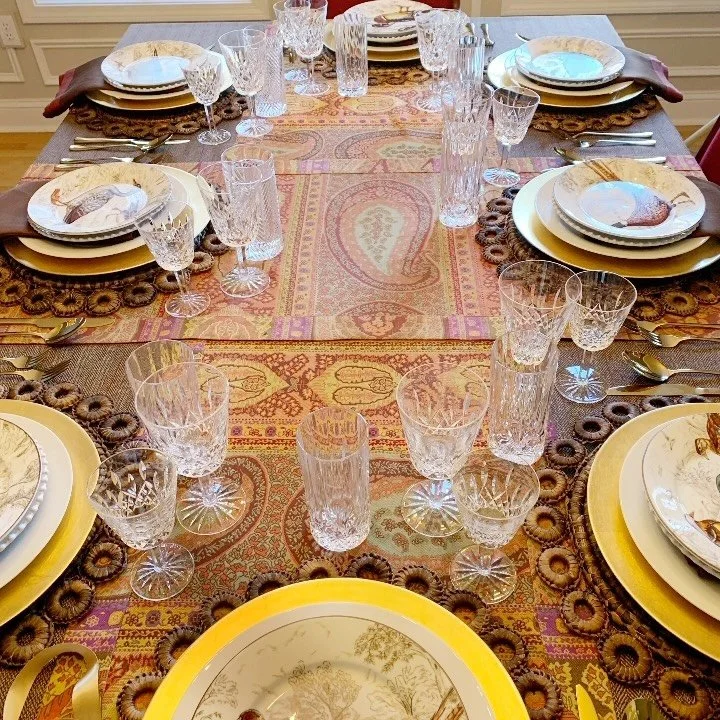
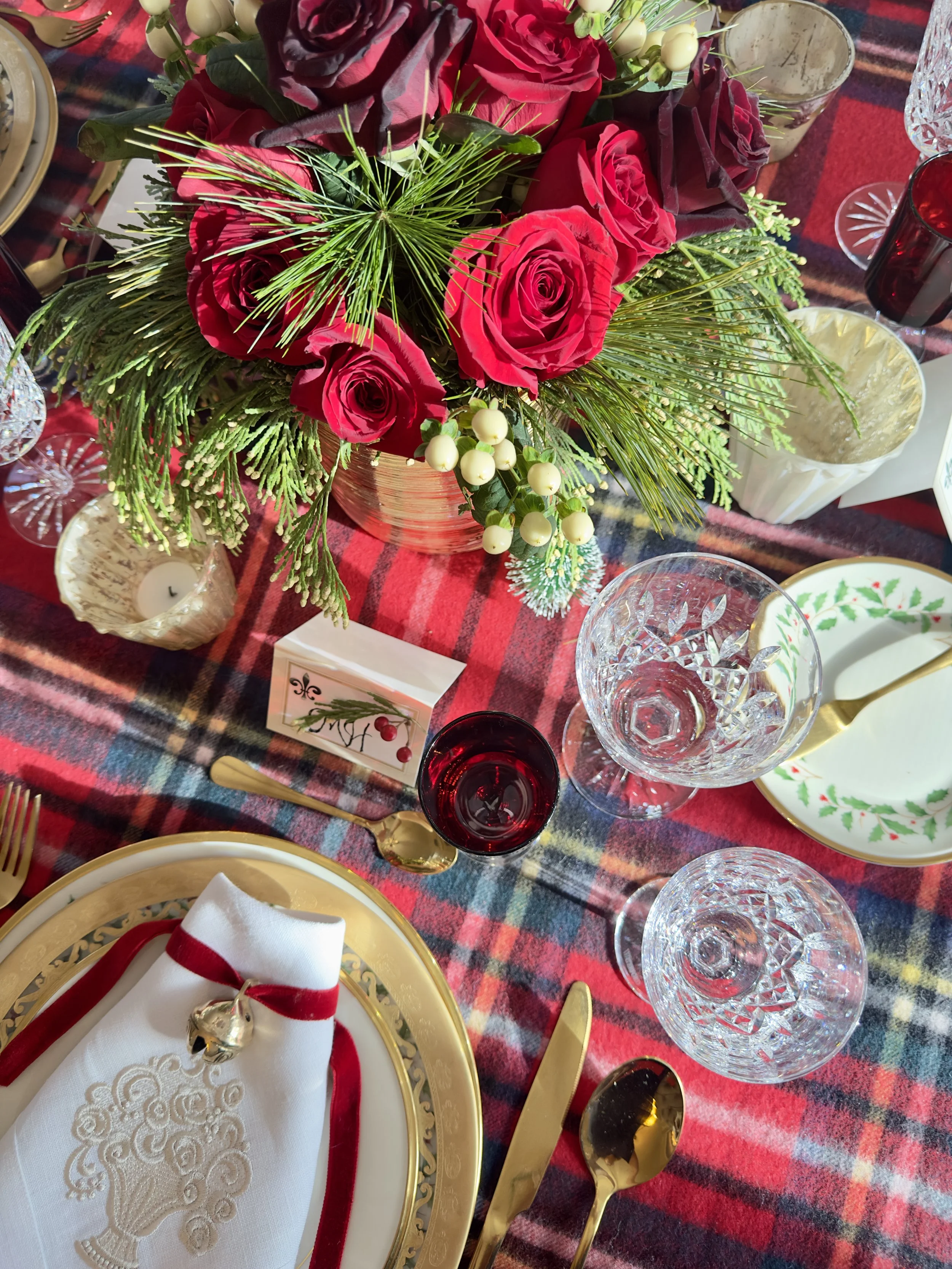
Last Christmas I used a tartan wool throw as a tablecloth, just a blanket laid over the table, and it was lovely in a way I had not quite expected, because wool has a weight and a depth to it that flat woven cloth simply does not, and against porcelain and gold and candlelight in December, it made the whole table feel warm before anyone had even sat down. I have another that is thick cotton with a pattern sewn onto it and raised right off the surface, and I reach for that one when a table needs texture more than it needs color.
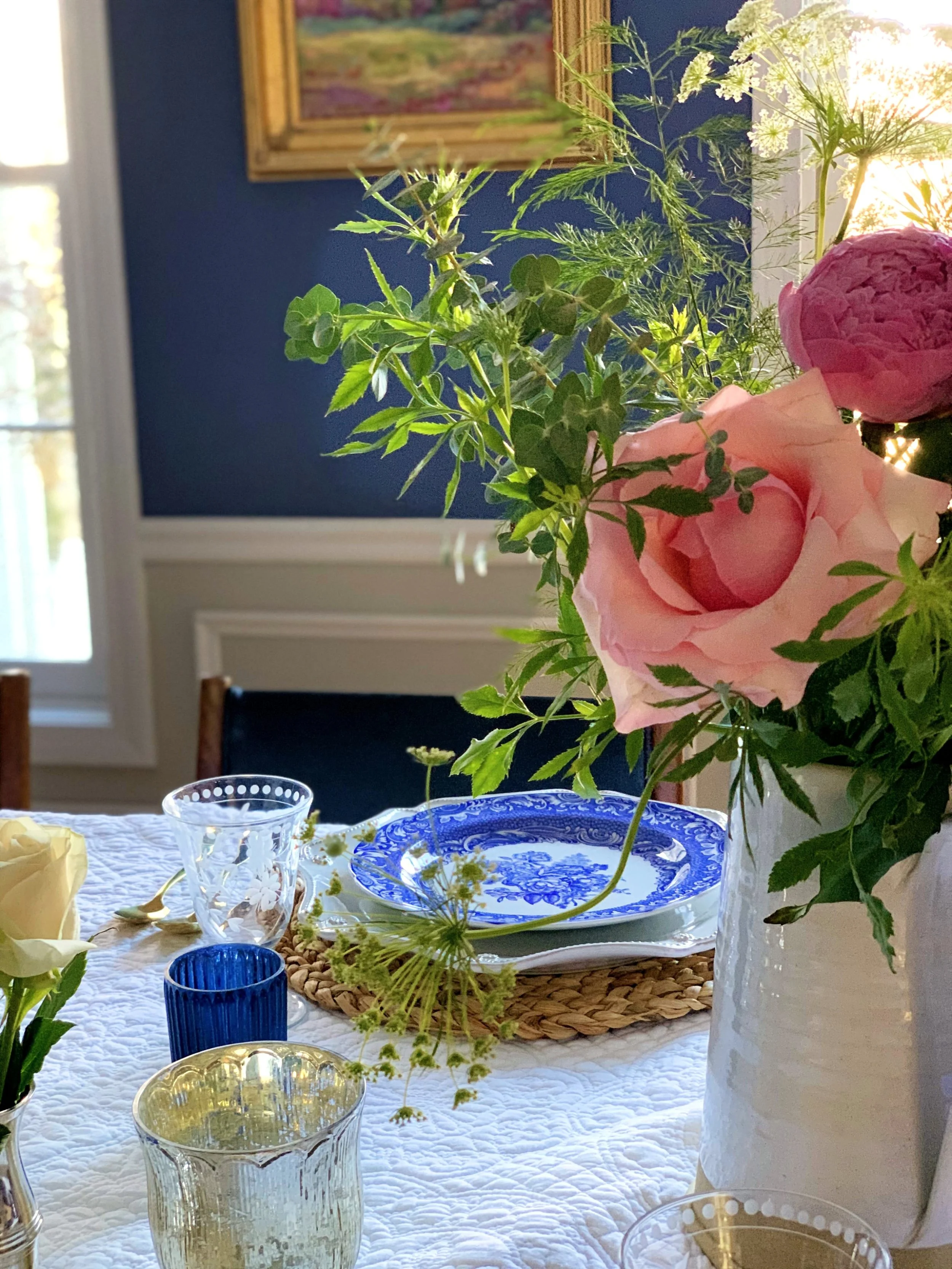
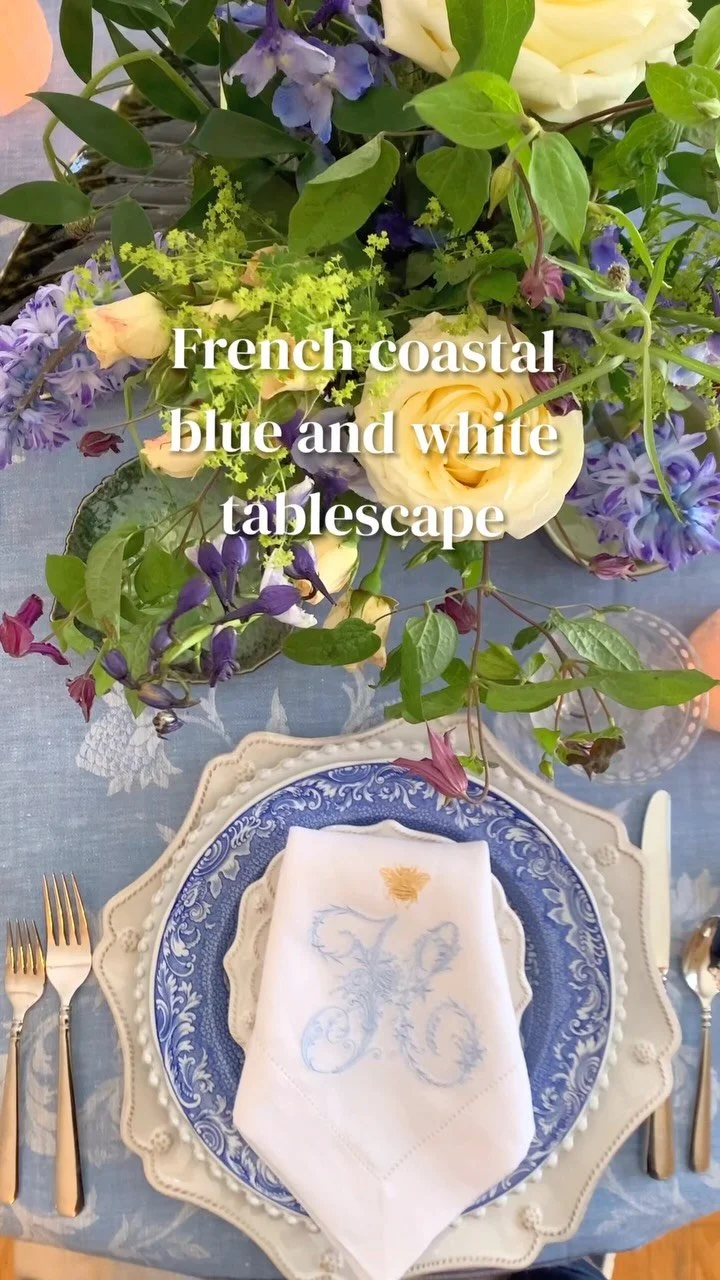
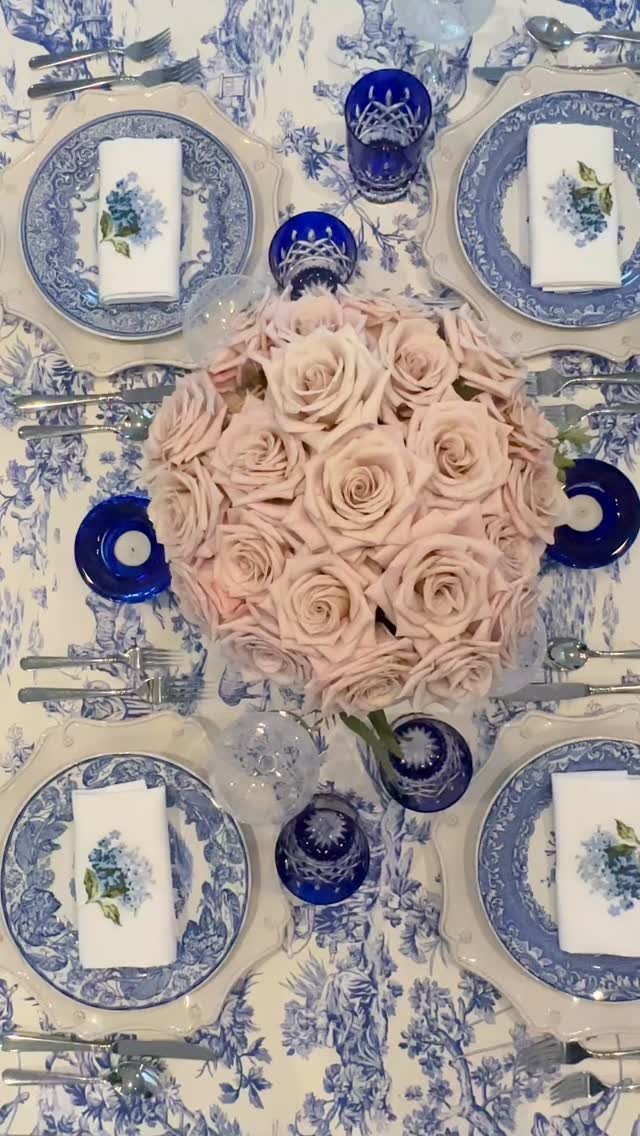
I have another that is thick cotton with a pattern sewn onto it and raised right off the surface, which I use when a table needs more texture than color. It sits beautifully under blue and white, because the white gives the pattern somewhere quiet to rest, and the raised work catches the light without adding a single new color to the table.
What I Hope You Take From This
Many of the things on my table were not made for my table. The tureen was made for soup, the tartan was made for a bed on a cold night, and the organza was almost certainly made for a dress, and yet every one of them is doing better work here than the things that were made for the job.
The urge to go out and buy the right object is strong, and I understand it completely, but the right object is often already in your house, quietly doing something else or nothing at all. This does not ask for money or skill. It asks only that you look at a soup tureen and see something other than soup, and after that, you are limited by nothing but your own imagination. But most of all, have fun with it. Let your creativity come out and shine!
Beauty is not decoration. It is intention made visible.
À bientôt,
Mary
Questions I Am Often Asked
Can you really use a tureen as a flower vase?
Yes, and it works better than most vases because a tureen has a wide mouth and a low shoulder, which lets the stems fall naturally and keeps the arrangement below eye level, so people can see one another across the table.
How do you arrange hydrangeas without floral foam?
You do not need any, because hydrangea heads are dense and round enough to hold one another in place. Cut the stems short, set three or four heads into a wide-mouthed vessel, and turn it once to find the side you like best.
What else can you use as a centerpiece instead of a vase?
A confit pot, a mixing bowl, a pitcher, a sugar bowl that lost its lid, a teapot, or sterling mint julep cups. Anything with a wide mouth and a low shoulder will hold flowers beautifully.
How do you decorate a table with what you already own?
Look for shape rather than purpose, since the vessels made for food are usually better proportioned for flowers than the ones sold for arranging, and the textiles made for beds and windows often make lovelier tablecloths than table linen ever does.
For the whole table that morning, the antique French linen, and both recipes, read A Table Set for Two in the MERZE Journal.
The Design Eye™ is a seasonal series from MERZE, published four times a year: spring, summer, autumn, and winter. Each edition offers one image, one observation, and one principle from the Design with the Heart™ philosophy applied to the season at hand. It is not a how-to. It is a way of seeing.
The Design Eye™ Autumn 2026 arrives with the first cool morning.