
New England Baked Beans: The Saturday Recipe My Mother Never Wrote Down
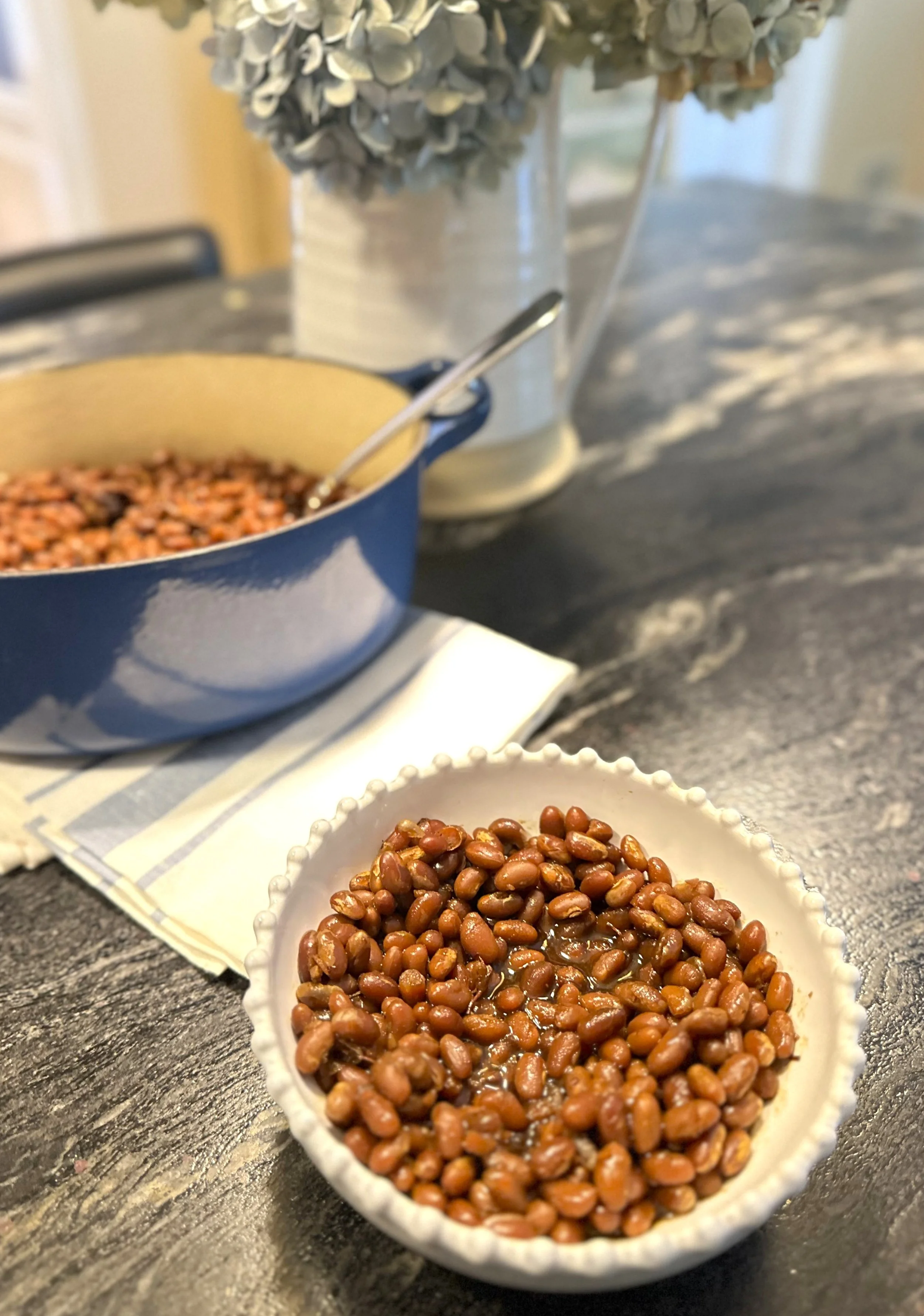
Making baked beans takes me home. The smell of them in the oven brings back my mother, our family table, and the bread she made to go with them.
She made them on Saturdays in the fall. It was often chilly outside by then, and a warm, hearty meal like that was a comfort we all looked forward to.
There would be three or four loaves rising at the back of the counter, waiting their turn at the oven. Some weeks she shaped the dough into rolls and some weeks she left it in loaves. It was the same dough either way. She was feeding eight children, so one loaf was never going to be the answer. We loved that bread as much as the beans. My favorite way to eat them was on a thick slice of it, buttered, with the beans spooned over the top. What a treat that was.
My oldest brother was Wayne. He loved those beans more than any of us did. When he was a teenager he would stand behind her at the stove and look over her shoulder into the oven to see whether they were ready. He waited. That is what I remember, the waiting.
We ate them with hot dogs at times. That was Saturday.
There was no recipe. There was never a recipe for anything she made, and I understand that better now than I did then. When you are cooking for eight people every day of the year you do not write things down. You learn to read the pot. What she had was not a list of ingredients but a way of working: navy beans and molasses, always, with salt pork, an onion, something sweet, something sharp, a covered pot, and a long afternoon. If there was no Dijon she used dry mustard. If the brown sugar had run out she reached for the maple syrup.
My mother was a stoic woman, and her love came through her cooking and her table. I am the same in that way. The difference is that I also say it out loud.
Wayne is gone now, and so are both of my parents. Later in his life, when he was very ill, we made him baked beans. He was so happy.
I miss my mother very much. This recipe has been in our family for decades, and I had never written it down until this week. I did it for my daughter, and for my cousins, who have been asking me for it. I stood over a pot of my own and checked it every forty-five minutes the way she did. It joins her berry compote and her corn chowder as the third thing of hers I have brought back this way. What I remember is hers.
Everyone has food like this. It is rarely the most refined thing a person has eaten, and it was never meant to be. It is the meal you want on a cold evening, or at the end of a long week, or when you are a long way from home. We break bread at the table, and that is where we find the warmth of being together.
My Mother's New England Baked Beans
Serves: 8 as side dish
Time: overnight soak, then about four to five hours in the oven at 325 degees farinhiht
Ingredients
1 pound dried navy beans
¼ teaspoon baking soda
2 slices salt pork, each about one inch thick
1 onion, quartered
¾ cup molasses
⅓ cup brown sugar
2 tablespoons Dijon mustard
2 tablespoons maple syrup
2 cups water, plus more as needed
Method
Put the beans in a large bowl and cover them with at least two to three inches of cold water, since they will swell as they soak. Stir in the baking soda, which softens the skins and makes the beans easier to digest. After a few hours, check the bowl. The beans will have taken up a good deal of the water, and if any are sitting above the waterline, add more so they stay fully covered. Leave them overnight, then drain and rinse.
Heat the oven to 325°F.
Parboil the salt pork for about ten minutes, then drain.
Put the drained and rinsed beans in a heavy covered pot. I use my Le Creuset. Add the water, molasses, light brown sugar, mustard, and maple syrup, and stir well. If your brown sugar is coarse or clumpy, some of it may float at first; it will dissolve once the pot heats.
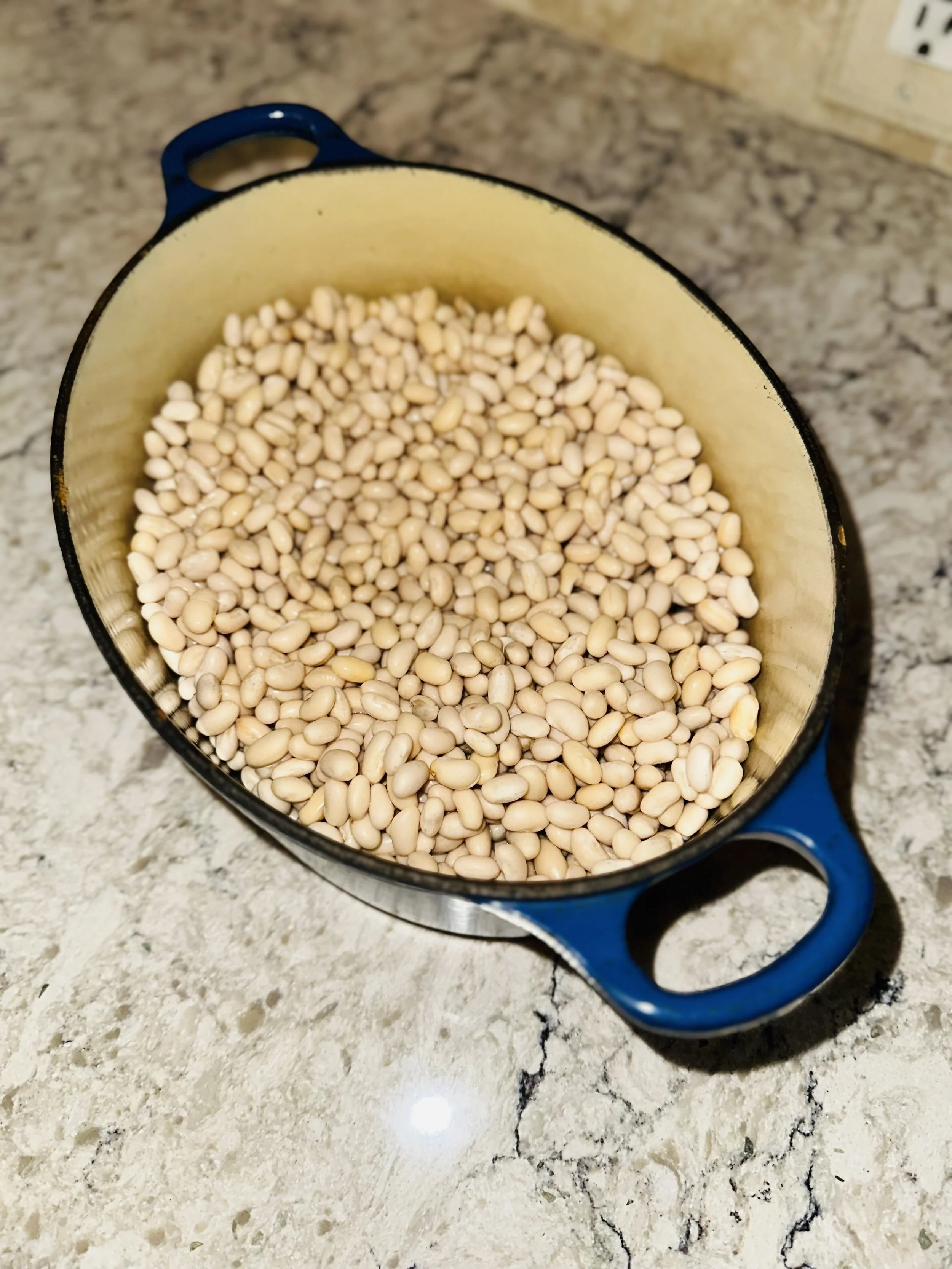
Add the onion and the salt pork, tucking the pork down among the beans, and stir again so everything is evenly mixed.

Cover and bake for about four hours, checking every forty-five minutes. The liquid should always almost cover the beans. If they begin to look dry, add a little hot water. The aim is for the beans to swell and take up nearly all of the liquid by the end.
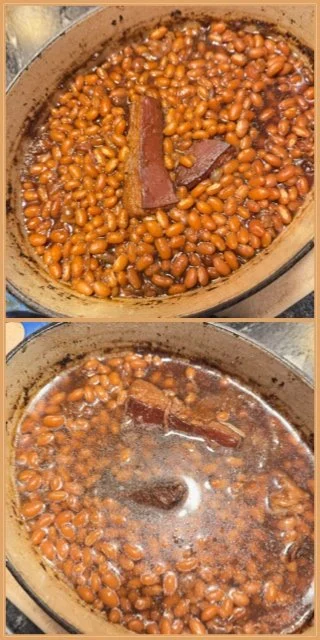
When the beans are starting to soften, taste them. If they are not sweet enough for you, add a little more molasses, and more light brown sugar or maple syrup depending on the flavor you want.
If there is still too much liquid near the end, take the lid off and bake for up to another hour, checking as you go, until it has reduced.
To serve, I still like them the way I always loved them: spooned over a slice of good bread spread with butter.
Why Baked Beans Take Their Time
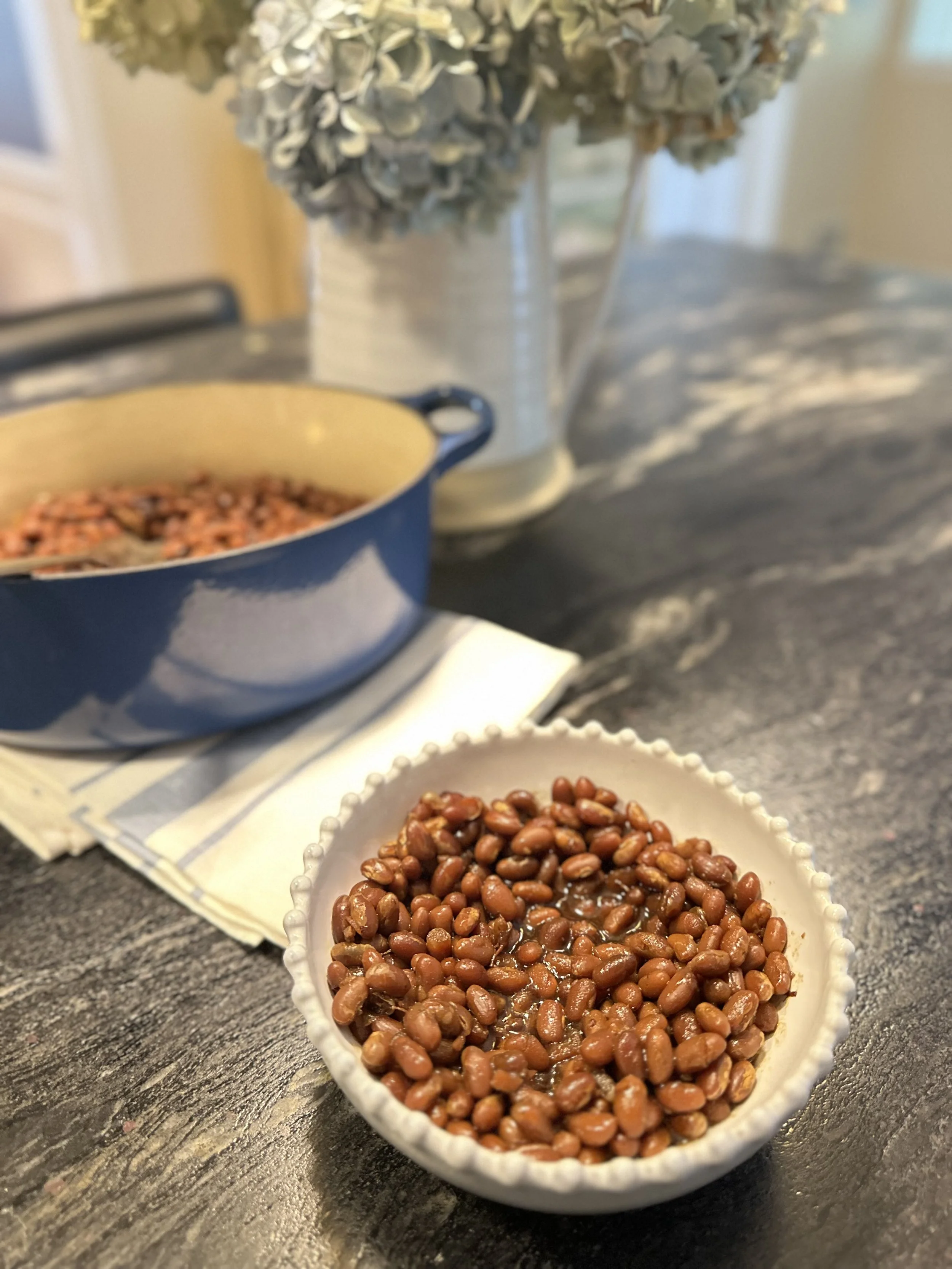
Most dried beans cook in about an hour. Baked beans take far longer, and there is a reason for it. The molasses and brown sugar firm the beans and slow their softening, which is also why they can bake for hours without falling apart. It is where the depth of flavor comes from.
It is also why the pot needs watching. America's Test Kitchen notes that a heavy cast-iron pot loses liquid faster in the oven than a lighter one, and mine is exactly that kind of pot. And no two batches behave the same. The age of the beans and the hardness of your water both change how long they take, and a bag from the store can be older than it looks. Some batches are ready at four hours and some want more.
If you are not sure they are done, America's Test Kitchen suggests a test I love: blow on a spoonful, and the skins of properly cooked beans will wrinkle and curl back.
What Stays and What Moves
Navy beans and molasses, always. The rest follows the pantry, the way it did in my mother's kitchen. If there is no brown sugar, maple syrup will do. If there is no Dijon, dry mustard works, but use much less, roughly a teaspoon of dry for each tablespoon of Dijon.
I have used both light and dark brown sugar, and it really comes down to what is in the pantry. Dark brown sugar is slightly deeper and more caramel, with a touch more bitterness; light is a little cleaner and sweeter. With this much molasses in the pot, the difference is small.
The recipe is written down now, but it was never really a list of ingredients. It is a chilly Saturday, a counter full of bread, and my brother at the oven door, waiting. Making it takes me home. I hope, in time, it will do the same for my daughter.
Design with the Heart™
À bientôt,
Mary

