The Whisper We Were Never Allowed to Follow
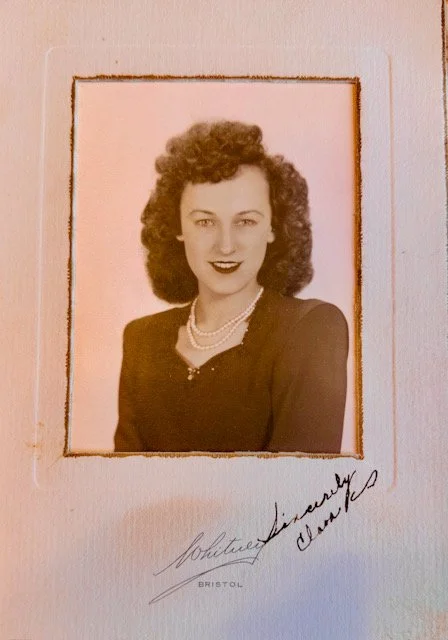
My mother was the smartest person in every room she ever entered. I understood this as a child, the way children understand things, not with words but with certainty. She had a mind that moved quickly and a warmth that drew people to her, and she was beautiful in a way that had nothing to do with how you look and everything to do with how fully you are present. She was all of these things, and she spent her life raising eight children in a world that never once stopped to ask what else she might have been.
She never complained. I want you to understand that. Not once, not in the way that would have been entirely justified, not in the small daily ways that would have been forgivable. She simply loved us and fed us and kept the world running, and she did it with a quiet dignity that I did not have the vocabulary to honor when she was alive. I have spent years finding the words since.
She was Breton. French to her roots, the way people from Brittany are French, fiercely and specifically, with a particular pride in the language and the land and the way of doing things that belongs only to that corner of the world. Her people had come to Canada in the late sixteenth century, and though generations, an ocean, and a border separated her from Brittany, the roots never loosened. She held them on purpose. She spoke both Parisian and Canadian French, moving easily between them. She carried France inside her the way you carry something given to you before you could refuse it, before you even knew it was a gift. And without ever naming it, without ever making a ceremony of it, she passed it to me.
I grew up hearing French at the table. I grew up tasting it in the food she made, almost all of it by hand and from memory. I felt France in the way she set a room, in the care she took with the things that surrounded us. Beauty was not frivolous in our house. It was how she loved. I did not know then that I was being formed by it. I only knew I felt most myself when I was near something beautiful and intentional, near a table laid with care, near the feeling that ordinary moments deserved to be honored.
But I want to tell you what else our house held, because it shaped me just as deeply. There were eight of us, five brothers and three girls, counting me, and my father had a business that my brother worked in beside him. The girls were not allowed. None of us were. The understanding was settled long before any of us could argue with it. The boys would build things, and the girls would build homes. We were not expected to want a career. We were expected to marry, to raise children, and to ask for nothing more. I loved my family, and I want to be honest that this was not cruelty. It was simply the air we breathed, and most people never thought to question it.
But something in me did. I cannot tell you when it started. I only know it was always there, a small and stubborn voice that said you will make something of your own one day. I did not have language for it then. I only knew it was mine. I think now that it was the same whisper my mother carried and was never permitted to follow. The difference between us was only the era we were handed.
I entered the corporate world at twenty-one, a young woman trying to find her footing in rooms that had not been built with her in mind. I had no degree and no map. I had only the willingness to show up and the quiet refusal to be told what I could not become. For seven years, I worked, watched, and learned what I could from where I stood.
College did not come for me until I was twenty-eight, and when it came, it did not come easily. I worked full-time and studied part-time, semester after semester, year after year, the way you cross a wide field when you are only allowed one step a day. I married at thirty-three. I had my daughter, my first and only child, at thirty-nine, and there came a point in that pregnancy when I could no longer fit behind a desk, so I set my classes down. I did not abandon them. I set them down the way you set down something you fully intend to pick back up. At forty, I returned. At forty-one, I graduated.
I have to tell you about the day I walked into that auditorium, because I have carried it ever since. At commencement, I was chosen to walk first, directly behind the person who led the entire graduating class into the hall. First. After thirteen years of stolen hours and deferred dreams and a body that had finally outgrown the desk, I walked in at the front. It was surreal. I remember thinking that the girl who was not allowed in her father's business was now leading a room into one. I had done it. Not quickly and not easily, but completely.
That degree opened doors, and I walked through every one of them. I climbed. In time, I left a full-time position to contract independently, betting on myself, and I climbed further still. My work took me into oil and gas, fossil fuels, insurance, healthcare, and aerospace. Industries built by men and run by men. More times than I can count, I was the only woman at the table. At the time, it did not even strike me as unusual. It was simply the shape of the room. I will not pretend it was easy to be a woman in a world that had not made space for one. It was hard. I learned to take up my seat anyway.
I want to be honest about the shape of that climb, because it was not the clean ascent it can sound like in a single sentence. It was success and then a fall, and getting up, and climbing again, and falling again. It was endurance more than triumph. It was grit. I was trying to believe in myself in rooms full of people who did not, who, in some cases, were waiting for me to fail and were not shy about letting me know it. I was a woman in a man's world, and I was reminded of that often, in ways both large and small.
But here is the thing I have come to understand about myself. I never lost my center in all of it. In a time when women were not supposed to lead, I led anyway, and I led with my heart. But I want to be precise about what that means, because it is easily misread. Leading with my heart was not the absence of strategy. It was my strategy.
My college degree was in psychology, and though I built my career far from that field, it never left me. It taught me to see people. I have always been able to read the value a person brings to a table, and just as clearly, to see when someone has brought none. I led through communication and empathy, reading the room and the people in it with a kind of attention the men around me did not tend to share or value. I valued the people I worked with, and I told them so. I gave credit where it was owed, every time, to the people who earned it beside me. That was not softness in place of skill. It was the skill.
They led differently, the men I worked alongside, and I refused to lead as they did. I refused to change, and it turned out that was perfectly all right. Leading the way I led made me vulnerable, and I knew it did. But it also made me something none of them could be. I was a woman, and I led as one, and in a world that treated that as my weakness, it was quietly the truest thing I had. It was my value. It took me years to stop apologizing for it and to say it plainly. The heart I led with, and the trained eye behind it, was never the thing holding me back. It was what made me good.
And I did arrive. I reached the corner of the room I had spent my whole working life climbing toward, the table where the chief executives sat, the seat a woman like me was never meant to occupy. I will be honest about what I found there. It was not what I had hoped. After all the years and the proving, arrival turned out to be more of the same, the same view, only higher. I had wanted it for so long, and once it was mine, it had already gone stale. I do not say that with bitterness. I say it because it was true, and because the staleness was the first quiet sign that the life I had built was not yet the life that was mine.
Along the way, I had mentors, though some of them never knew they were mentoring me. I was watching, learning, taking what I needed, and carrying it forward. There were very few women among them, and that scarcity is exactly why I remember every single one. I have not forgotten a single woman who showed me it could be done. So when my turn came, I mentored the woman climbing behind me. Independence, both financial and individual, was never negotiable for me. I had decided long ago that I would belong to myself.
But through all of it, the steadiest presence in my corner was my mother. I would come to her with the plights of the working world, the rooms full of men, the days that tested me, and she would sit and listen to every word. She rarely said much. She would simply mouth the word "Wow" without a sound, smile, shake her head slowly, and then tell me to keep going. Keep on. She was rooting for me. The woman who had never been allowed into that world was, all the while, my quiet champion within it. That is what I miss most, with all my heart. The listening. The silent Wow. The sense that someone who loved me was always, steadily, on my side. I mouth it to my own daughter now. Without a sound, smiling, shaking my head. Wow. Keep going. I am rooting for you. It turns out that is one of the things that passes down, hand to hand, the same as the rest.
Life did not move in a straight line, and I have stopped pretending the worthwhile ones ever do. When my daughter became ill, I left my career for a year to care for her. There was no decision to weigh. You simply go. When she was well again, I returned. Later, when my parents grew old and unwell, my sister and I stepped in to care for them, and I left my work again to do so. I do not regret a single hour of either. But I want to name plainly what those years gave and what they cost, because women are so often asked to absorb such seasons in silence, as though stepping away were the same as falling behind.
Then my mother died, and the world went quiet in the way it only does when someone who was always there is suddenly and permanently not.
I should tell you who she was before she was ours. Before the eight children and the house that never stopped needing her, she came to Hartford as a young woman and modeled for G. Fox & Co. She was proud of that. Not vain about it, proud of it, because it was hers, a thing she had done out in the world under her own name. She was stunning. Her eyes were as blue and as clear as the water, and you did not forget them. I think about that young woman often now, the one who had a life and a name of her own before she gave everything to us.
Afterward, I went to France.
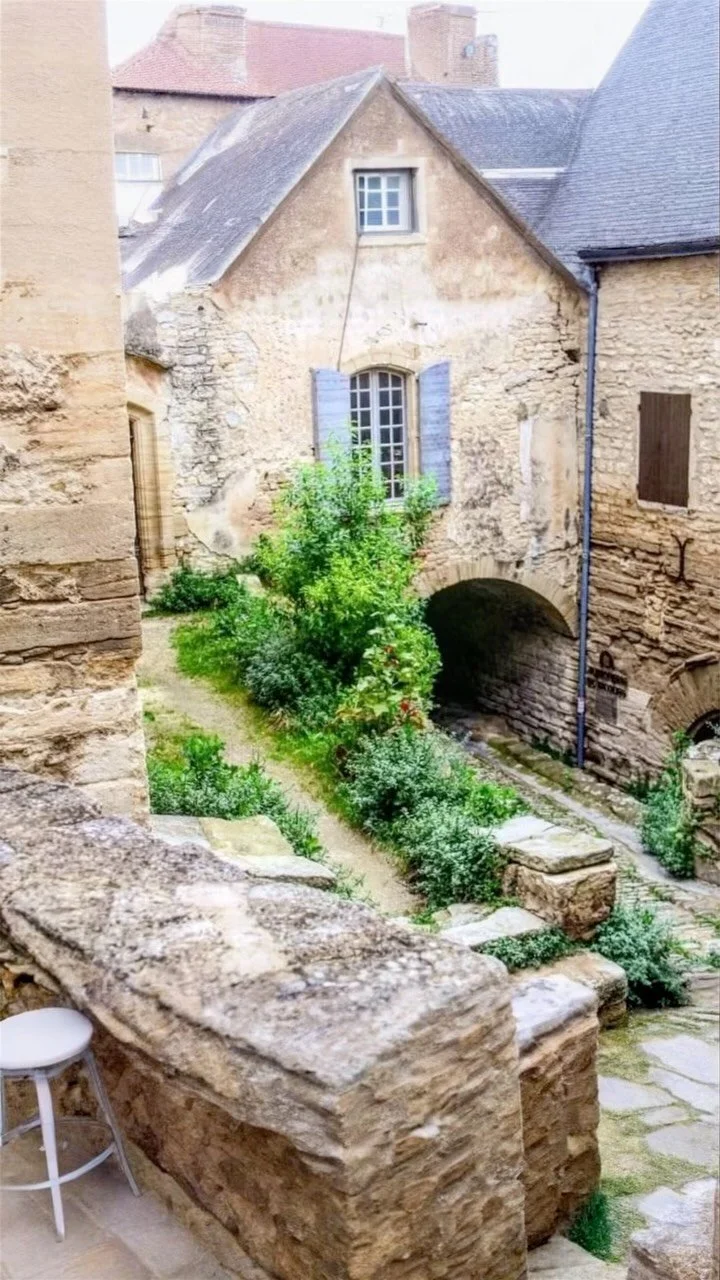
I do not know exactly what I was looking for. Myself, perhaps. Her, perhaps. Some thread connecting the woman I had become to the woman she had been, to the country that had made us both in ways neither of us fully understood. I found all of it, none of it, and something I have no adequate word for. I stood in Brittany and felt the earth move beneath me. That is not a figure of speech. Something shifted, cellular and deep, the way grief sometimes resolves itself not into peace but into recognition.
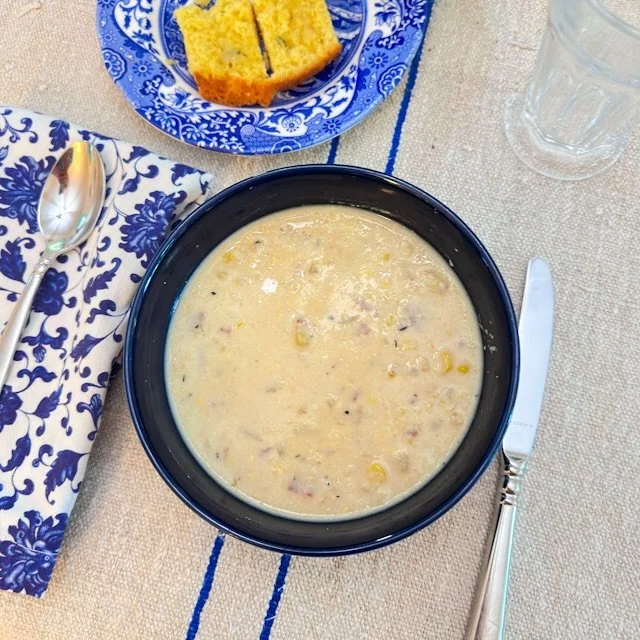
I recognized the food. That was the strange and tender part. The meals set before me in France were the meals of my childhood, the galettes of dark buckwheat I had grown up eating as simply my mother's cooking, never knowing they were Breton, never knowing they belonged to anyone but her. I had loved them my whole life.
And then I understood something that moved me more than I expected. She had given me all of this the hardest way there is to give anything. Nothing was ever written down. There were no recipes in our house, not on paper. She cooked from memory alone, the way her mother had, and her mother before her, each woman holding the whole of it in her hands and passing it to the next without a single word committed to a page. I was the next pair of hands. I had been carrying their inheritance my whole life and had only just learned its name.
I came home changed.
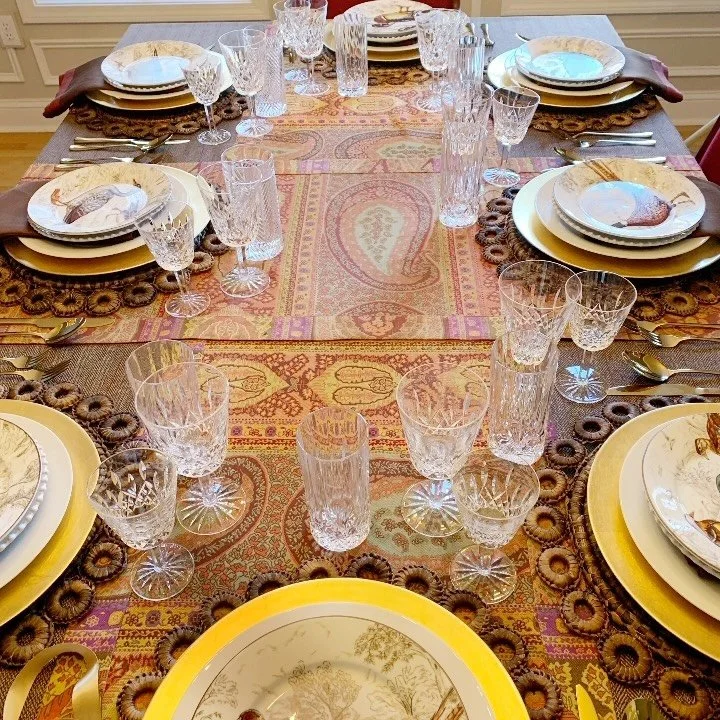
Not long after, I entered a table design competition called Set to Celebrate. There were thirty-six tables, thirty-six designers, most of them established, most of them taken seriously in rooms where I was not yet taken seriously at all. I was still the woman at the edge of the room, the one whose credentials in this world were invisible to the people who kept its gates. I set my table anyway.
I set it for her.
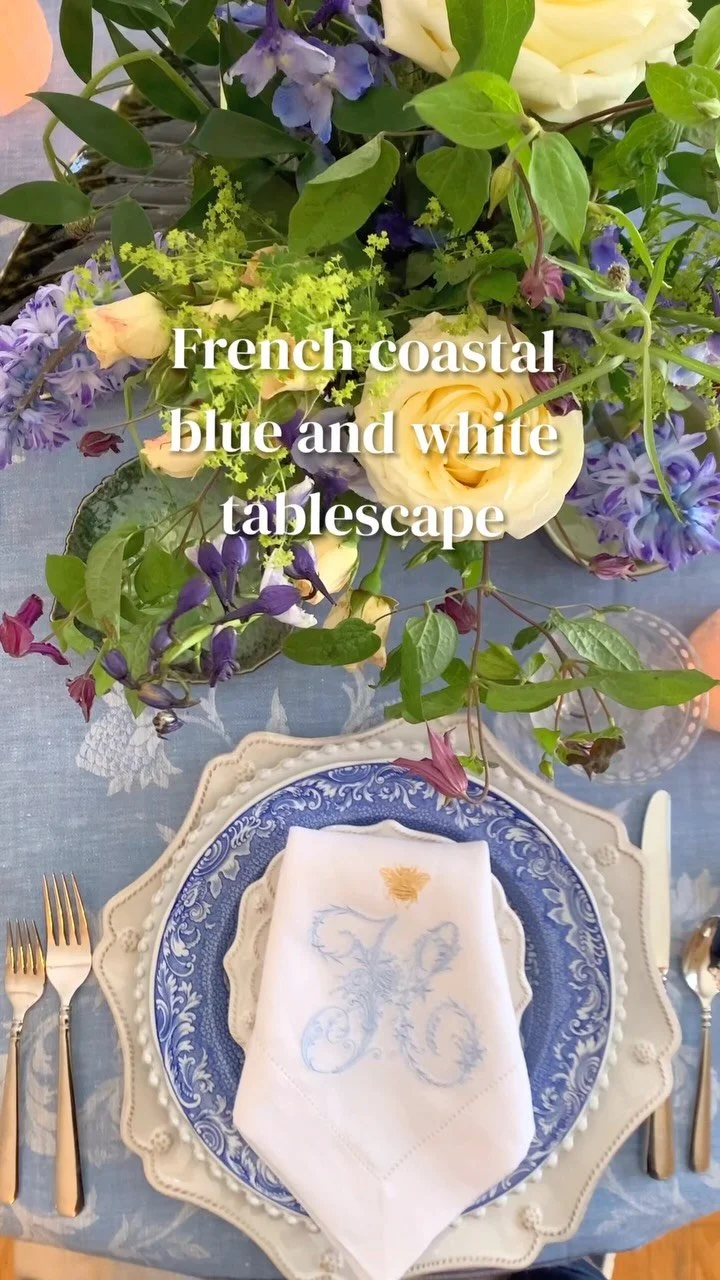
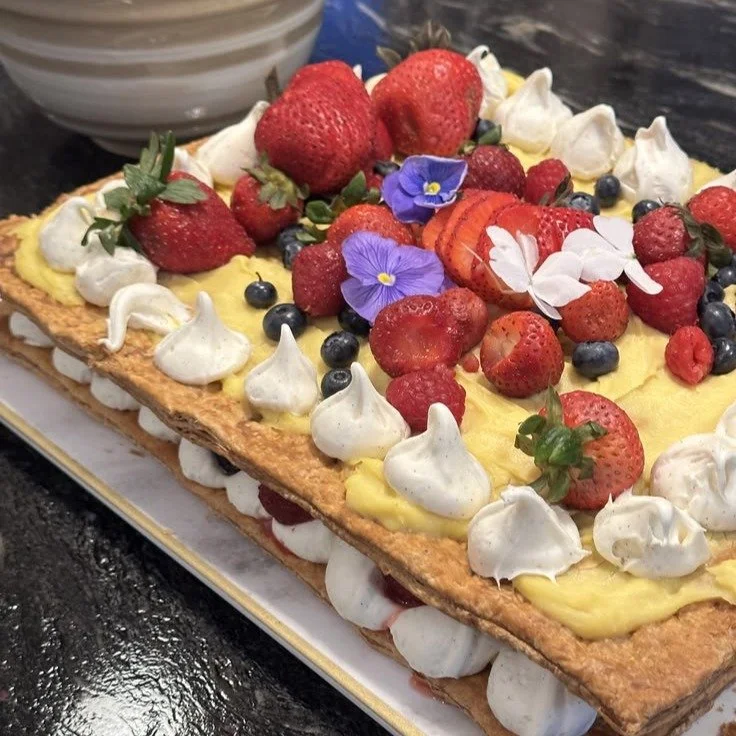
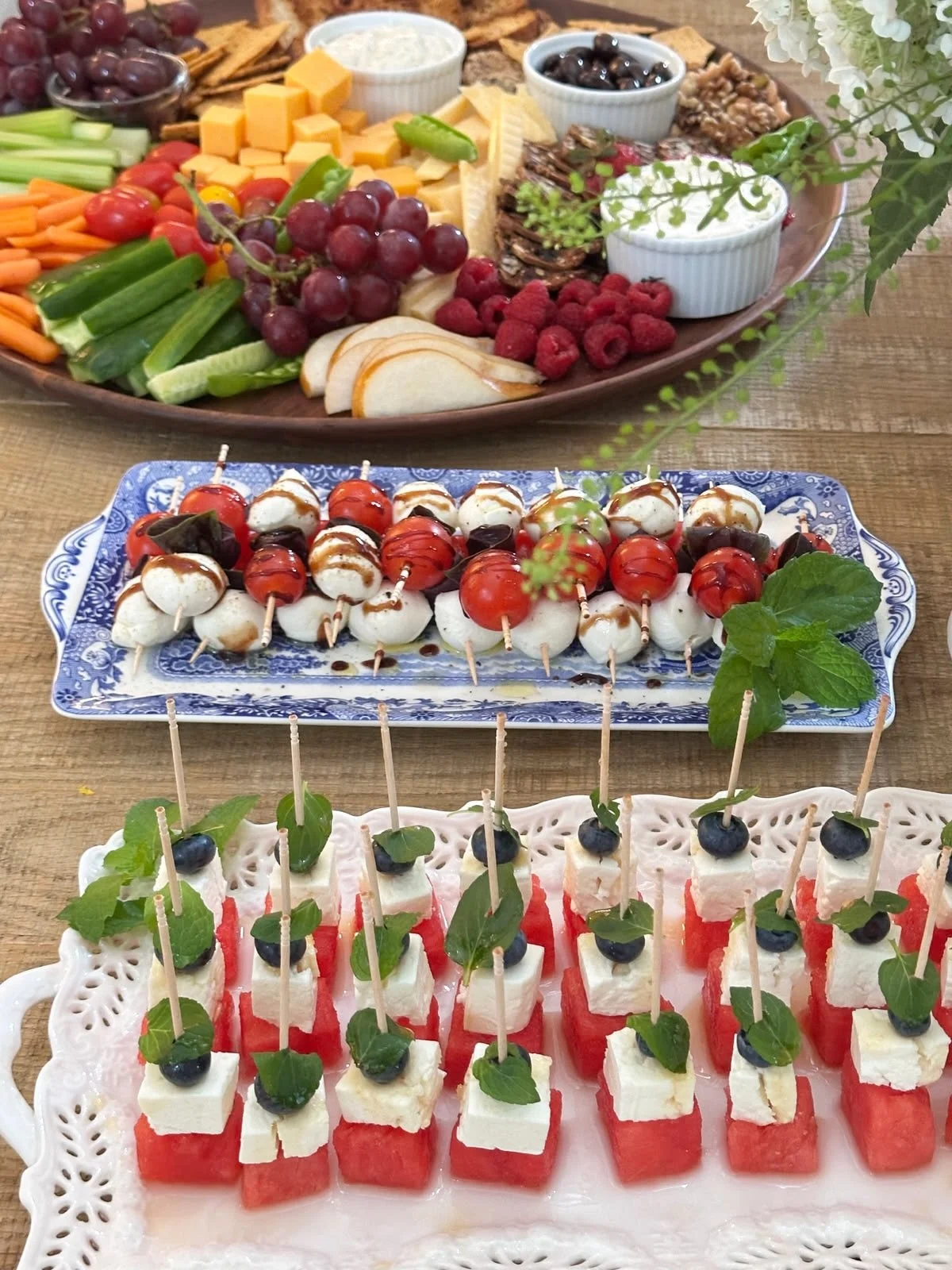
I set it through my grief and my love and everything France had cracked open in me, and I set it the way she had taught me, without ever teaching me: with intention, with beauty, with the belief that a table is never just a table. It is an act of love made visible. It is the most honest thing a person can offer. Come, sit, you are welcome here. I made this for you.
I won. Most Beautiful Table, out of thirty-six.
The room was astonished, and I will be honest that so was I. Not because I doubted what I had made, but because I had grown so accustomed to not being taken seriously that being seen so completely felt disorienting, like stepping into a light I had not known was waiting. That win changed the trajectory of my life. Not only because of the recognition, though I will not pretend recognition did not matter, because being seen always matters to someone who has learned to expect invisibility. It changed things because it confirmed what I had been quietly carrying. What I do at a table is not decoration. It is design. It is art. It is the physical expression of a philosophy about how a life can be lived, and how a woman can choose, at any age and in any season, to make her world beautiful on purpose.
By then, my daughter was leaving for college, and my parents were gone. The roles that had organized so much of my life had, almost all at once, come to their natural ends. It was an enormous change, and underneath the grief was a question I could no longer avoid. What now?
And the whisper, the one from the girl who was kept out of her father's business, the one my mother carried her whole life and never got to answer, finally spoke up. It said: now. It is your time now.
It took years to land on what it would become. I had a deep love for the corporate world and all it had given me, and I did not want to lose that hard-won knowledge. But I also had another self I had carried quietly for decades, the part of me that planned events and styled rooms as a passion on the side, the part that spoke to a creativity in me that was never small. MERZE became the place where the strategist and the stylist, the executive and the artist, finally got to live in the same body without apology.
MERZE came from her. From France. From grief resolved into a table set with everything I had. It is a companion for women who are becoming, at every stage of life, because that is the truth no one tells you plainly. We are always becoming. Through transition and growth, through love and loss, through the grind and the years of hard work, through raising children and burying parents, and on into the seasons that come after. None of it is the waiting room before real life. All of it is life.
Here is what I understand now, on the far side of all that climbing. For most of my years, I believed a balanced life meant arranging myself so that everyone around me was comfortable, fitting each person neatly into my days. I was wrong. A balanced life is not making room for everyone else inside your hours. It is fitting yourself into your own life, authentically. It is showing up for yourself, creatively. It is loving who you are. A balanced life is your soulful self made visible, your authentic spirit finally given a seat at the table.
I still make her buckwheat galettes. There is no recipe to follow. There never was. I make them the way she made them, from memory and by hand, the way her mother made them and hers before her. Centuries of Breton women in a single fold of batter, and not one word of it ever written down. My sisters make them. My cousins make them. We are scattered now across our own lives, but we all still fold the same batter our mothers folded, and theirs before them. That is what heritage is. Not something you keep on paper. Something you keep doing.
My mother never got to follow her whisper. The world did not ask her what she wanted, and she was too loving and too faithful to demand an answer. But she gave me mine. She gave it to me in the French she spoke at the table, in the food she cooked from memory, in the way she moved through her life with a grace I now understand was its own form of courage.
I followed it for both of us.
Every table I set, I set for her. Every object I choose for its beauty and its history and its quiet weight. Every woman I sit across from and tell: your life is worth designing. You are worth designing for. This is not a small thing. This is everything. My mother would have known that. She always knew.
And so here is my hope, the one I have carried into everything MERZE is. I hope my Wow reaches further than my own daughter. I hope it reaches you. I hope that somewhere in these words you hear someone quietly in your corner, mouthing it without a sound, smiling, shaking her head at how far you have already come. Keep going. Listen to yourself, to the whisper you may have been told for years to ignore. You are allowed to follow it. You are allowed to become, at any age and in any season, the woman you were always quietly meant to be.
I am rooting for you. I always will be.
À bientôt,
Mary