My French-Inspired Kitchen
On intentional living, handmade objects, and cooking with love
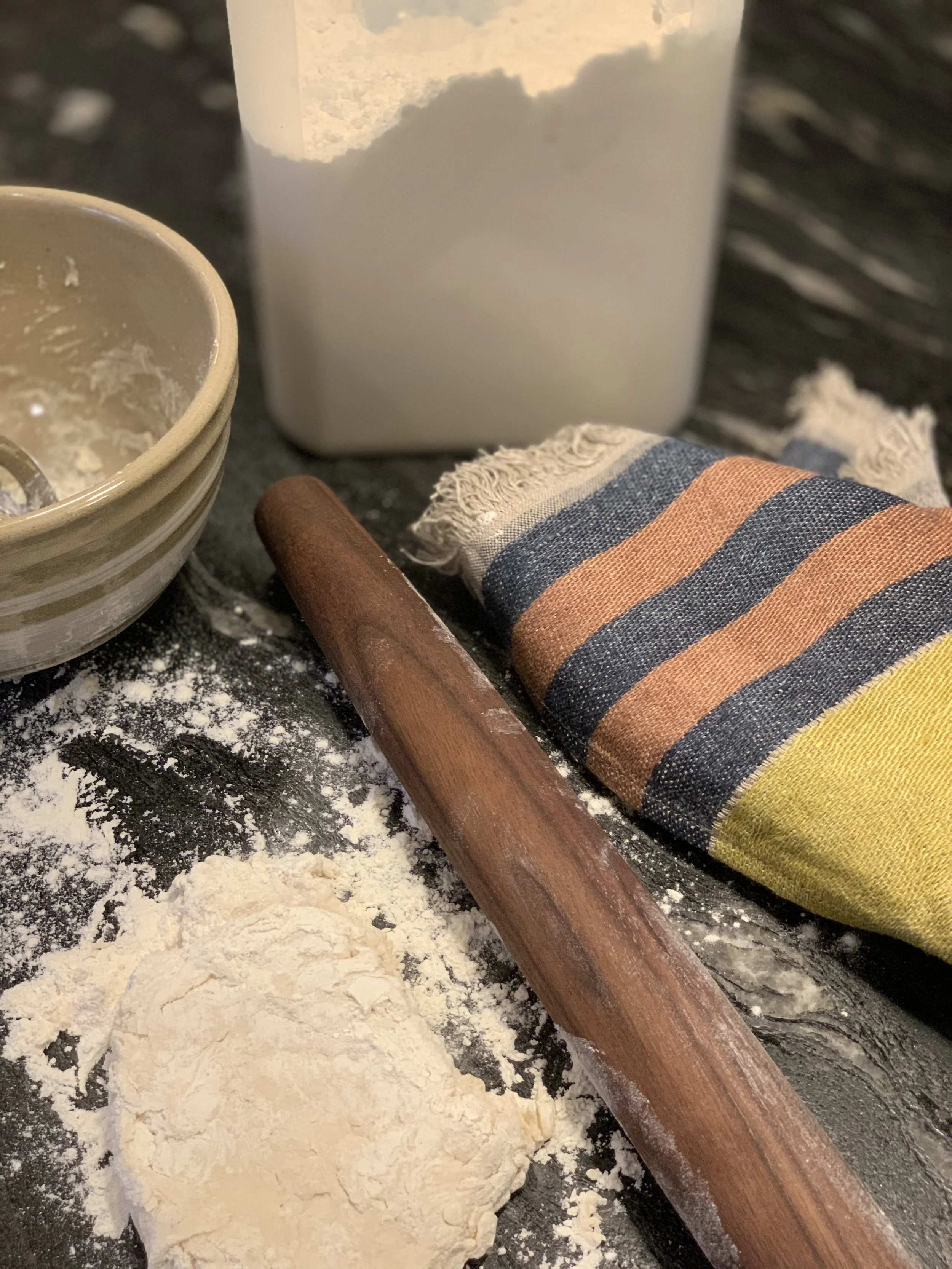
There is a moment, just before I begin to cook, when I reach for a bowl. Not any bowl. One of the heavy, handmade ones, wheel-thrown in Vermont, its glaze pooling unevenly at the rim the way only a human hand can leave it. I hold it for a second longer than I need to. And in that small pause, I am a girl again in my mother's kitchen, watching her move between the stove and the table as though the whole act were a kind of prayer.
My mother was Breton, French to her roots, and she did not speak of love so much as she made it. She made it in the morning bread, in the long Sunday meals, in the way she set a table for people she cared for. Everything came from her own hands. Nothing was bought when it could have been made. I understood, without her ever saying it, that this was how she told us we mattered. The food was the sentence, and the table was where it was spoken.
I have come to understand, more fully now than ever, that I am exactly the same.
When I cook for the people who come into my home, when I set the table with attention and pay close, quiet notice to each person at it, I am not performing hospitality. I am saying something I do not always have other words for. I care for you. I am glad you are here. You are worth the trouble. It took me most of a lifetime to recognize that the impulse I felt in the kitchen was not domestic habit but inheritance, my mother's language passed into my own hands. And now I embrace it fully, without apology, as the truest art I have.
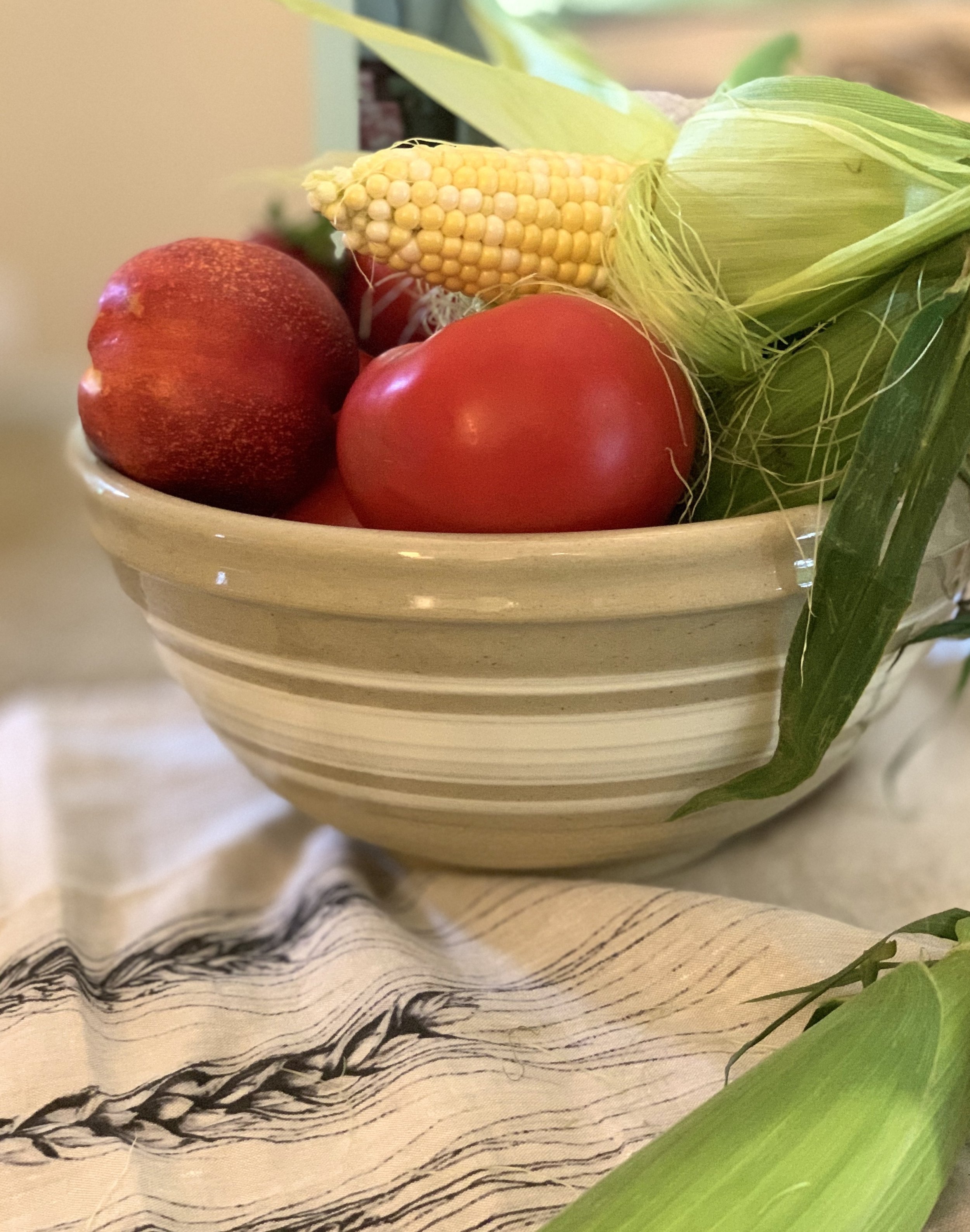
For me, preparing food is an art, and like any art, it has its rituals of entering. A painter has the feel of the brush. I have these objects. They are how I cross the threshold from the noise of the day into the slower, more attentive place where good food and a beautiful table are made.
My kitchen holds things I have gathered over a long time, and each one earns its place. On a shelf near the window sit two antique French confit pots, earthenware from the south of France, one glazed in green and yellow, one in a rare blue that once kept a family fed through winter. They are worn in the way only generations of use can wear a thing, and they carry that history like a patina. I did not buy them for decoration. I bought them because they are real, honest, and came from a world where nothing beautiful was made carelessly. When I look at them, I feel the south of France. I feel my mother's people.
On the table, the bee goblets catch the afternoon light. I have had them for years. There is something about that small engraved bee, ancient symbol of industry, of community, of the sweetness that comes from sustained and loving work, that has always felt personal to me. My guests always notice them. They always ask.
The linens folded in the drawer are Belgian, woven in Flanders from flax grown and woven there for centuries. When I lay one across a table or drape one over my arm at the stove, I feel the weight of that history, and it steadies me. There is a Libeco tablecloth I return to again and again, the stripe of it, the way it falls, that makes even an ordinary weeknight feel considered. That is not a small thing. That is the whole point.
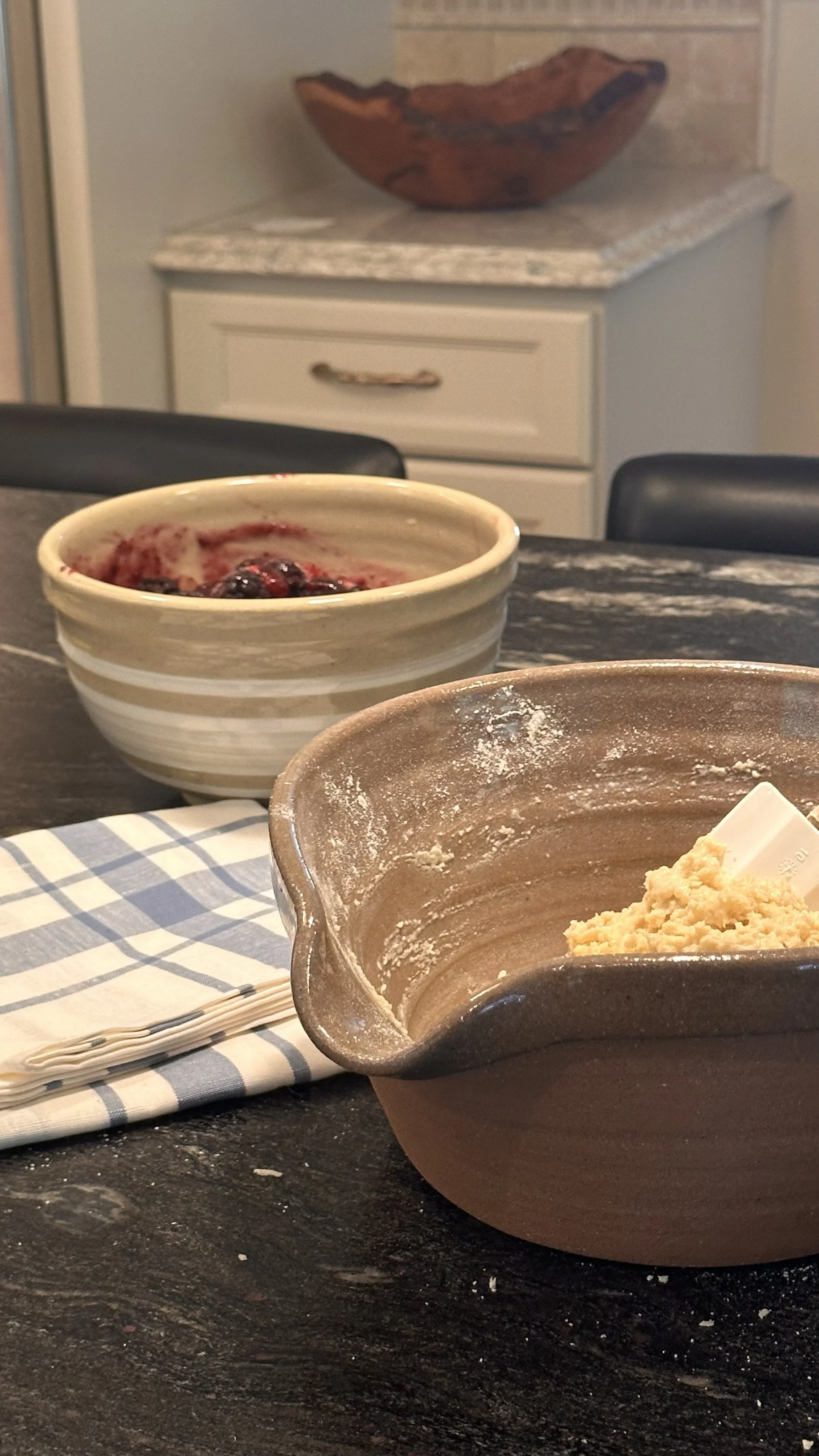
And then there are the wood bowls. A few I have acquired over the years from Spencer Peterman, turned from single pieces of spalted maple and cherry burl, each one shaped around the living edge of the wood. No two are the same. They sit on my table and on my counter, and they are, without question, among the most quietly beautiful things I own. My mother would have understood them immediately. They are humble and extraordinary at once, which is exactly what she was.
This is why the handmade matters so deeply to me, and why I have filled my kitchen and the MERZE boutique with pieces that carry the mark of a human hand. The things that surround me when I cook are not a backdrop. They are participants. They are what move me from going through the motions into actually being present, which is the only place where real cooking and real hospitality can happen.
I think that is what I am finally after, in my kitchen and in everything MERZE is becoming. Not perfection. Not show. But the deep, grounding pleasure of beautiful, honest things used in the service of love. My mother taught me that beauty is not frivolous. It is how we care for one another. It is how we say the things that are hardest to say out loud.
So I will keep reaching for the heavy bowl before I begin. I will keep setting the table with my whole attention. I will keep the confit pots on their shelf, the bee goblets in the light, and the linen folded just so. And I will keep believing, as she did, that to cook for someone, beautifully, and on purpose, is one of the oldest and tenderest ways there is to love.
À bientôt,
Mary