The History of Linen, and How to Layer It Like a Designer
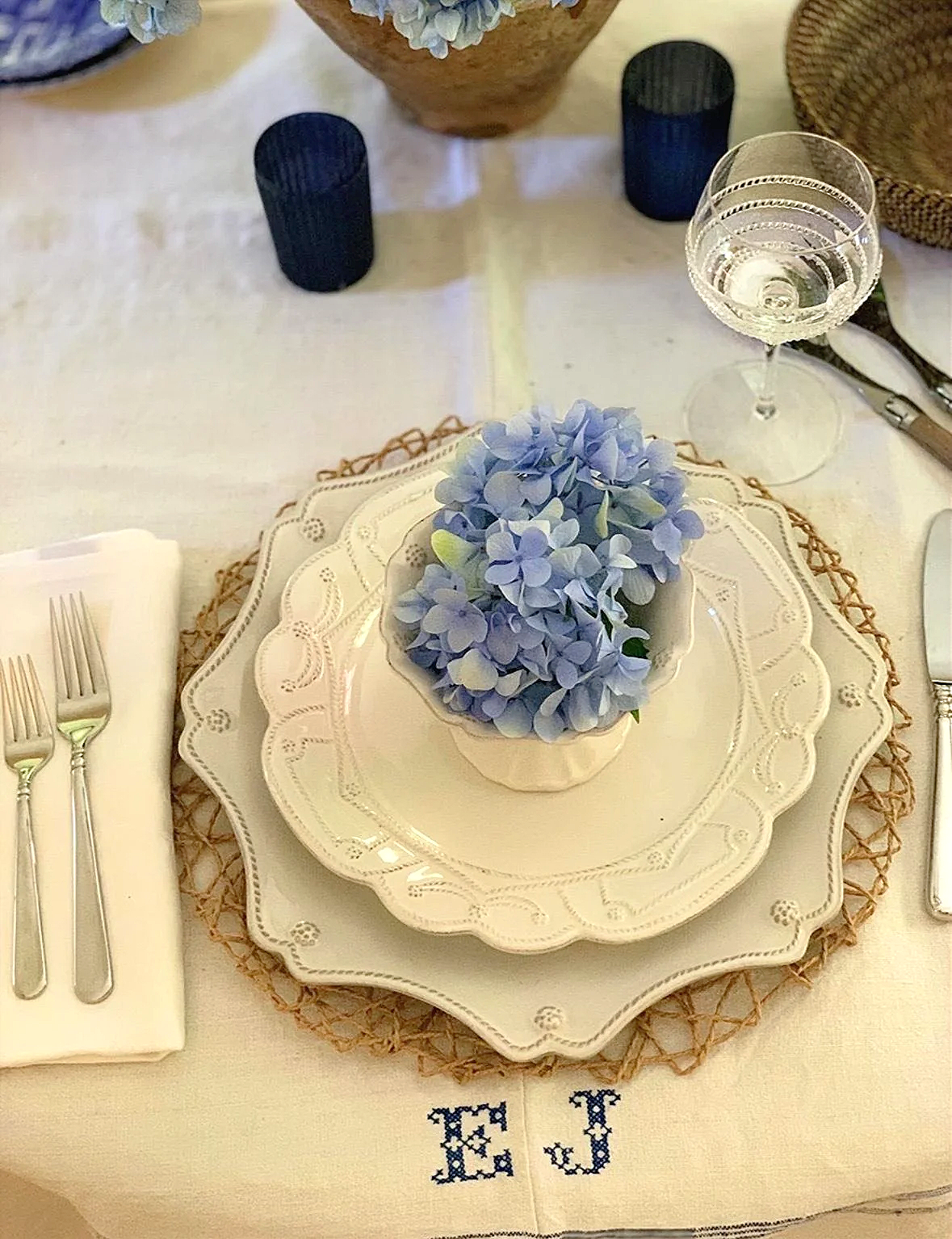
Designed, styled, and photographed by Mary Madore-Hickey.
Why the tablecloth beneath your china matters more than anything you put on top of it.
There's a moment right before people arrive when the table is finally done. The china is placed, the candles are waiting, and the flowers are in. And underneath all of it the linen falls the way linen falls, loose, either perfectly ironed or a little rumpled, but either, alive.
That's the moment I set the whole table for.
I know it sounds backward to say the tablecloth is the most important thing on the table when the cloth is the one thing nobody looks at. But get it wrong and nothing saves you. Too short, too shiny, too synthetic, too little, or aggressively pressed, and the beautiful china sitting on top of it just looks stranded. I have watched it happen. The linen decides how the table feels before anyone has said a word.
Where It Comes From
Linen is flax. The plant shoots up past three feet in about a hundred days, flowers for a moment, and then gets pulled out of the ground, pulled, not cut, and left to dry right there in the field. The fiber comes from dried stems, is spun into yarn, and then woven. That's it. It's slow, labor-intensive, and it hasn't fundamentally changed in centuries.
The best flax in the world grows in Flanders, in northern Belgium, and I've always found it a little poetic that the same region that produced painters obsessed with how cloth catches light also perfected the making of the cloth. In Meulebeke in the 1800s, more than 65% of the town's residents worked in the flax industry. The streets there are still named for it. Flax Street. Retting Street. Linen Street. A whole town organized around a plant.
Here's the thing I keep coming back to. Linen was never as precious as silk. It was a farmer's cloth and a queen's cloth at the same time. Tough enough to be washed a thousand times, beautiful enough to be written into wills, kept in carved wooden presses, handed from a mother to a daughter.
Table linens were the inheritance. Not the jewelry. The tablecloth.
The Woman Whose Initials Are on My Table
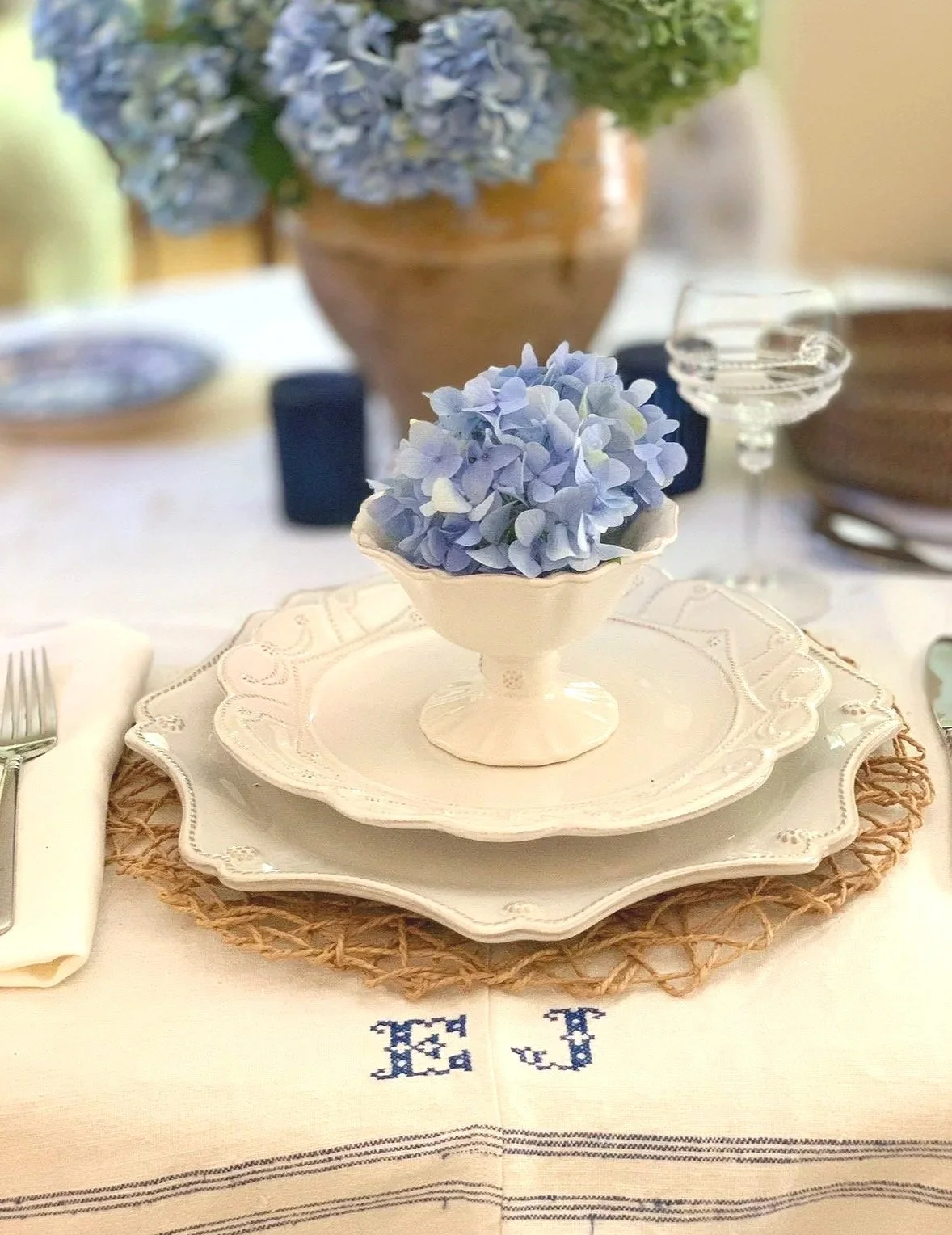
Designed, styled, and photographed by Mary Madore-Hickey.
I have an antique French tablecloth that I found and had shipped here from France, and I love it.
It's a heavy old cloth, a woven stripe running through it, soft the way linen only gets after decades of washing. And in one corner, in blue cross-stitch, someone embroidered two letters. E and J.
I don't know who she was. I don't know what she cooked, who sat down at her table, or what year she stitched those initials into the corner of a cloth she expected to use for the rest of her life. But she monogrammed it, which tells me she meant to keep it. Linens were worth marking. They were worth claiming.
And now it's here, in Connecticut, on my table, and I set my plates on it, and my friends put their elbows on it, and it has never once looked out of place.
That is what a linen tablecloth actually is. Not a background. A thing that outlives you. Somebody's initials in the corner, and the cloth still working, still beautiful, a hundred years after she put it away.
I hope somebody uses mine when I'm gone. I hope they wonder about me for a second and then set the table anyway.
What the French Understood
Covering a table started in medieval France and Italy and spread from there, but the French turned it into something else. The cloth wasn't there to protect the wood. It was there to announce something. It was always white, or as near white as they could manage, and the whiteness was the message: this gathering is not ordinary, and neither are you.
By the seventeenth and eighteenth centuries, everything else got composed on top of that cloth, the candles, the silver, the china, and eventually the flowers.
The cloth wasn't the backdrop. It was the floor plan.
I still work that way. The linen is my first decision, never my last. Its color, weight, and how it hangs determine everything downstream.
Why I Use Libeco
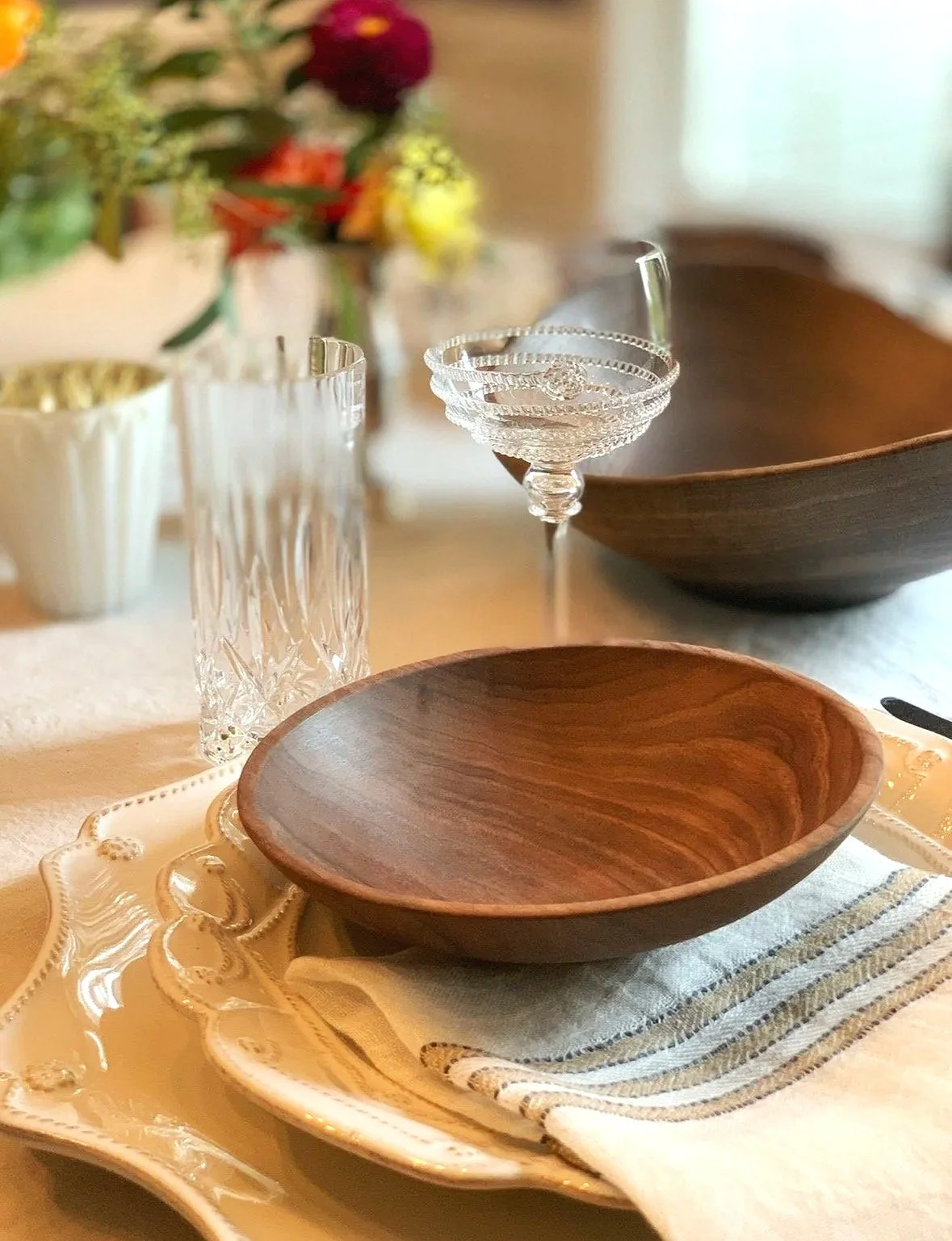
Designed, styled, and photographed by Mary Madore-Hickey.
There are plenty of good linen makers. I use Libeco because they've been doing this since 1858, out of Kortrijk first and then Meulebeke, and the fifth generation of the same family is running it now. That kind of continuity can't be manufactured. You either have a hundred and sixty years of it, or you don't.
A few things worth knowing. Only six weavers in the entire world are permitted to carry the Belgian Linen label, which certifies the cloth is woven in Belgium from European flax. Libeco is one of them. They also carry Master’s of Linen, which means the whole thing, from flax to finished fabric, happened in Europe. And every yard of it is inspected by hand and mended where needed before it leaves the mill.
Nobody does that unless they care.
I feel it when I unfold it, honestly. That sounds sentimental, and I don't care.
How to Layer It
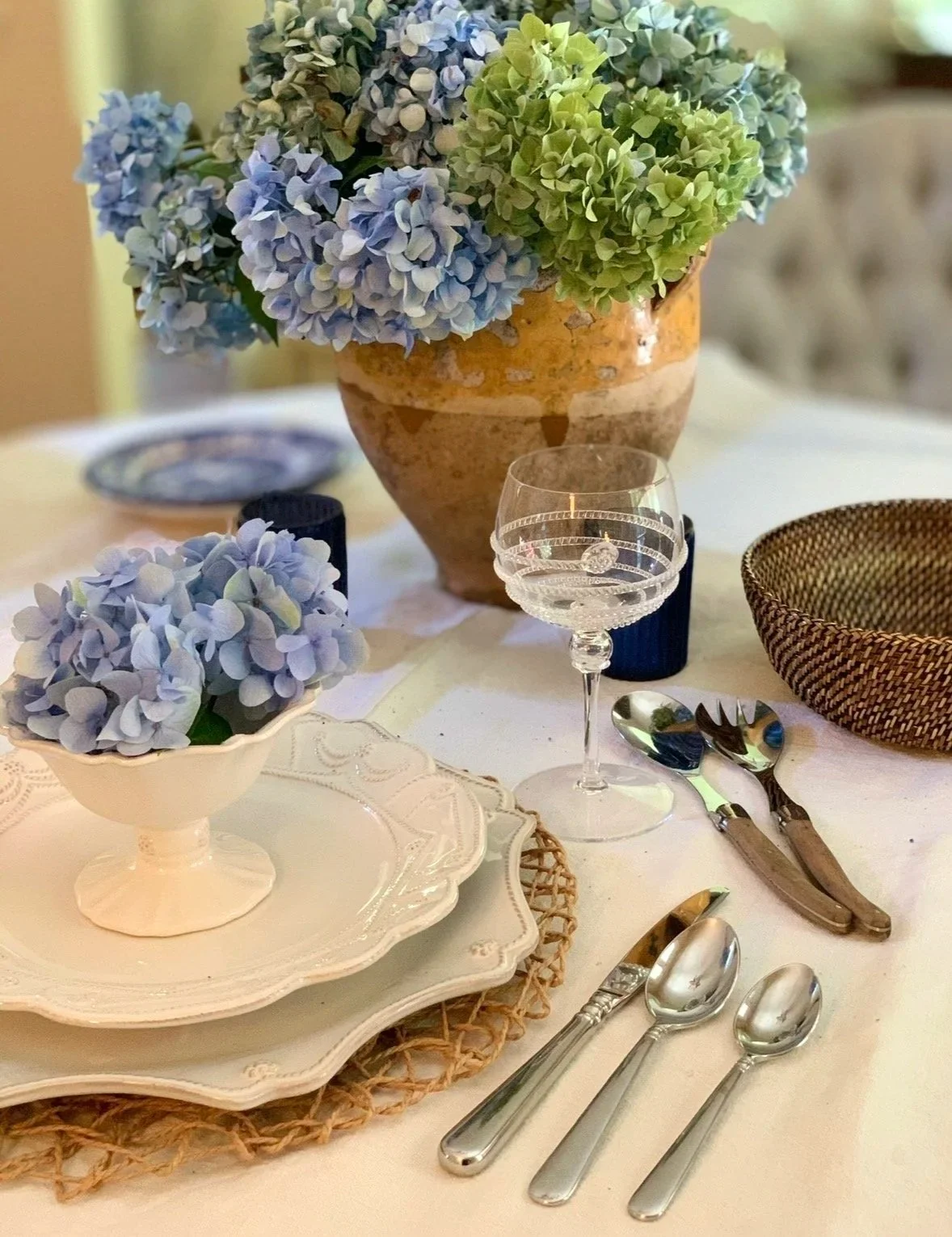
Designed, styled, and photographed by Mary Madore-Hickey. As featured in Cottages & Gardens.
Layering isn't piling more on. It's building depth, the way you'd build it in a garden.
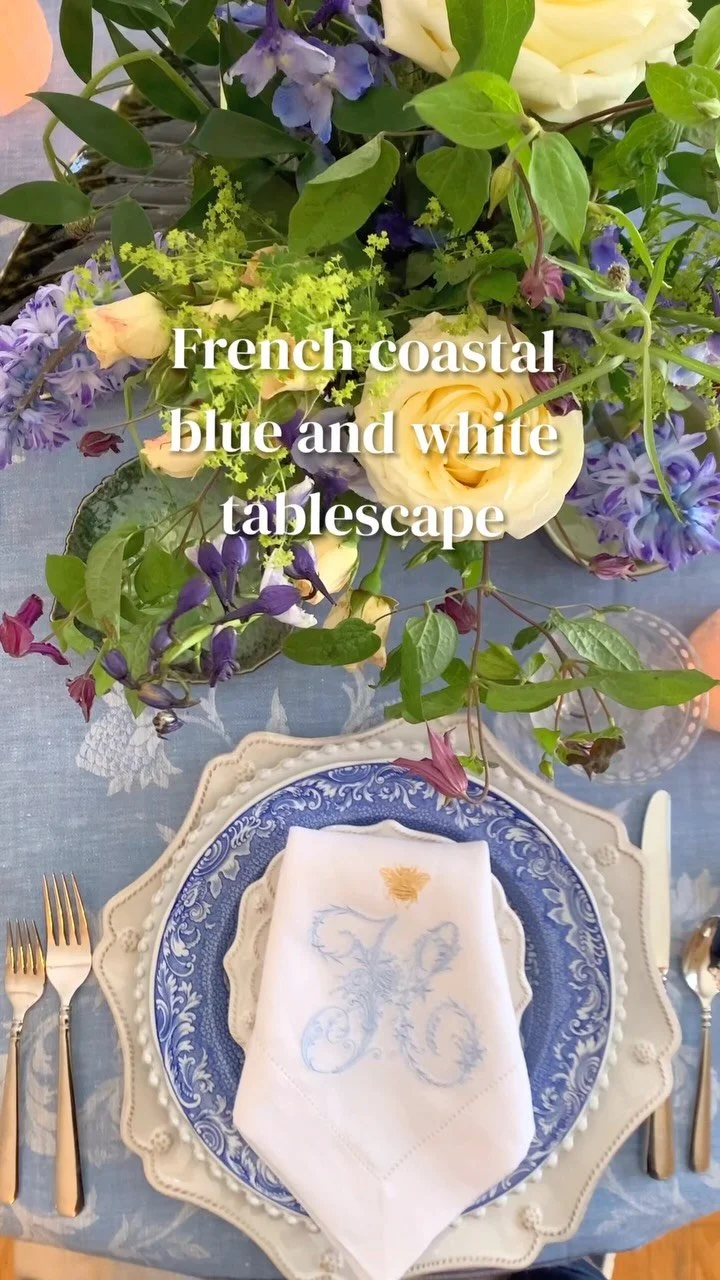
Start with your foundation cloth. Floor-length or close, white or an old ivory. This is your canvas. Let it drape, and if it's been washed a hundred times, even better, that's when linen finally behaves. Linen needs to breathe.
Then, color or pattern on top. A runner lay on the diagonal or length of the table, or a piece of old embroidered linen you found somewhere. This is the layer with a personality, so let it match the season and the story. A faded blue stripe in summer. A washed gray or deep indigo when it's cold.
A Trick Worth Knowing
Here's something I do constantly, and I learned it from my mother.
She didn't have a cupboard full of linens. When the table was big, and the cloth was small, she used what she had and added something to it until it worked. There was no design theory in it. It was arithmetic.
But I watched her do it, and I noticed something. That second cloth, laid over the first at an angle so its corners and edges fell across whatever was bare, didn't look like a compromise. It looked better. Two cloths offset, one falling over the other, gave the table a depth that a single perfect cloth never had.
So now I do it on purpose. Square, rectangle, whatever shape covers the gap you actually have. Lay it over the first and let it fall where it needs to.
And there's another use for it, which any woman who owns beautiful linens already understands. Tablecloths get stained. It's inevitable. Some of it lifts, and some of it never does, and you're left holding a gorgeous piece of cloth with a mark on it that will not budge.
So what do you do, throw it out?
You don't. You lay something over it. The spot disappears, the table looks immaculate, and nobody sitting at it will ever know. You keep using a cloth you love instead of exiling it to a drawer over something nobody but you can see. Just place another one over it in varying directions.
She solved a problem. I turned it into a method. That's most of what I know about design.
How to Keep It Alive
Linen gets better with each wash. I don't mean it tolerates washing. I mean it improves, softer and more luminous every single time, which is why a twenty-year-old cloth beats a new one on any table you'll ever set.
Cool water. Mild detergent. Never bleach, bleach is the one thing that will actually ruin it. Hang it or lay it flat instead of cooking it in a hot dryer. Iron it while it's still a little damp, when it's in the mood to cooperate. And store it rolled, not folded sharply, so you're not wearing a crease into the same line for twenty years.
The wrinkles that stay after ironing are not a failure. They're the point.
The French have a word for it, froissé, for the particular way linen creases. It doesn't mean ruined. It means this cloth has been on a table before. It's been used. It has a past.
That's what I want on my table. Not something perfect. Something that's been somewhere.
If you want the practical side of this, how to wash it, when to iron it, what to do about the stain that will not come out, and the one thing I hand off every holiday season, I wrote a full guide here: How to Care for Vintage and Modern Table Linens.
What else do I Keep
Libeco is where I start, but it isn't the whole cupboard.
I also keep Italian pieces, embroidered linens made by artisans in Ukraine, where embroidery isn't decoration, it's identity. And French linen, obviously. The woven motifs, the toile, the antique-inspired weaves that make a table feel like it wandered out of a country house.
Everything I choose comes down to the same three questions. Does it have a history? Is it beautiful? Will it make the person sitting at my table feel like I thought about them before they got here?
E and J knew that. Whoever she was, she knew that.
The linen answers all three.
Design with the Heart™
À bientôt,
Mary