
A French-Inspired Fourth of July
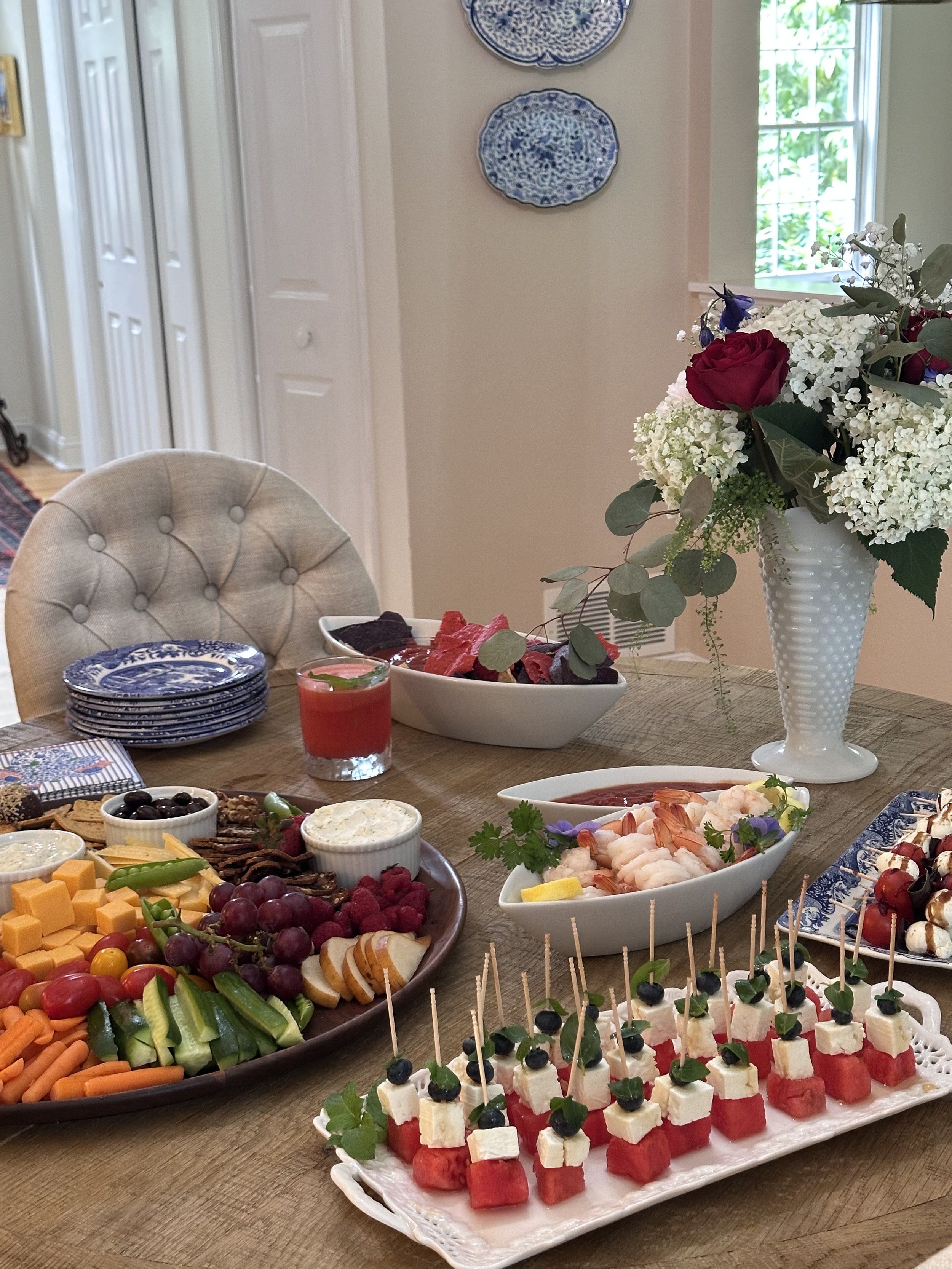
The full Fourth of July table, set with abundance and the quiet red, white, and blue of a French-inspired summer gathering.
On the quiet art of feeding the people you love, and why a holiday table is never really about the holiday.
There is a kind of welcome that happens before anyone says a word. It lives in the table, in the color and abundance of it, in the small signs that someone thought of you before you arrived. That is what I reach for when I cook for the people who come into my home. Not performance. Something closer to a sentence I do not always have other words for: I am glad you are here. You are worth the trouble.
This is the heart of how I cook and gather. I wrote about it more fully in My French-Inspired Kitchen in the Journal.
The Fourth of July is, in my home, less about the holiday and more about the gathering. It is the permission to fill the table with color and abundance, and the particular sweetness of summer at its peak. Connecticut strawberries in late June are not the same fruit as what you find in February. Neither are the tomatoes, the watermelon, or the blueberries. This time of year, the ingredients make the decisions. You simply listen.
Part of listening is knowing what you already have. Just outside my kitchen door grow the herbs that move through my cooking from the first warm days of spring all the way through Thanksgiving, when the last of them go into the feast I make for the people I love most. Mint. Parsley. All of it organic, grown in pots, within arm's reach. There is something about cutting a fresh herb and bringing it directly to the table that no store-bought bunch can replicate. My mother would have understood this without my needing to say so.
Here is what I made for my guests, and exactly how I made it.
Summer Charcuterie and Grazing Board
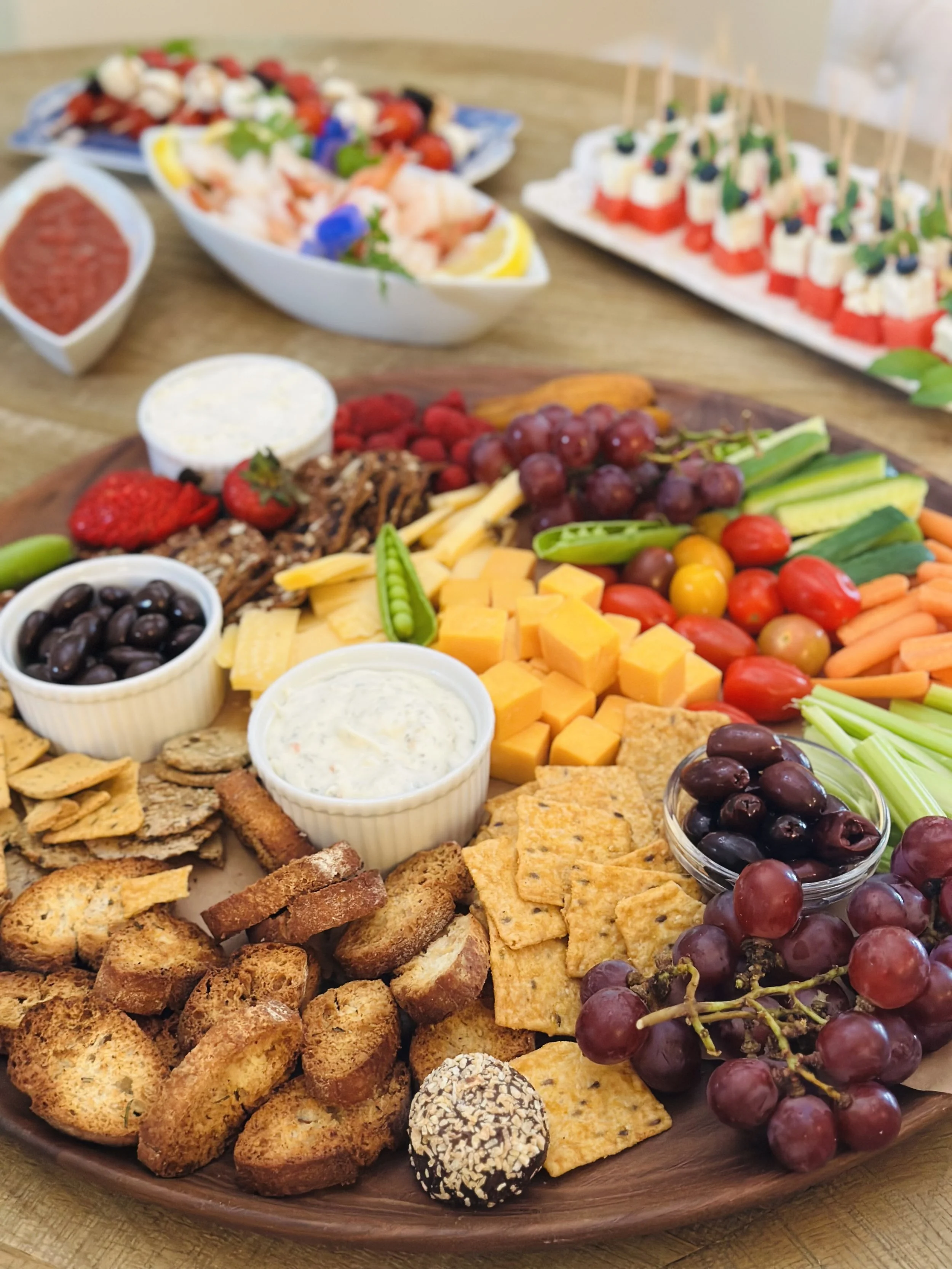
A summer grazing board built so sweet and savory speaks to each other across the same surface.
A summer grazing board is not a shortcut. It is a philosophy.
The board I built was organized around one principle I return to whenever I entertain: sweet and savory must speak to each other on the same surface. Alongside several cheeses, soft and aged, mild and sharp, I placed dark chocolate-covered almonds, briny olives, fresh strawberries, red grapes, raspberries, sliced pear, and cherry tomatoes. A full range of raw vegetables: carrots, cucumber, sugar snap peas, and sweet peppers. Crackers of different textures. Mixed nuts. Two cool herbed dips to anchor each end of the board.
The grazing board invites guests in before a single word of welcome is spoken. It says: there is something here for you.
What makes a grazing board work: The round dark wood board grounds the abundance without confining it. Things spill slightly over the edges, intentionally. A perfectly contained circle of food reads as catering. A board that breathes reads as a home. Build in levels. Use small ramekins for dips and olives to create height. Fill gaps with nuts and smaller berries last.
Caprese Skewers on a Summer Entertaining Platter
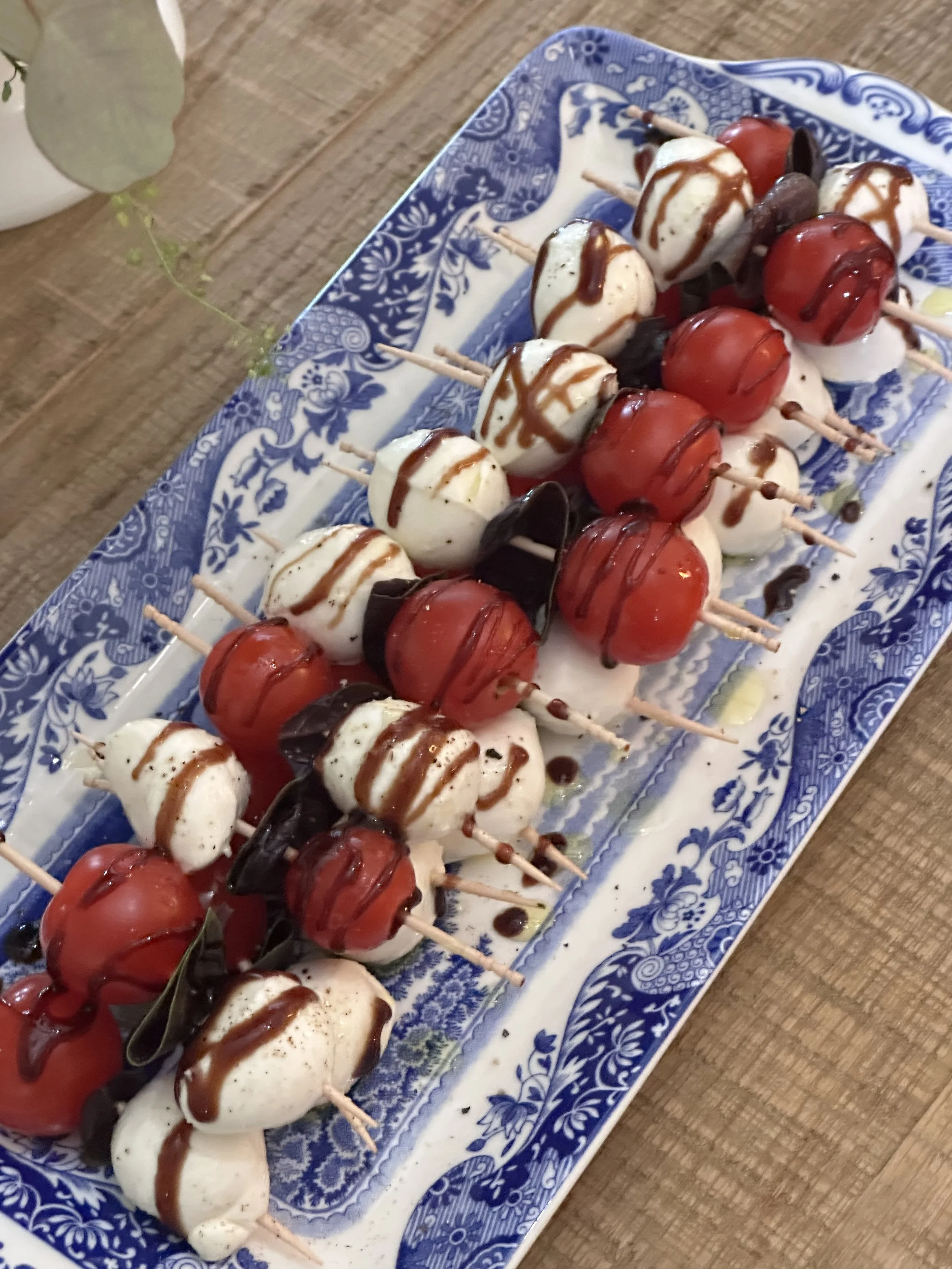
Caprese skewers on blue and white transferware, the red, white, and blue that is also, quietly, the French tricolor.
These are the first things guests reach for and the last thing I worry about.
Cherry tomatoes, red and dark, threaded onto bamboo skewers with fresh mozzarella balls and whole basil leaves, finished with a generous drizzle of aged balsamic glaze. The balsamic does two things: it adds the sweet-acid note that makes every bite complete, and it makes the platter look as though someone spent considerably more time than they did.
I serve them on my blue-and-white transferware platter. Always. The red of the tomatoes and the white of the mozzarella, against that blue-and-white glaze, is a combination that never tires. It is also, if you look at it honestly, the French tricolor, entirely appropriate for the occasion.
To make caprese skewers: Thread cherry tomatoes, fresh mozzarella balls, and whole basil leaves onto bamboo skewers. Arrange on a platter. Drizzle with aged balsamic glaze just before serving. Can be assembled up to 2 hours in advance and refrigerated; drizzle the balsamic at the last moment.
Watermelon Feta Skewers with Honey and Fresh Mint
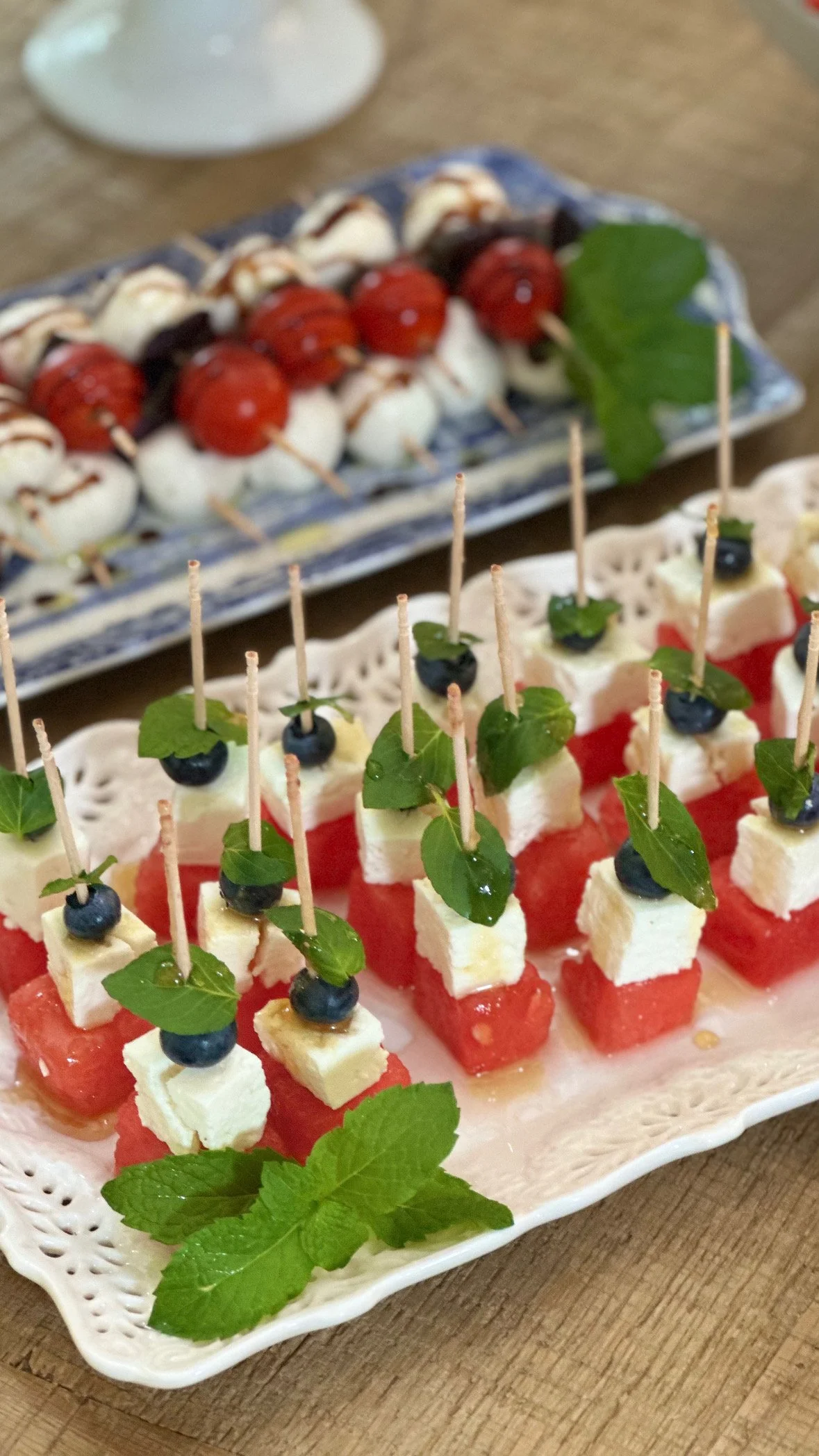
Three summer favorites on one table, watermelon feta skewers, caprese on blue and white, and an abundant grazing board, the kind of relaxed, layered spread that invites guests in before a single word of welcome.
This is the dish that stopped people.
Watermelon cut into clean one-inch cubes. A cube of block feta placed on top, not crumbled, cut, so it holds on the skewer. A single fresh blueberry. A mint leaf cut that morning from the pots just outside my door, where it has been growing since April, and will still be alive when I make my Thanksgiving stuffing in November. A drizzle of good honey over each finished skewer, not syrup, not agave, honey, poured slowly so it catches every cube.
Arranged on a white lace-edged platter in rows: red watermelon, white feta, blue blueberry, green mint. Red, white, and blue. Not a flag. A table.
The honey is not optional. It ties the salt of the feta to the sweetness of the watermelon and the brightness of the mint into something that tastes entirely intentional. It takes 30 minutes to assemble for a crowd and looks like an hour's work.
To make watermelon feta skewers with honey:
Cut seedless watermelon into 1-inch cubes, pat dry with paper towels to remove excess juice
Cut the block of feta into similar-sized cubes; chill the block first for cleaner cuts
Thread watermelon, feta, one blueberry, and one fresh mint leaf onto each skewer
Arrange on a platter and drizzle with honey just before serving
Add a pinch of flaky sea salt over the finished platter if desired
Make up to 2 hours ahead, refrigerate uncovered, and drizzle honey at the last moment
The mint in this dish came from my organic herb garden. That matters to me, not for any reason I can easily explain, only that there is something different about cutting an herb from a plant you have tended and bringing it directly to the table. That continuity, from the first warm day to the last feast of the year, is what a kitchen garden is really for. Not convenience. Intention.
Easy Shrimp Cocktail for a Crowd
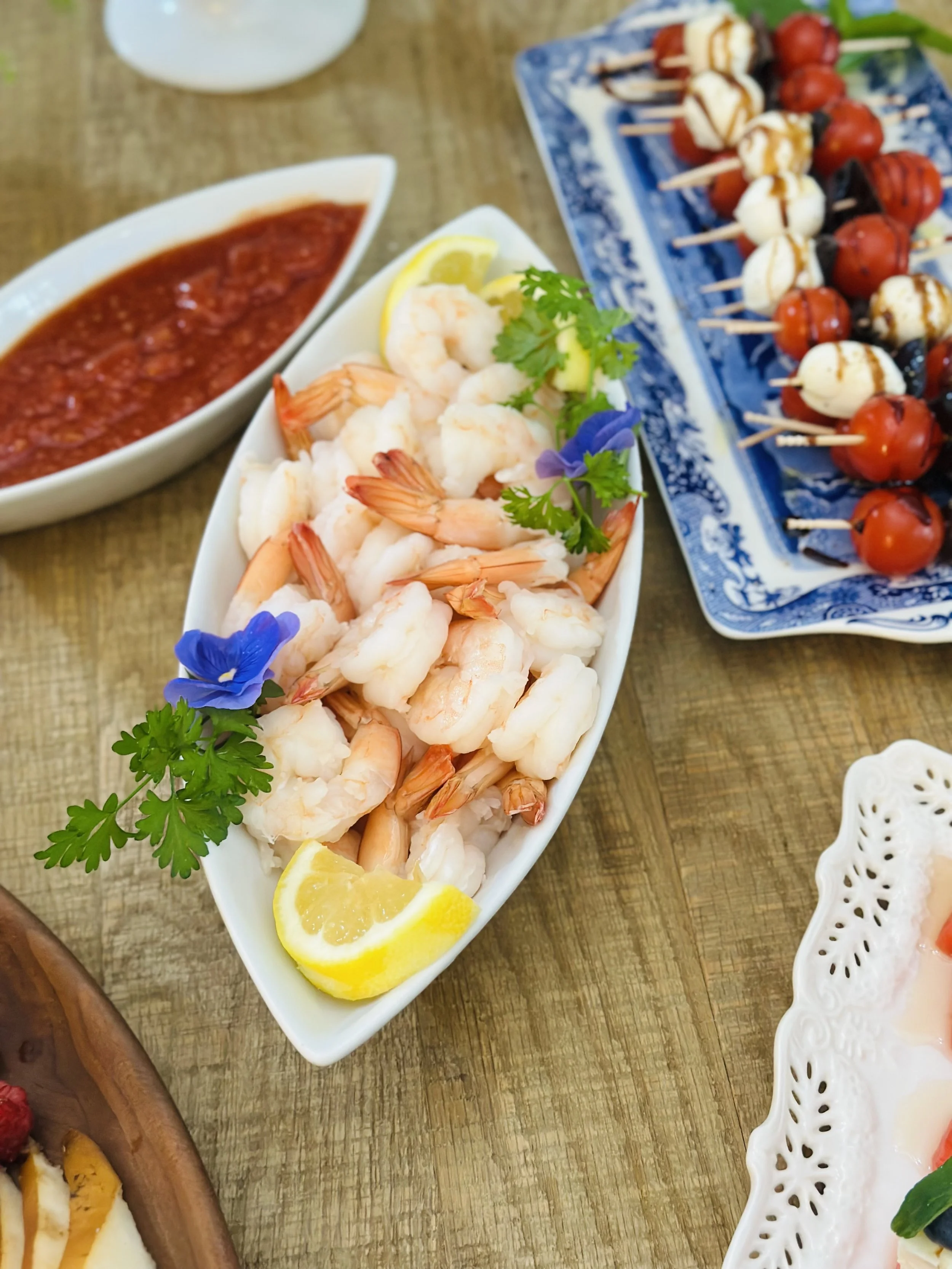
Chilled shrimp with parsley, lemon, and a single edible flower cut from the garden, the signal that someone was paying attention.
A mound of chilled shrimp in a white boat-shaped vessel, garnished with fresh parsley from the herb garden, a wedge of lemon, and a single edible flower cut from the garden that morning. Cocktail sauce is served alongside in a matching vessel.
Nothing complicated. Everything considered.
The edible flower is not a decoration for its own sake; it is the signal that someone was paying attention. That is what I want every guest to feel the moment they arrive at the table. That someone noticed them, prepared for them, and is glad they came.
For easy shrimp cocktail entertaining, buy the best-quality chilled, cooked shrimp you can find. Arrange on a bed of ice or in a chilled vessel. Garnish with fresh herbs and a lemon wedge. Serve with a well-seasoned cocktail sauce. The presentation does the work.
Fresh Watermelon Juice Cocktail
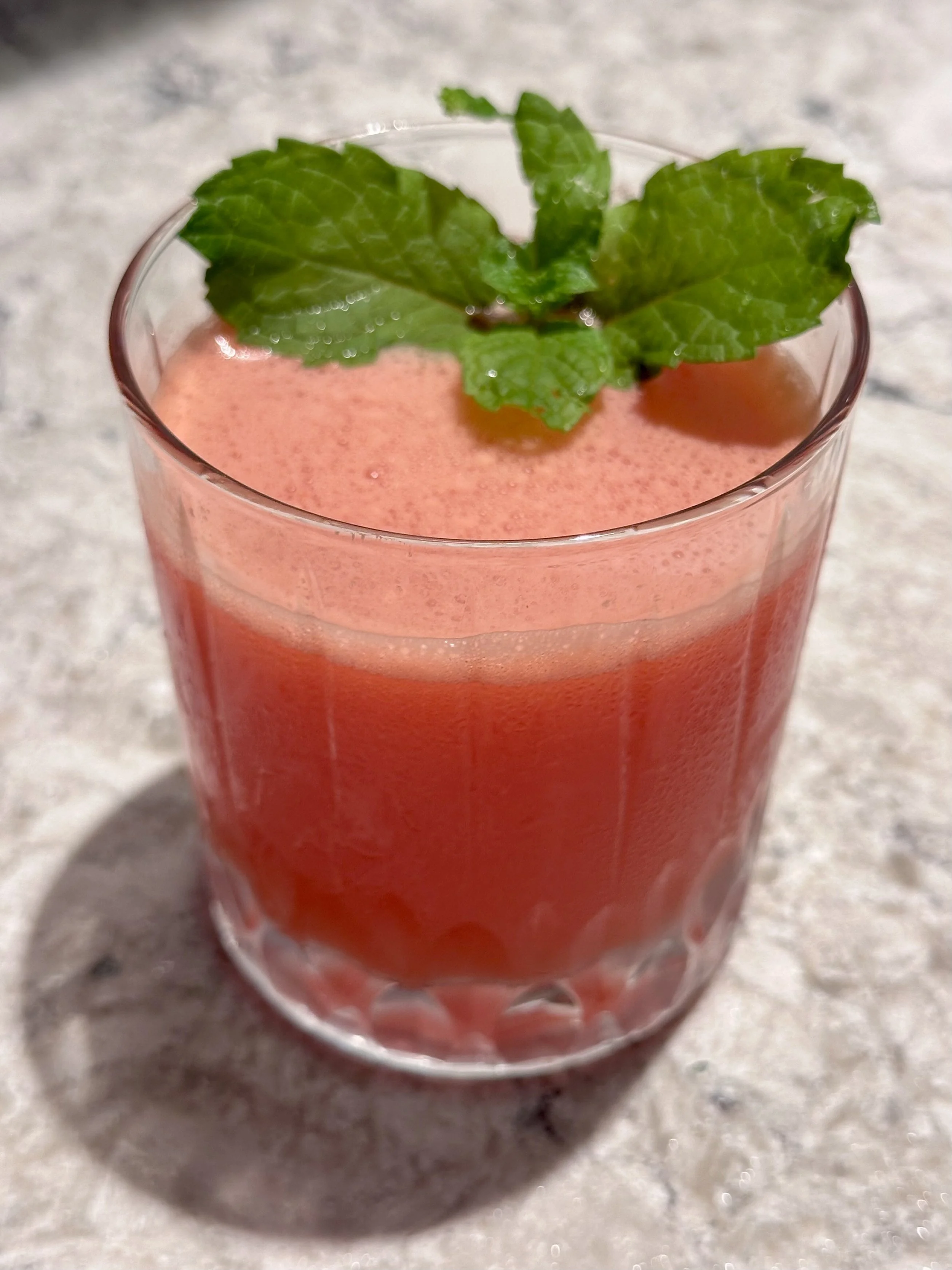
Fresh watermelon juice with garden mint, made from what remained, because nothing is wasted.
Once I was done with what I needed from the watermelon, I had half left. The French instinct, and my mother's instinct, which are the same thing, is that nothing is wasted.
I juiced it. Fresh watermelon juice, still cold, with a sprig of fresh mint from the garden. Served in a clear glass so the color speaks for itself, that particular deep pink that watermelon produces when it is truly ripe and in season. It needs nothing else. Not vodka, not sparkling water, not simple syrup. Just the fruit and the mint and the quiet satisfaction of having made something beautiful from what remained.
To make fresh watermelon juice: Cut ripe, seedless watermelon into chunks, blend until smooth, then strain through a fine-mesh sieve. Serve immediately over ice with fresh mint. For a summer cocktail, add a splash of sparkling water and a squeeze of lime. For a grown-up version, add a measure of vodka or tequila blanco. We added a little vodka and a pinch of lime for the adults who wanted an alcoholic beverage.
A Note on the Table
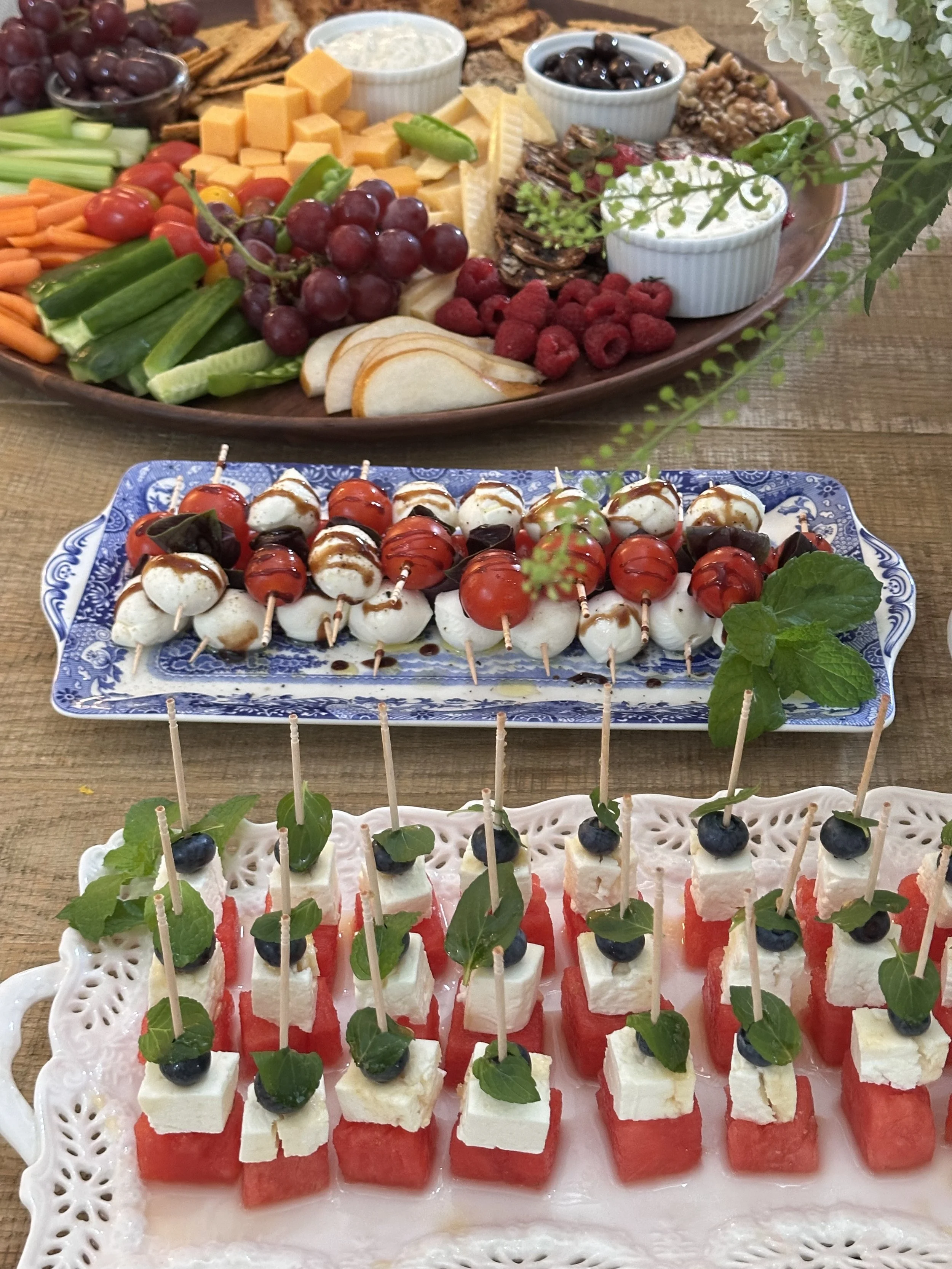
Everything you see here was served on pieces that regularly live in this house and on this table. The blue-and-white transferware platter that holds the caprese skewers. The white scalloped plates. The lace-edged platter under the watermelon skewers. These are not pulled from storage for occasions. They are used, returned to the cabinet, and used again.
The herbs on this table were not purchased. They were grown, organically, in pots outside my kitchen door, tended from early spring through the last harvest of the year. That is not a complicated practice. It is a decision to pay attention to what you are serving and where it comes from.
Beauty is not reserved. It is not saved for the right moment. The right moment is the one in front of you, with the people who came.
Design with the Heart™ is the philosophy at the center of MERZE Lifestyle. The Farmhouse Pottery bowl featured in these photos is available at the MERZE Boutique.
À bientôt,
Mary

