Designing with Layers - How to Style A Tablescape Like A Professional - 2nd in this series
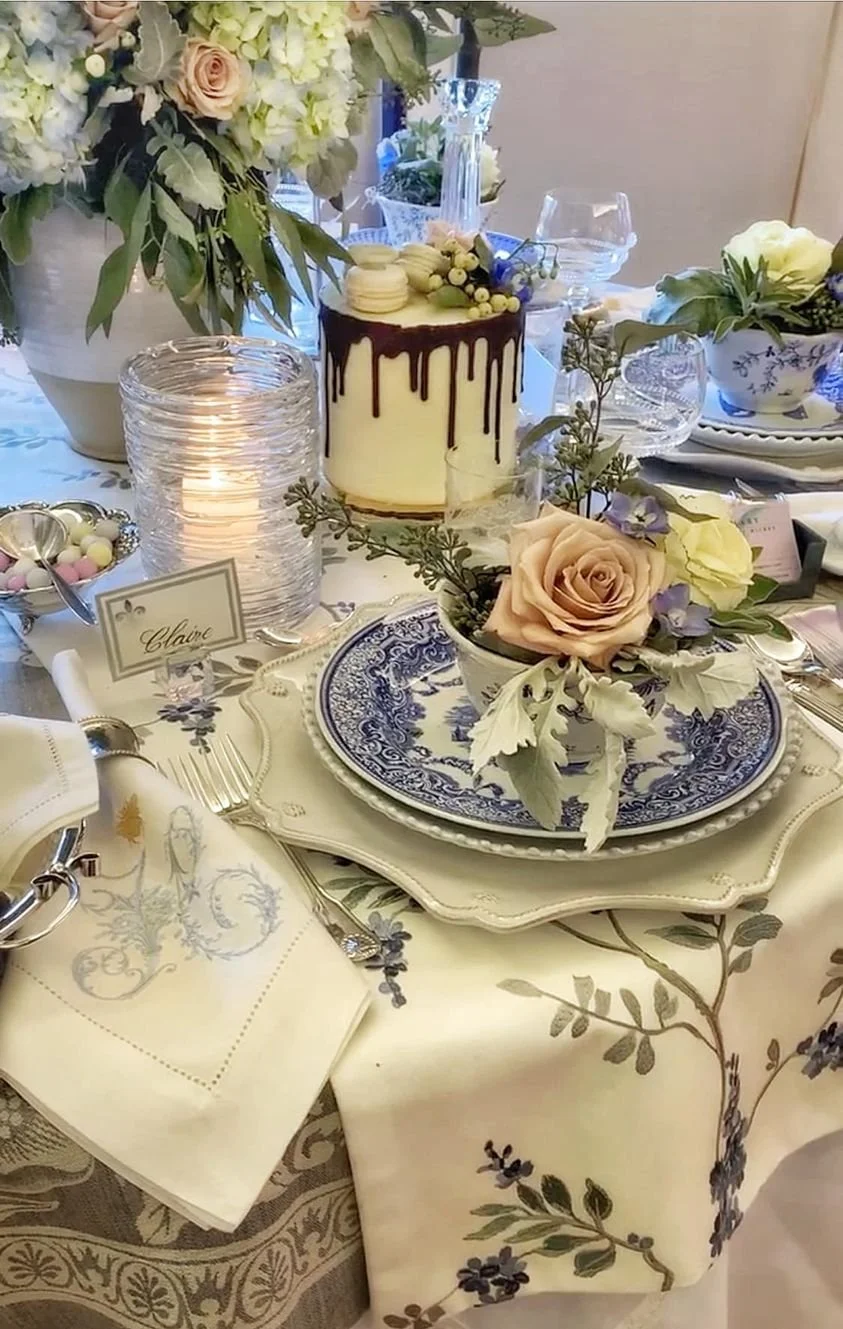
Have you ever dreamt of escaping to a secret garden, overflowing with vibrant blooms and bathed in the golden glow of a French sunrise? Imagine yourself wandering through a tapestry of lavender fields and sun-drenched stone pathways, the gentle murmur of a hidden fountain a constant companion. This wasn't just a daydream for me – it became the inspiration for my latest tablescape, a layered landscape I like to call "My French Garden."
Designing a tablescape isn't simply about arranging plates and flowers. It's about weaving a story, a visual narrative that transports your guests to a world beyond the ordinary. Through layers of color, texture, and pattern, we can create an immersive experience that lingers long after the last bite is savored.
So, join me on this journey as we explore the power of layers and unlock the secrets to crafting a tablescape that tells a story, ignites the imagination, and captures the very essence of a French escape.
“
”A room should never allow the eye to settle in one place. It should smile at you and create fantasy.””

BEFORE I BEGIN, I WANT TO EXPLORE THE CONCEPTS OF TEXTURES AND LAYERS IN INTERIOR DESIGN.
Textures Texture refers to the tactile finish of an object or surface, whether smooth, rough, bumpy, or flat. Textures can be visual or actual. Visual texture is what the eye perceives when looking at a surface, often through patterns. Actual or tactile texture can be both seen and felt, offering a multi-dimensional experience. Imagine the inviting fluffiness of a pillow or the cozy embrace of a down quilt, appreciated not only through sight but also through touch.
Layers In interior design, including tablescapes, layers are essential for creating a cohesive and captivating look. Layering involves combining textures, colors, and patterns to build a rich, detailed design. Each layer tells its own story, contributing to the overall narrative. For instance, placing one fabric atop another forms a layer. Adding a plate on top of those fabrics introduces another layer. Similarly, in a living room, draping a throw over a sofa and placing a decorative pillow on top adds layers, enhancing the space's depth and beauty.
Layering allows for a harmonious blend of textures and patterns, creating visual interest. As you layer different elements, you give the eye much to explore and appreciate.
“LAYERING GIVES YOUR DESIGN DEPTH AND VISUAL INTEREST AND CREATES A HARMONIOUS SPACE. WHEN YOU LAYER WITH DIFFERENT COLORS, TEXTURES, AND PATTERNS, THE EYE HAS A LOT TO TAKE IN.”
Now that we understand these concepts, let me take you through the enchanting process I followed to develop my layers using textures.
By thoughtfully combining various tactile elements, I crafted a tablescape that not only pleases the eye but also invites touch, drawing my guests into a sensory journey reminiscent of the rustic beauty and charm of Provence.

The beautiful rustic sophistication of a French chateau’s private garden inspired me. It is so dreamy! My first layer was a white tablecloth like this one. Not too formal but of good quality so that it would flow nicely. The second tablecloth was square, allowing it to cascade only on four sides of the table, but mine was to the ground. That is precisely what I was going for.
The beautiful rustic sophistication of a French chateau’s private garden inspired me to create this dreamy tablescape. To start, I chose a high-quality white tablecloth as my base layer. This foundation is key—it should be elegant yet not too formal, allowing it to flow nicely and set a serene tone.
Next, I added a second layer with a square tablecloth. This one is designed to cascade to the ground on all four sides, creating a romantic and luxurious feel. The layering of these tablecloths not only adds depth and visual interest but also captures the charming essence of a French countryside setting. This dual-layer approach is the perfect starting point for building a rich, inviting tablescape.

Fabric for table runner

Second, to add color and texture to your tablescape, consider incorporating a runner down the middle of your table. I chose a lovely fabric and crafted it into a beautiful two-sided runner. The textures of the embroidered flowers that flow throughout the entire length of the fabric create a three-dimensional view, adding visual interest and depth.
When developing your layers, remember they start below the tabletop and extend to the top. Each layer should build upon the previous one, guiding the eye from the bottom to the top of the table, creating a cohesive and visually engaging design.
A helpful hint: the length of your table runner is flexible. Generally, it should hang at least six inches over each end of your table but shouldn't extend further than your tablecloth. However, there are exceptions to this rule. For a styled event where drama is appreciated, it's perfectly acceptable to have florals or a statement runner, such as silk or velvet, cascading to the ground. These elements can create a stunning visual impact, making your tablescape truly memorable.
By thoughtfully choosing and layering your runner, you can enhance the overall aesthetic and create a rich, immersive experience for your guests. Whether you opt for a traditional length or a more dramatic approach, the key is to ensure each element complements and elevates the others, achieving a harmonious and captivating tablescape.

I chose to have my last layer drop to only 6 inches to give off a more casual look and feel.
Third, once I established the table runner’s design, I aimed to enhance its depth of color and ensure it stood out. The runner's beautiful fabric seemed to get lost against a plain white linen tablecloth.
Initially, I considered adding a blue tablecloth, but everything changed when I discovered a vintage French floral Jacquard tablecloth. This exquisite piece featured a lovely matted floral pattern in deep cream over muted gray, making it ideal for a French-themed tablescape. The gray background complemented the runner perfectly, making it stand out without overwhelming the overall design.
I was initially concerned that pairing the French tablecloth with the runner would result in too much pattern, but the combination turned out beautifully. The subtle contrast between the patterns added a sophisticated touch and brought the entire tablescape to life.
Tip: The length of a tablecloth drop can significantly influence the formality of your design. A drop of 6 to 12 inches past the table’s edge is typical. A shorter drop, up to 6 inches, creates a more casual look, while a longer drop, beyond 6 inches, lends a more formal elegance to your table. Adjust the length based on the desired atmosphere of your event to ensure your tablescape aligns perfectly with your vision.
“The details are not the details. They make the design.
”

To achieve a more casual feel, I deliberately allowed the final tablecloth to only 6 inches off the table. The table runner followed suit, also falling to 6 inches, ensuring a cohesive look with the tablecloth below it.
Hint: When selecting tablecloths, you don’t have to spend a fortune. Get creative! I often visit vintage shops, tag sales, and similar places to find unique pieces. These tablecloths can be very inexpensive, and their quality is often exceptional. I've also repurposed throws and bed coverlets for my tablescapes. Yes, really! You'd be amazed at the texture, color, and pattern you can find in a coverlet. It's one of my favorite tricks.
Don’t be afraid to experiment with your design. Move your linens and plates around—crisscross linens on top of each other. The beauty of tablescaping is that it's a personal expression of your style. Make it your own, and let your creativity guide you. Play with different elements and see what resonates with you in the moment. The result will be a unique and charming tablescape that reflects your personality and flair.
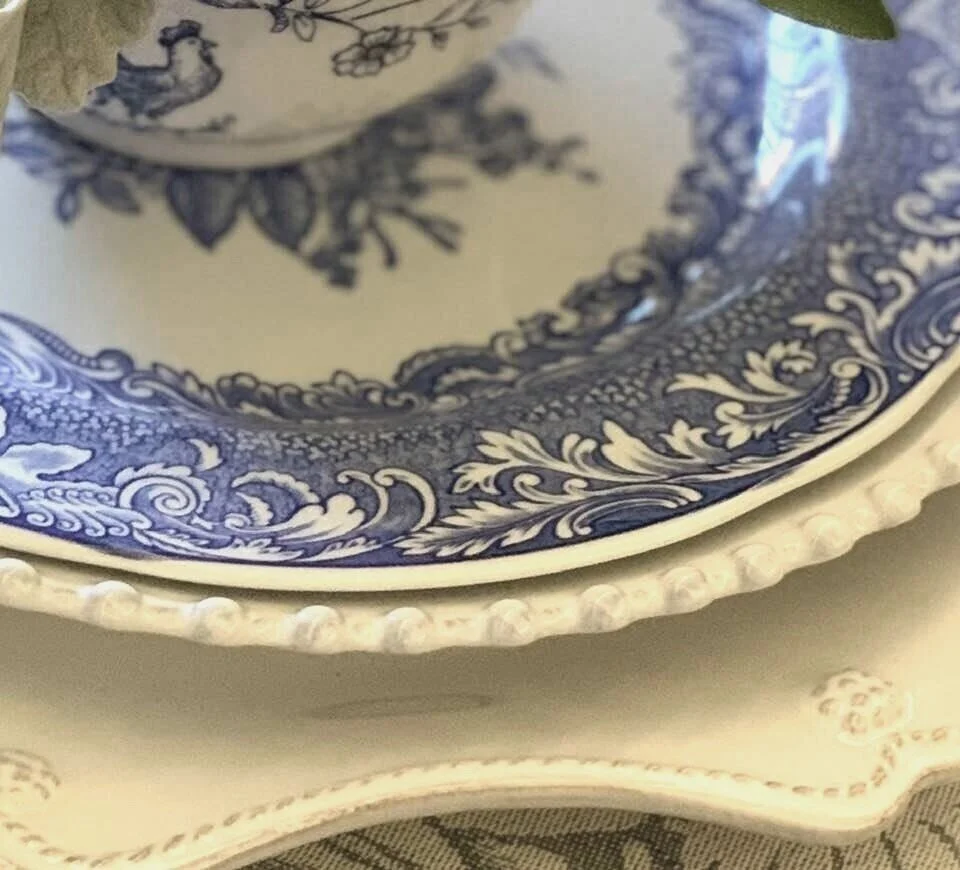
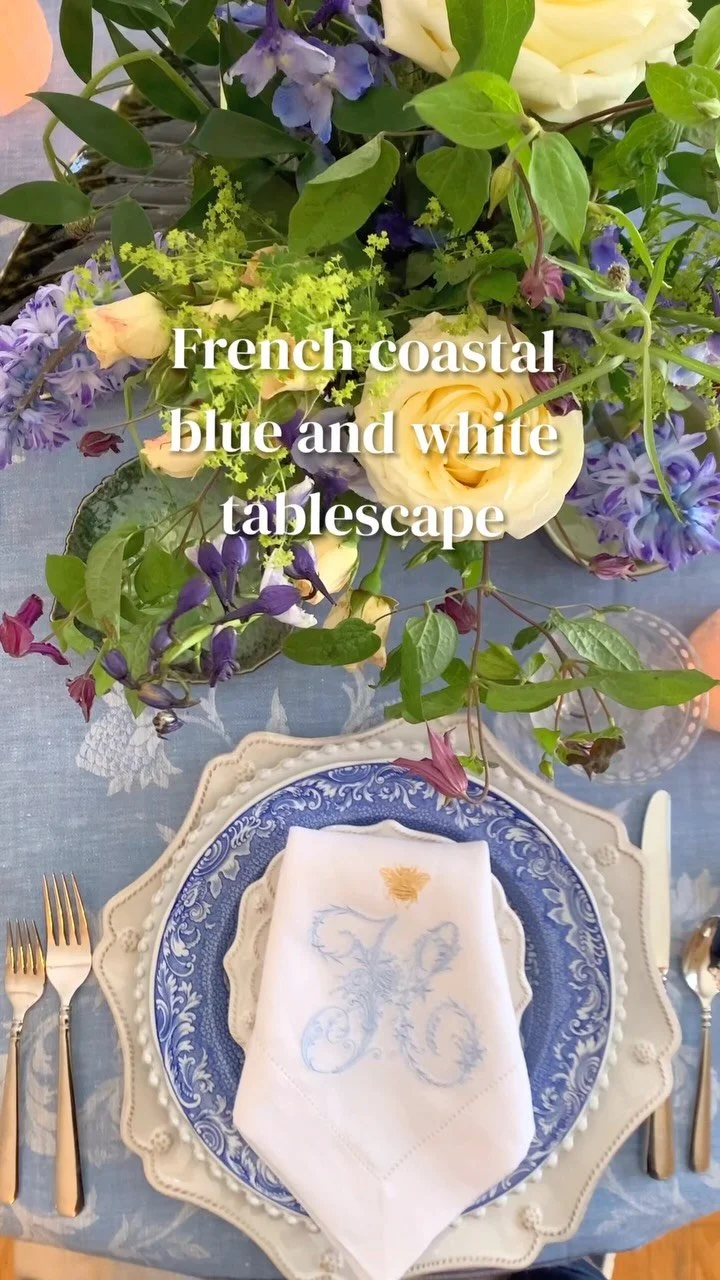
Once I finished layering the linens, I turned my attention to the place settings, aiming to make each one stand out by adding more layers with different patterns and colors.
To begin, I chose a beautiful French-style charger. The charger’s intricate texture and pattern provided a stunning foundation for the place settings.
Next, I added a plain cream-colored plate with a raised pearl design along the edge. This subtle detail added elegance without overpowering the other elements.
Then, I introduced my absolute favorite vintage blue and white plates. These plates brought a pop of color and classic charm to the setting. Finally, I topped off the layers with a blue and white French country-style bowl. This final touch not only complemented the plates but also added a cohesive, harmonious look to the entire place setting.
Tip: When creating place settings, think about how each layer contributes to the overall design. Start with a foundational piece, like a charger, and build up with plates and bowls that add texture, color, and pattern. Mixing vintage and contemporary pieces can create a unique and visually appealing tablescape. Don't be afraid to experiment with different combinations until you achieve a look that reflects your personal style and the theme of your tablescape.

By incorporating a 4-piece place setting, I significantly enhanced the overall depth of the design.
To achieve this layered look, I started with three tablecloths and a runner, creating a rich, textured foundation. Then, I added four layers to each place setting: a French-style charger, a cream-colored plate with a raised pearl edge, a vintage blue and white plate, and a French country-style bowl.
These combined elements create visual depth, ensuring the eye moves continuously across the table without settling on any single detail. This layering technique helps to unify the design, making the theme more cohesive and visually captivating.
Tip: When building your tablescape, think about layers as a way to add complexity and interest. Start with your linens to create a strong foundation, then build up with your place settings. The goal is to create a design that guides the eye across the entire table, appreciating each layer while contributing to the overall theme. Experiment with different combinations until you achieve a balanced and harmonious look that reflects your style and vision.
4o
““A room should never allow the eye to settle in one place. It should smile at you and create fantasy.””
“When you add layers with colors, textures, and patterns, you add playful depth and dimension to your design.” Give it a try!
Here is a quick video of my tablescape.
“Mon Jardin à la Française” or “My French Garden”
As with everything I post on my blogs, please feel free to comment, or if you have any questions, please email me through my contact page. I welcome it anytime!
Design with your heart™️
Happy entertaining, my friends!
Mary
“May your home be a place where friends meet, family gathers, and love grows. ”