Blending East Coast and West Coast Interior Design, Through a French Lens
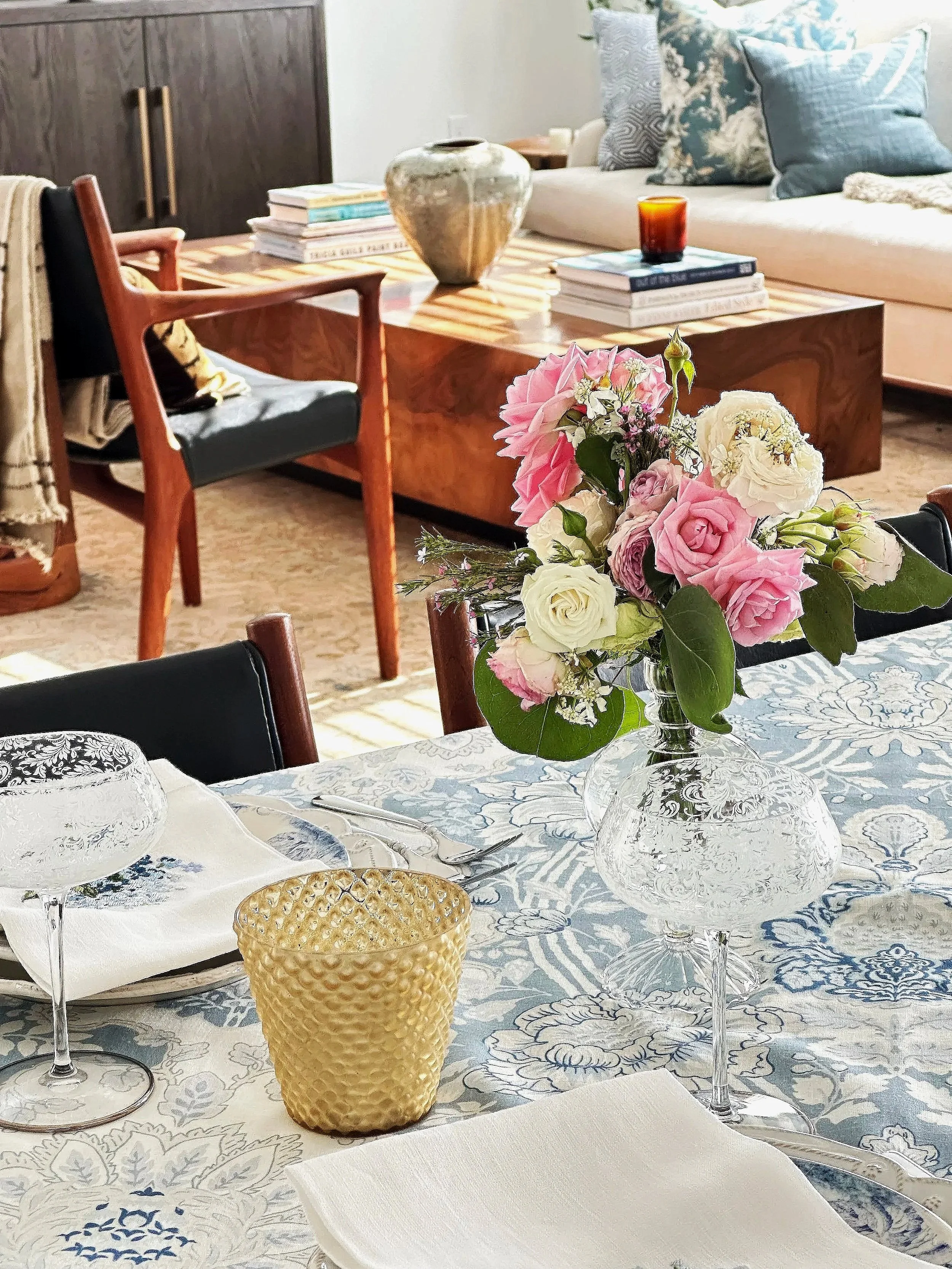
A Coastal Style Anchored in Three Worlds — East Coast, West Coast, and the Coast of France
For four years, I lived in a California bungalow. I had grown up shaped by East Coast tradition, by formal silhouettes and inherited beauty, by the Atlantic coast of New England. The move west was an immersion in a completely different design language. Open spaces. Natural materials left in their unfinished state.. Light that moves through rooms differently than Atlantic light moves. A relationship between indoors and outdoors that East Coast homes do not typically cultivate.
When I first arrived in California, I did not know how to design a home. The bungalow architecture asked for something I had not yet learned. After living there for a while, I came to understand that the home would only feel like mine if I incorporated both aesthetics. Not one or the other. Both at once.
Eight months ago, I returned to Connecticut, into a colonial home that is more formal than the bungalow was — an architectural fireplace, smooth wood floors, the kind of refined bones that East Coast traditional design has always honored. I brought the same color palette, art collection, linens, and textures with me. The home looks different from the bungalow. The architecture asked for that. But the design's soul remains consistent because the philosophy that holds it together does not change.
What follows is what I have learned about how East Coast tradition and West Coast ease can blend into one coherent home, anchored by the French heritage that has always run through my work.
What East Coast Design Gets Right

East Coast design carries centuries in it. You feel New England's maritime past in it, and the formal European sensibility that came across the Atlantic and never quite left. Colonial architecture, Shaker restraint, Georgian symmetry — they all live in what we now call East Coast style..
The color palette leans toward depth. Navy that recalls the Atlantic at twilight. Oxblood and chocolate brown that anchor a room with warmth. Rich neutrals that hold their own. In the seaside towns of New England, the palette opens to brighter hues drawn from the coast itself. Pinks softened by salt air. Blues borrowed from the harbor. Greens that echo the gardens behind clapboard houses.

The textiles tell the same story. Velvets that catch the light. Silks that whisper rather than announce. Stripes and plaids that signal heritage. Floral patterns that connect interior spaces to the gardens just beyond the windows. The materials feel intentional. Polished hardwood floors. Marble counters. Brass and silver hardware that has been there for generations, or chosen to look like it has.
What makes East Coast design enduring is its commitment to permanence. The pieces in an East Coast home are meant to last. The furniture is built rather than assembled. The art is collected rather than purchased. The whole space communicates that someone has been here for a long time and intends to stay.
What West Coast Design Gets Right
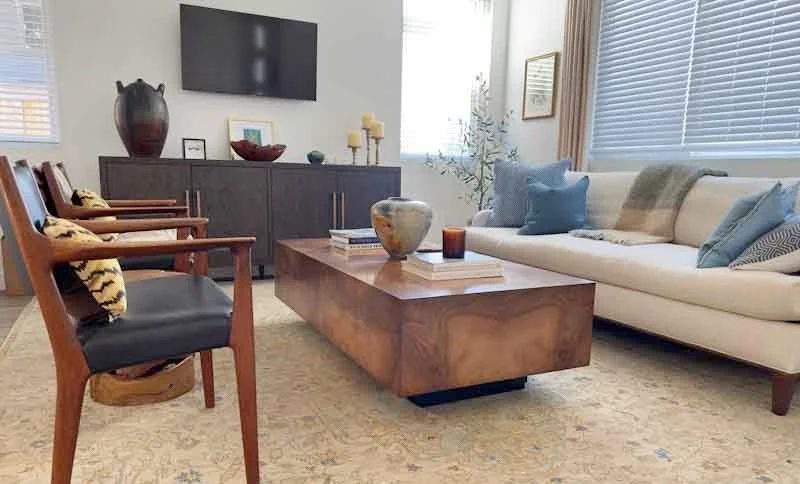
West Coast design grew out of a different relationship with land and weather altogether. The Pacific coast is younger, more open, and more willing to dissolve the boundary between inside and outside. California specifically built an aesthetic that celebrates light, ease, and connection to nature, shaped by mid-century modern architects who sought a living relationship between buildings and the surrounding landscape.
The color palette favors lightness. Whites that soften rather than brighten. Creams and warm sands. Light grays that hold gentle dimension. Greens that echo eucalyptus and bay laurel. Blues drawn from the Pacific rather than the Atlantic read as a different kind of blue. Cooler. Wider. Less anchored.
The materials are essentially organic. Reclaimed woods. Linen rather than silk. Stone left unpolished. Woven fibers and natural textures that retain their imperfection. The forms tend toward simplicity. Open floor plans rather than separated rooms. Minimal window treatments that let the famous California light fill the space. Furniture with clean lines that does not crowd the room.
What makes West Coast design distinctive is its commitment to ease. The pieces in a West Coast home are meant to be used without anxiety. The materials patina rather than wear. The aesthetic forgives. The whole space communicates that someone is genuinely living here, fully and without caution.
Where the Two Styles Meet
The instinct that these two aesthetics could blend together comes from recognizing what they share underneath their surface differences. Both East Coast and West Coast design are deeply connected to nature. Both honor natural materials. Both create rooms where people gather. Both prioritize comfort, even when they express comfort differently.
The blending works when you stop thinking of them as opposing styles and start thinking of them as different vocabularies describing the same essential desire. The desire to live beautifully in spaces shaped by the land you call home and the lives you have lived.
Start by choosing a neutral foundation that holds both aesthetics. A warm cream or a soft beige works as the base color in both East Coast and West Coast homes. Building from this foundation permits you to introduce richer East Coast tones and lighter West Coast accents in the same space without either dominating.
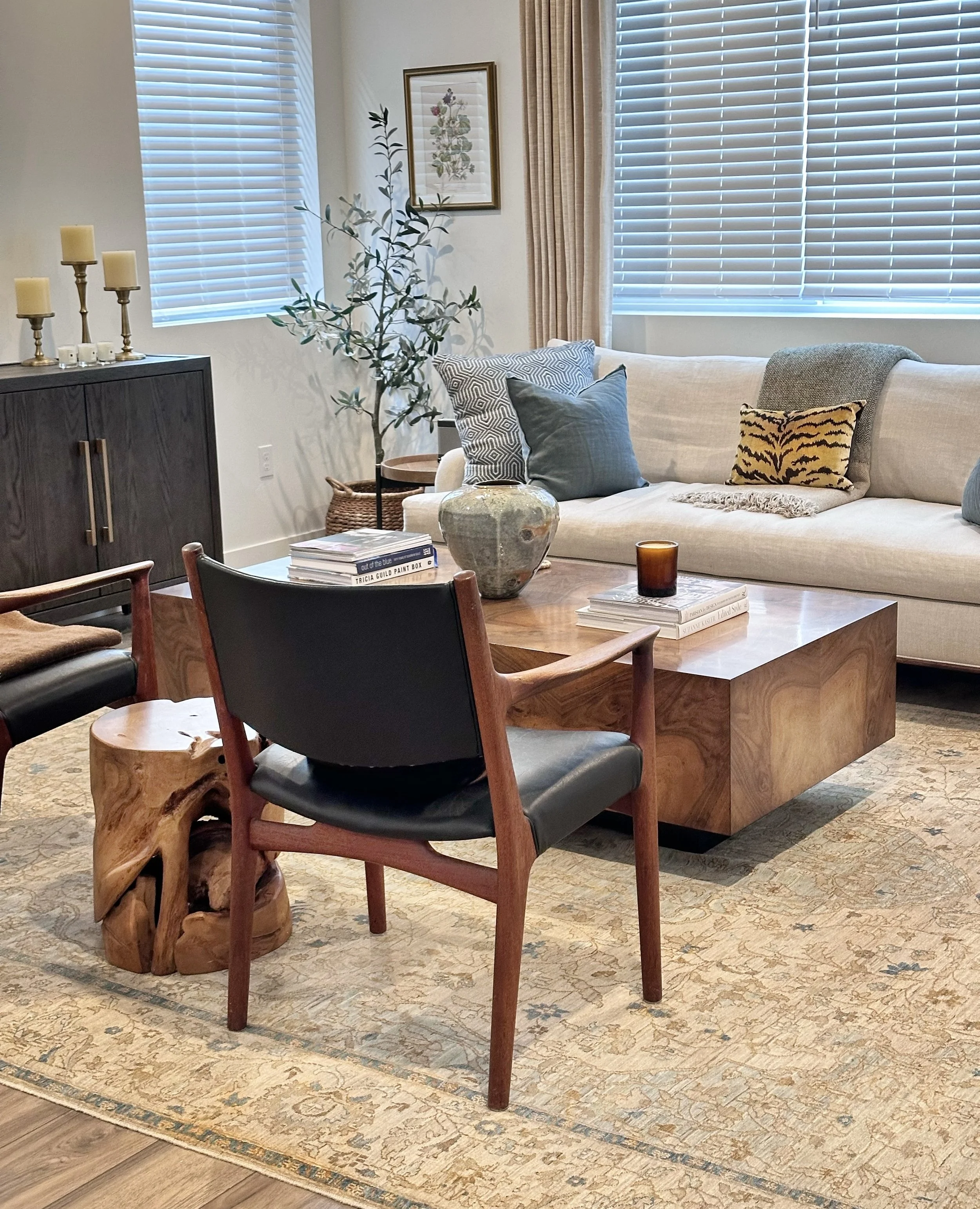
Then layer natural materials across both traditions. Reclaimed wood furniture sits beautifully alongside polished hardwood floors. Linen upholstery reads as both relaxed and refined. Stone accents work equally well in tailored East Coast rooms and casual West Coast spaces. The materials themselves transcend the regional categories.
Mix your patterns thoughtfully. East Coast traditional patterns, like stripes and florals, can coexist with West Coast modern patterns, like geometrics and abstracts. The key is to choose patterns that share a color story or a scale, rather than trying to balance every category equally. One traditional floral on a sofa pairs with a modern geometric on accent pillows. Both fit because they share a palette.
And let each room maintain its own balance. Some rooms in a bicoastal home lean more East Coast. Others lean more West Coast. The home becomes coherent through repeated materials and a consistent color story, rather than by making every room a perfect blend.
The Third Coast — Brittany and the French Heritage That Shapes Everything

Underneath the East Coast and West Coast traditions, I have lived between runs another coast that has shaped me from before I was born. Brittany. The rugged Atlantic coast of France, where my parents come from, is where my heritage lives.
Brittany is its own coastal world. The light is different from the American Atlantic light. The villages along the rocky shore have been there for centuries longer than New England villages have existed. The palette is shaped by the granite cliffs, the wide skies, the slate roofs of Breton homes, and the wildflowers that grow along the coastal paths. The Bretons have been making things beautifully for generations — linen, ceramics, cookware, lace — with the kind of quiet authority that comes from doing it for a very long time.
This French Atlantic coast was the first coast my family knew, long before any of us crossed the ocean. It runs through everything I create. It is the reason French inspiration anchors my work. It is the reason an antique olive oil jar from a French village feels like home to me, even in a Connecticut colonial. It is the reason my color palette holds a particular kind of softness that pure American coastal design does not always have.
In my home, there is a coastal painting of Brittany. The piece carries colors that work in every room — the soft blues, warm sands, layered greens, and gentle creams that you find along the Breton shore. The painting hung in my California bungalow. It hangs now in my Connecticut colonial. It is my anchor across both homes and across all three coasts.
The bicoastal blending I have built across both my homes works because the deeper anchor is French. East Coast tradition and West Coast ease both flow toward and from the Brittany coast that lives in my bloodline.
A Color Palette Drawn from Three Coasts


The color palette I have built across both my California and Connecticut homes draws from three coastal worlds. The Atlantic coast of New England shaped my upbringing. The Pacific coast of California, where I lived for four years. The Brittany coast of France, where my heritage lives.
These three coastal worlds share a visual vocabulary that surprised me when I first laid them side by side. The blues are different from each other — Atlantic blue is anchored and deep, Pacific blue is wider and cooler, Brittany blue carries something of both — but they speak together. The whites and creams that frame coastal homes are similar across all three. The greens of the gardens and the rugged grasses on the coastal cliffs work in each tradition.
In my home, this color story lives in the art collection that traveled with me from California to Connecticut. A photograph I took at the Channel Islands captures the Pacific in its truest blue, with kelp, water, and reflected light. A vibrant impressionist painting holds the same colors, rendered in oil on canvas — pinks, blues, oranges, greens — the way memory holds a place rather than the way the eye sees it. The Brittany coastal painting shows the French Atlantic with its impressionistic clouds and grasses. A photograph of New England's rocky shore, with breaking waves, shows the Atlantic I have known my whole life.
These pieces hung together on the walls of my California bungalow. They hang together now on the walls of my Connecticut colonial. The art is the through-line. The colors come from the art and live in everything else — the fabrics, the pillows, the linens, the flowers I bring inside. When you build a coherent palette this way, drawing from places that mean something to you, your home holds those places in every room.
This is the principle that I would offer to any reader trying to build a coherent color palette across coastal traditions. Begin with the places that have shaped you. Find the art that holds those places. Let the art lead the rest of the home. The colors will tell you where to go.
Texture as the Common Language
If color is where the two American aesthetics most obviously diverge, texture is where they meet most naturally. Both East Coast and West Coast design rely on layered textures to create depth and interest. The textures themselves often work in both traditions.
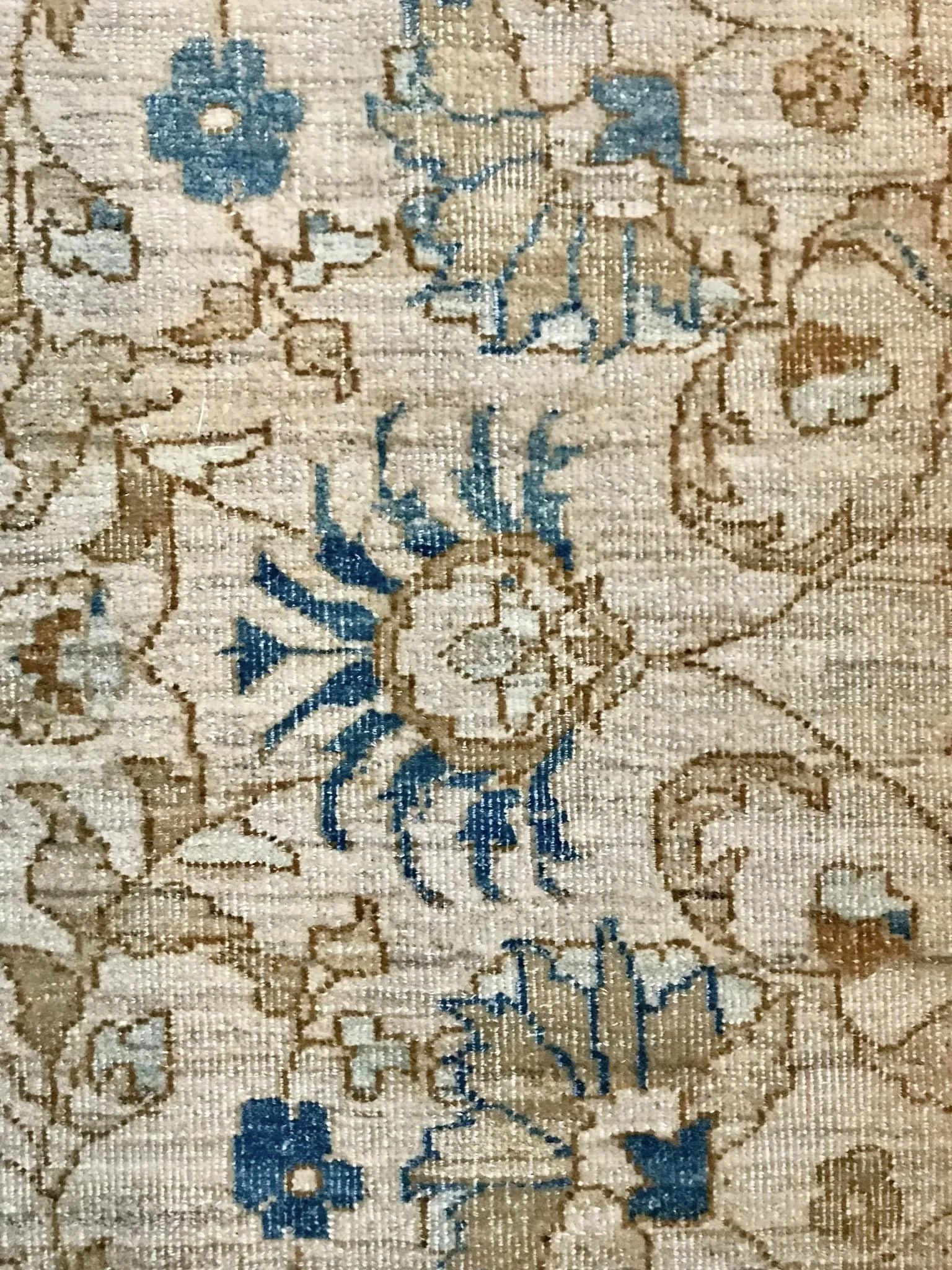
In my living room, I have layered textures that come from both worlds. The Scalamandre tiger pillows bring a touch of East Coast pattern with rich dimensionality. The heavy woven linen throws bring West Coast organic ease. The linen sofa anchors the room with a material that genuinely belongs to both traditions — refined enough for East Coast formality, relaxed enough for West Coast comfort. An antique Parisian carpet provides the formal foundation with hand-knotted depth. The smooth velvet backing on my pillows adds polished East Coast warmth. The natural wood elements bring a different kind of warmth.
The antique French olive oil jars sit on shelves nearby, their weathered terracotta surfaces adding another layer of texture that speaks to all three influences at once. The rough authenticity of the unglazed pottery reads as West Coast organic. The age and patina read as East Coast heritage. The French origin adds the European quietness that ties everything together.
The same linens and textures came with me from California to Connecticut. The colonial home is more formal architecturally — there is a fireplace, smooth wood floors, and the bones of a New England traditional home that the bungalow lacked. But the textures I built into both spaces are consistent. The colonial home simply lets the textures speak more formally. The bungalow let them speak more casually. Same materials. Different rooms hold them.
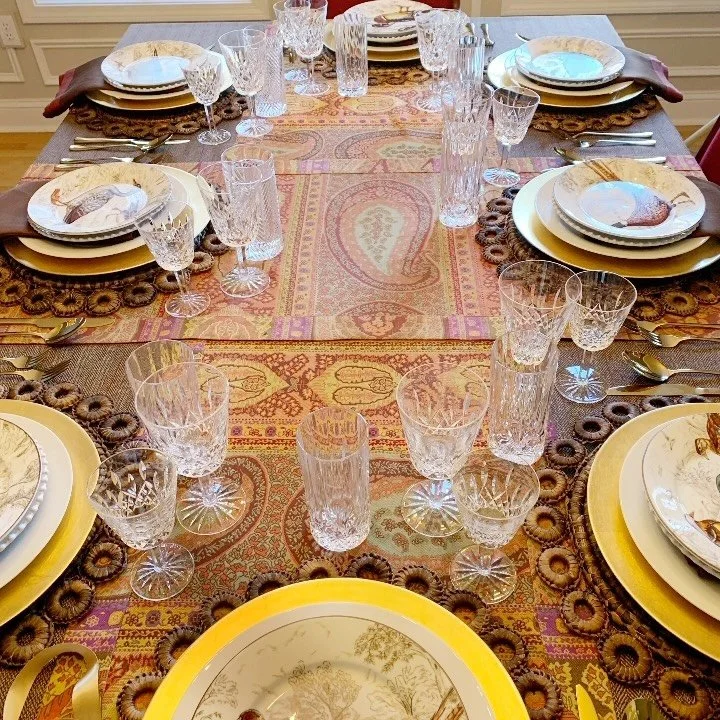
The same principle governs a table. On my Thanksgiving tablescape, sixties Scandinavian porcelain sits under a contemporary plate, with flatware I was given when I married.
Two Different Homes, One Coherent Aesthetic
What surprised me most about returning to Connecticut from California is how the same aesthetic could live in two completely different architectural contexts. The bungalow was casual, low-slung, indoor-outdoor in the California way. The colonial is formal, vertical, and anchored in the New England traditional way. These are genuinely different homes with genuinely different bones.
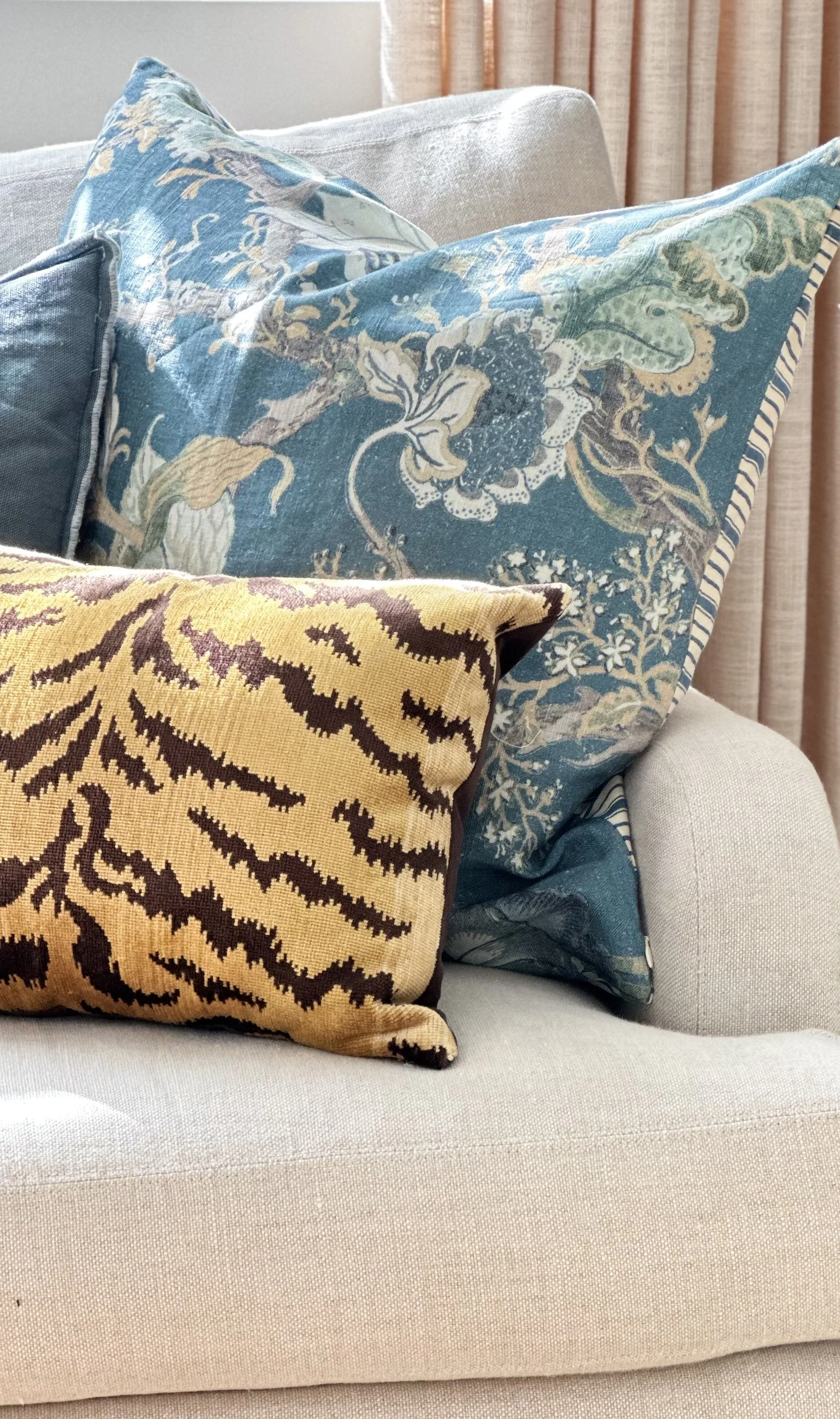
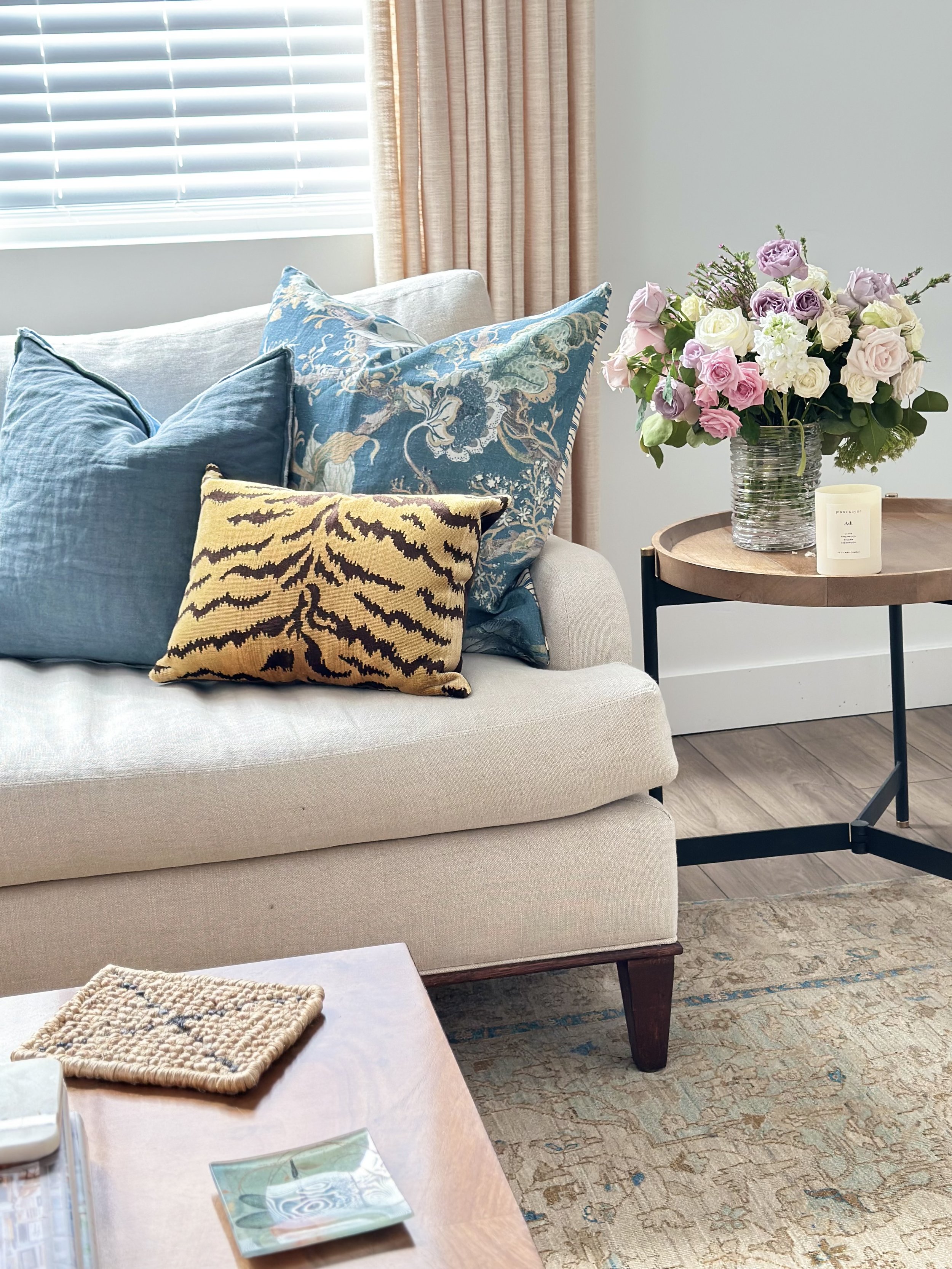
But the colors moved with me. The art collection moved with me. The linens, the pillows, the textures, the French elements, the philosophy of mixing East Coast and West Coast through a French lens — all of it moved with me intact. The colonial home looks different than the bungalow because the architecture asks for slightly different things. But anyone who has been in both would recognize that the same hand designed both spaces.
This is what I have come to believe about coherent design. The aesthetic does not live in any one piece of furniture or any one decorative choice. It lives in the consistency of the palette, the consistency of the art, the consistency of the textiles, and the consistency of the philosophy that holds it all together. When those consistencies are strong, you can adapt to whatever architectural context you find yourself in. The home will still feel like yours.
A Home That Holds Both
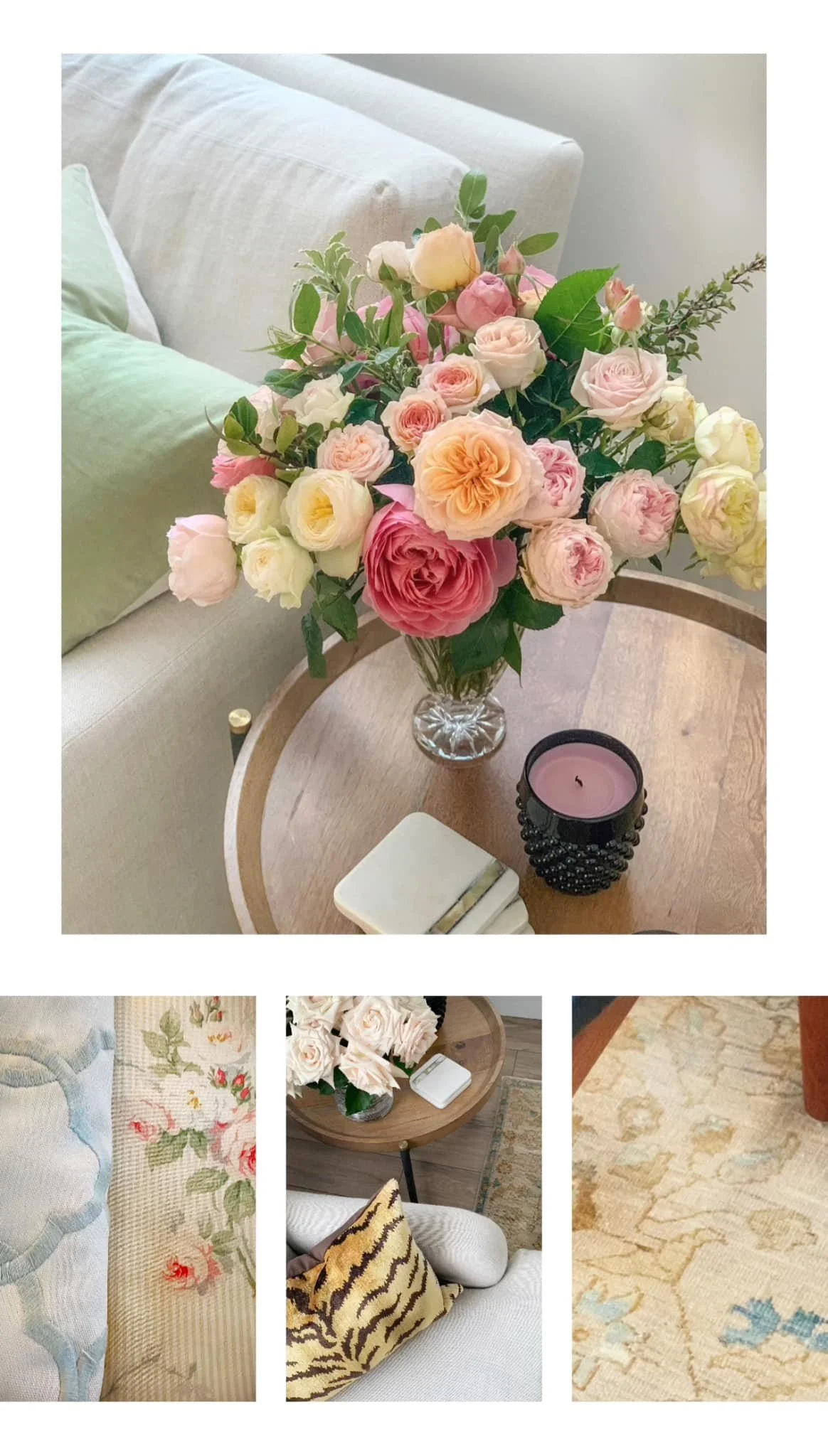
Design Mood Board
This mood board gave me a lot of inspiration for the colors that I wanted to add to my living space. You can see that I have added my love for flowers and the colors that are so vivid in many East Coastal homes. I am using my carpet as the main focus on color and adding a touch of pink.
A home that holds both East Coast tradition and West Coast ease is not about choosing between them. It is about recognizing that both aesthetics have always been about creating spaces where life unfolds with grace.

The East Coast tradition teaches us that beauty can be inherited, that rooms can hold history, that craftsmanship matters. The West Coast tradition teaches us that beauty can be lived in, that rooms should welcome rather than impress, that natural materials carry their own quiet authority. French inspiration teaches us that these values are not in tension. They have always been part of the same conversation about how to live beautifully.
Blending them gives us more language to do the same work that thoughtful design has always done. The work of creating homes where the people we love want to gather. Where memory accumulates. Where beauty serves comfort rather than competing with it.
This is the heart of bicoastal interior design. Not a trend that will pass. A genuine expression of how American design is evolving as we recognize that our regional aesthetics have always been speaking to the same essential human need.
Live beautifully. On purpose.
Design with the Heart™
À bientôt,
Mary