When Women Become the Village
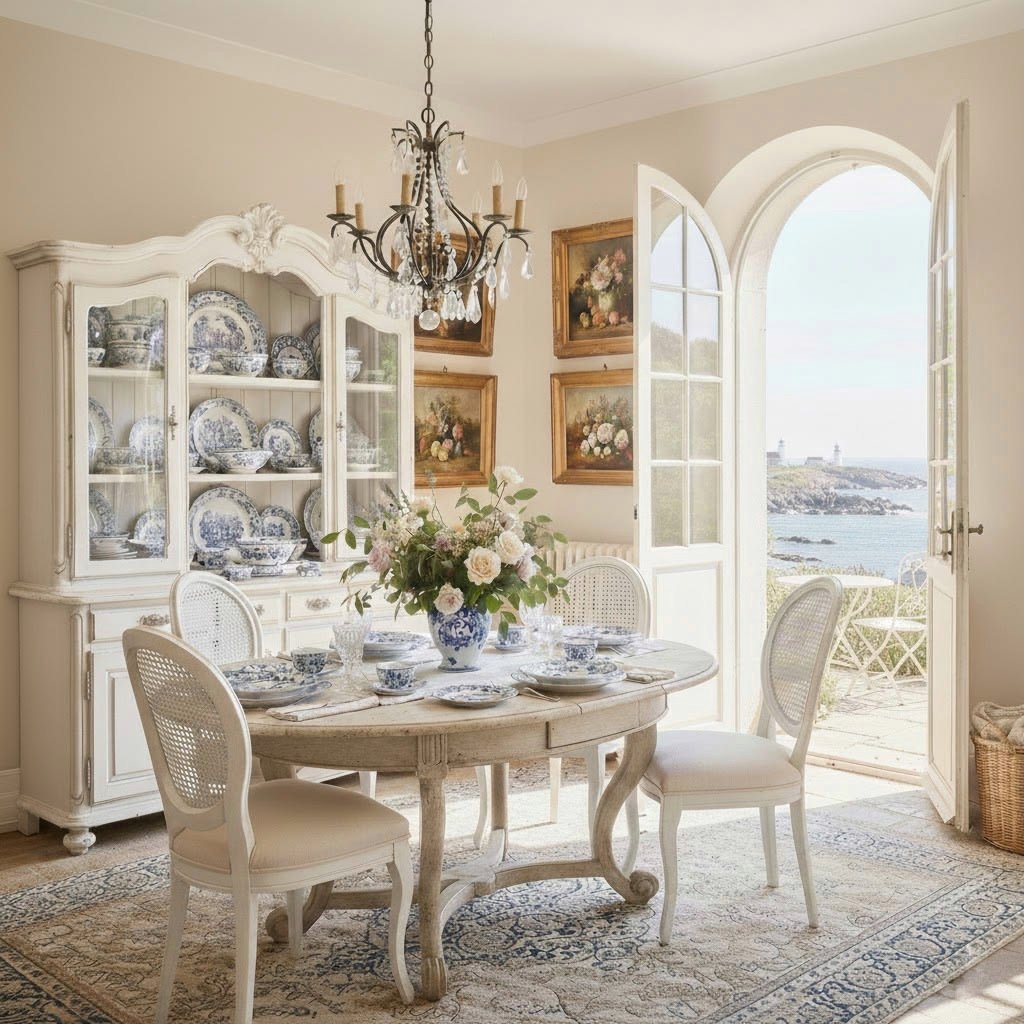
A dining room shaped by heritage, light, and the quiet rhythm of daily life, where French tradition meets coastal ease.
When Women Become the Village
Women have always found one another. Sometimes through friendship, sometimes through work, sometimes through family, and often through a quiet understanding that needs no explanation. When care, memory, and responsibility must be sustained day after day, many women gradually become the village itself.
This is not a weakness. It is intelligence shaped by experience.
Women move through their days carrying many roles at once. Professional, creative, maternal, relational, reflective. These roles shift hour by hour, often without pause. In the midst of this fullness, what is most easily lost is not ambition or responsibility, but creativity. The quiet inner space where imagination lives. The place where ideas form and the spirit feels restored.
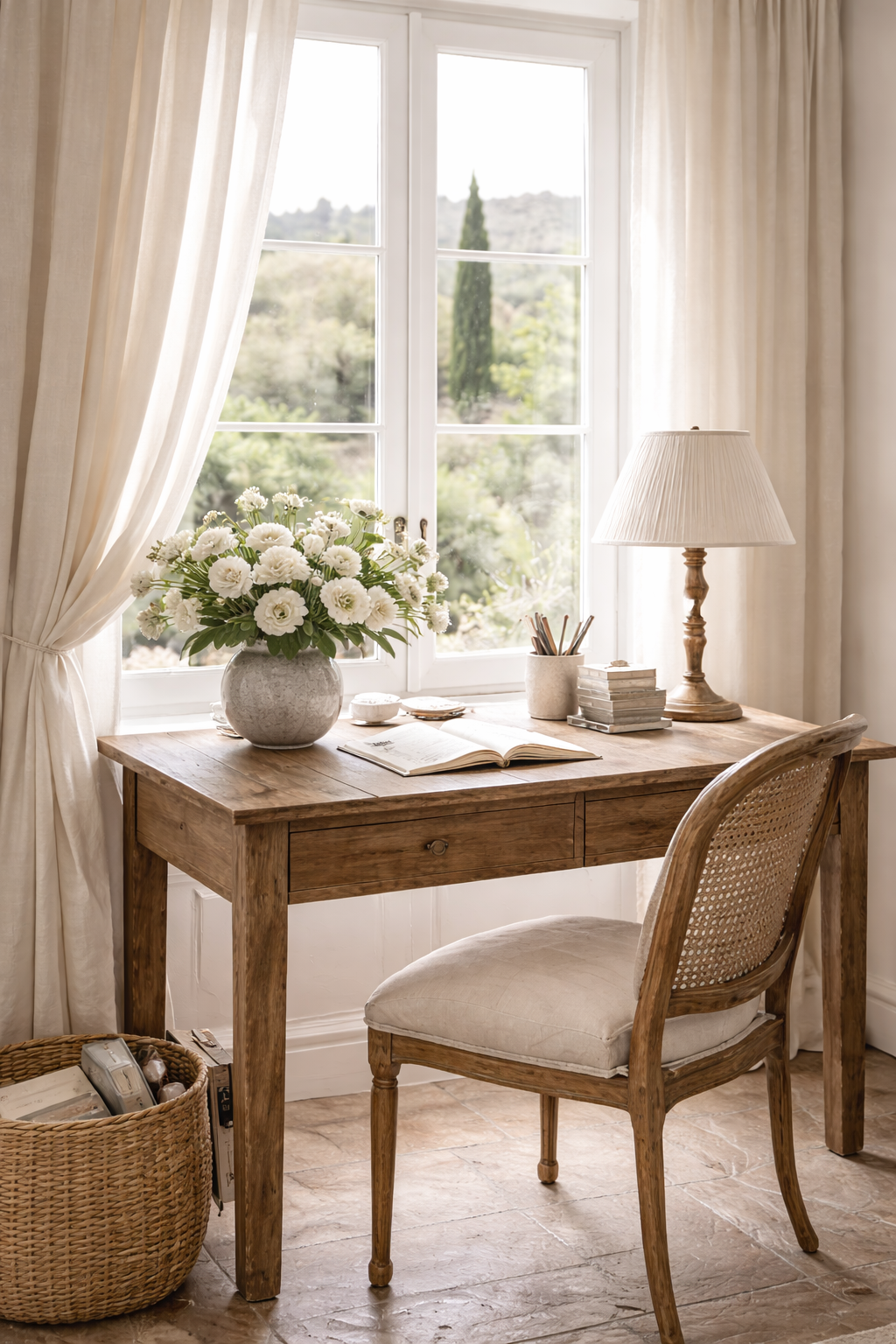
A simple writing desk by a window, bathed in natural light, offering a calm place for reflection, creativity, and returning to oneself.
For a long time, I believed balance would come from doing more or doing it better. It never did. Balance came only when I allowed myself to return inward, quieted the noise, and made space for creativity to reappear.
Home became essential to that return.
The Quiet Strength Women Carry
There is a particular strength women develop over time. It is not loud or performative. It shows up in awareness, in emotional intelligence, and in the ability to hold complexity without needing to resolve it immediately.
Women often become the connective thread in their families, communities, and workplaces. They remember details. They sense when something is off. They carry histories, both spoken and unspoken. This strength is steady, not fragile. But it requires restoration.
Home, when lived thoughtfully, becomes the place where that restoration can begin.
Creativity as a Return to Self
Balance is often discussed in terms of time. More time with family. More time away from work. More time devoted to others. But for women, balance is rarely about time alone. It is about creativity.
Creativity does not always mean making something. It means presence. It means having the inner space to think, to notice, to feel inspired again. When creativity is lost, even a full life can begin to feel muted.
Home should be the place where creativity returns quietly. Not through effort, but through stillness. Through light moving across a room. Through folding linen slowly. Through arranging flowers simply. These moments invite the mind to soften and the spirit to breathe.
This is where restoration begins.
How Place Shapes the Way We Live
I have lived across landscapes shaped by water, light, and time. Coastal places on both the East and West Coasts, alongside interiors deeply influenced by my French heritage. Each place left its imprint, not as a design aesthetic, but as a way of living.
Over time, these influences naturally layered into my home. Not as a deliberate blend, but as a reflection of lived experience. Place shapes how we move, how we gather, how we rest. When we allow those influences to coexist, home begins to feel honest rather than curated.
East Coast Structure and a Sense of Order
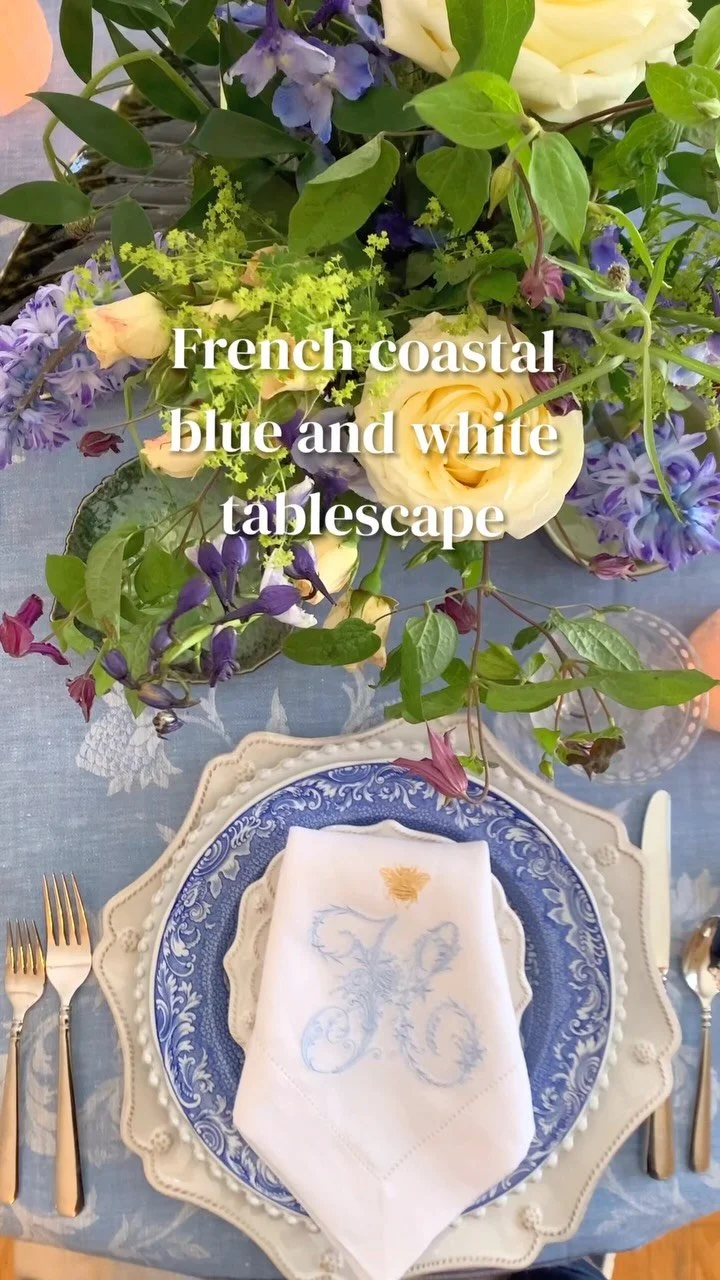
The East Coast influence in my home provides structure. It shows up in proportion, symmetry, and restraint. Furniture silhouettes are classic. Layouts feel intentional rather than casual. Blue and white elements appear naturally, drawn from Chinese porcelain, patterned textiles, and woven rugs.
These colors echo the natural world I grew up in. The Atlantic. A deep blue sky. Hydrangeas are in full bloom along New England gardens and coastlines. Their repetition creates visual order and calm, especially in spaces filled with light.
These elements give a home its bones. They prevent it from drifting too far into informality and provide continuity that feels grounded rather than rigid. The East Coast runs through my blood. I was born and raised in New England, and the landscape shaped my sense of balance, comfort, and familiarity. Bringing these elements into my home feels instinctive, not curated.
At the same time, this structure creates room for contrast. It allows softer, more organic influences to enter without overwhelm. The formality of a composed room, a fire lit in the evening, a sense of order at the table, becomes the backdrop against which more fluid elements can live. This foundation makes it possible for natural textures, layered color, and outdoor living to feel intentional rather than casual.
In this way, East Coast structure does not limit how I live. It supports it. It provides the framework that allows the home to open outward, welcoming organic materials, varied tones, and a freer way of living shaped by the West Coast and beyond.
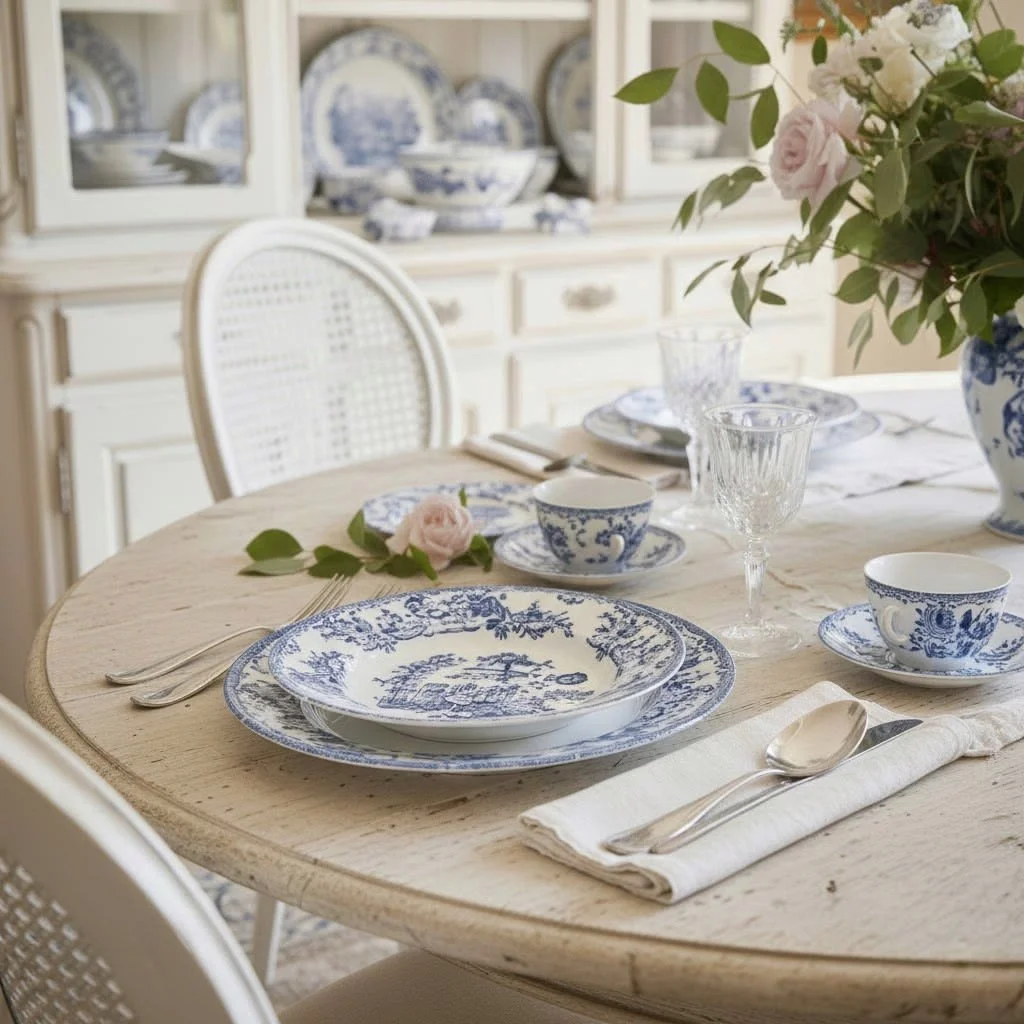
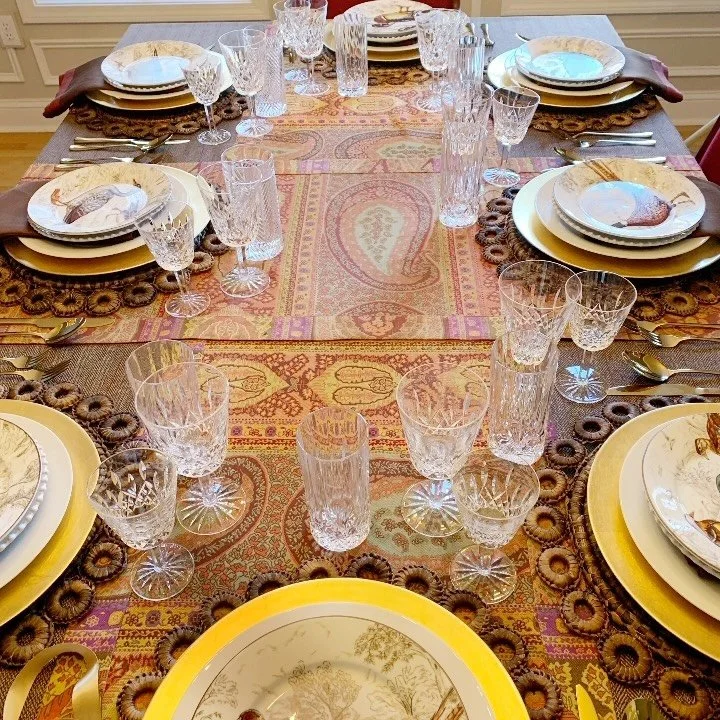
A close view of the kitchen table, where blue and white place settings, softened linens, and layered porcelain reflect a rhythm of daily gathering.
West Coast Ease and the Importance of Light
From the West Coast comes openness and breath. A way of living that values ease without sacrificing beauty. Natural materials, softened palettes, and spaces that invite movement define this sensibility.
Light plays a central role. Windows shape how a home feels throughout the day, drawing the landscape inward and allowing the outdoors to become part of daily life. As light shifts, so does mood. Doors open easily. Boundaries soften. The home expands beyond its walls, encouraging awareness of time passing and a gentler rhythm of living.
Here, life unfolds across both interior and exterior spaces, not managed, but lived.

Design and Photo by Merze Lifestyle - A living room shaped by movement between coasts, where East Coast structure, West Coast ease, and a quiet touch of Provence live together naturally.
Provence and the Beauty of Everyday Ritual
Provence brings something quieter and deeply human. A respect for daily ritual. An understanding that beauty belongs in ordinary moments. Not pristine or perfect, but worn, softened, and lived with. It is a way of living that values presence over performance and continuity over novelty.
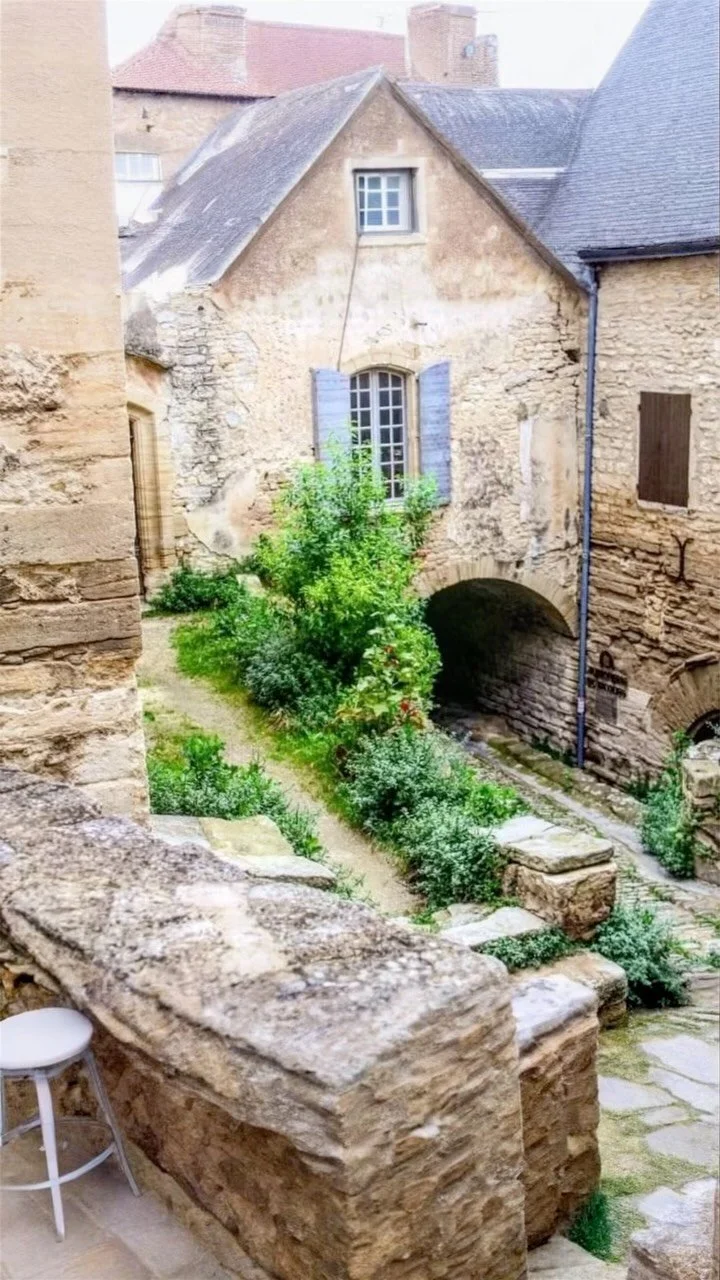
France is my heritage. My roots trace back centuries, and that lineage has shaped how I move through the world and how I make a home. It lives in the meals I cook, the rhythms of daily life I return to, and the language of care I use with the people I love. These influences are not decorative. They are instinctive.
Antique confit pots and olive oil jugs, rich with patina, sit easily alongside newer pieces in my home, not as display objects, but as quiet anchors. Linens grow more beautiful with use. Wine jugs, once utilitarian, now hold space as sculptural reminders of a life lived close to the land. A painting of Brittany, where my family is from, hangs as a constant presence, connecting place, memory, and identity. This way of living understands that what is used with care becomes meaningful. Objects earn their place through time, touch, and purpose.
Bringing these elements into my home is an act of continuity, a way of honoring where I come from while allowing the home to evolve naturally. Provence, for me, is not a style. It is a lived inheritance, one that quietly informs how I gather, how I care, and how I create space for others to feel at ease.
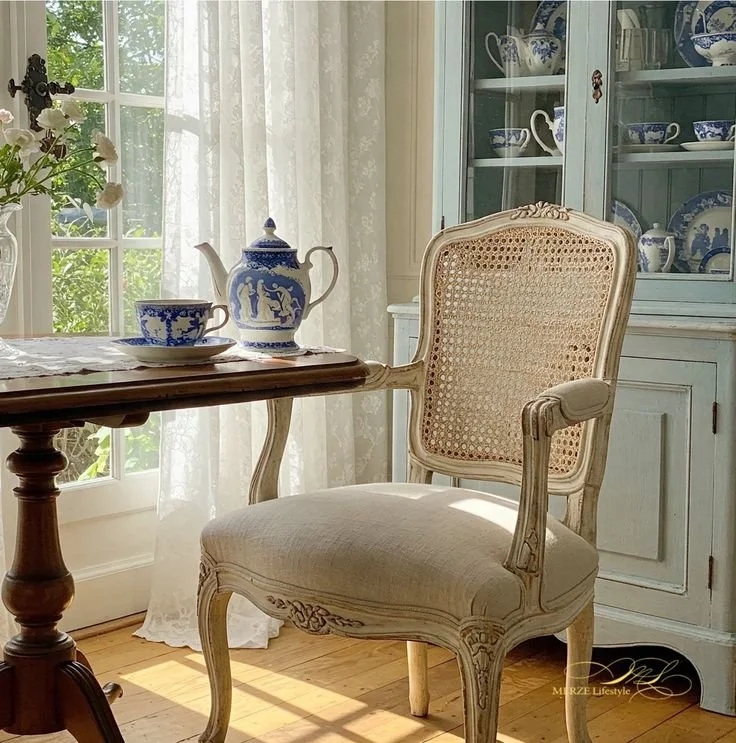
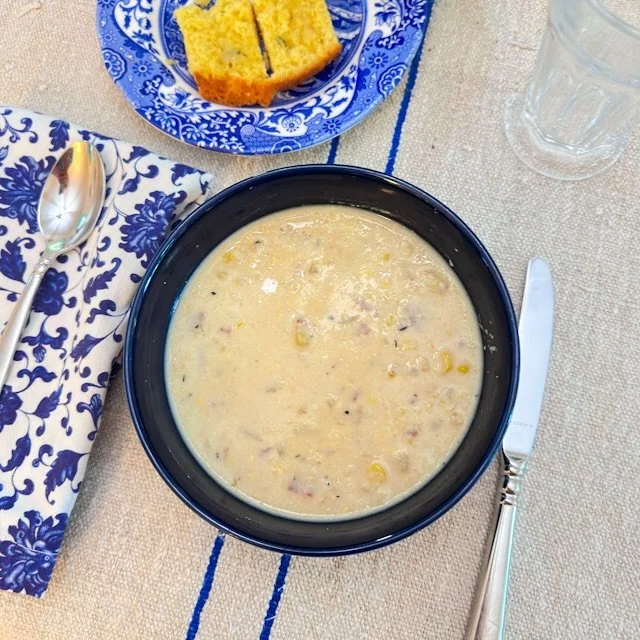
A kitchen gathering space where blue and white porcelain, timeworn seating, and daily ritual come together with ease.
A Home Shaped by Continuity
Over time, these influences no longer feel distinct. They settle into one another and become part of how the home is lived, not how it is described. Structure and ease, ritual and openness, formality and softness begin to coexist naturally, shaped by experience rather than intention.
France remains at the root of this way of living, not as a place recalled, but as a sensibility carried forward. It informs how meals are prepared and shared, how objects are chosen and kept, and how care is expressed without display. The order and clarity I grew up with create a foundation, while organic materials, shifting light, and a deep connection to the outdoors allow the home to breathe.
Objects earn their place through use. Linens soften with time. Vessels once meant for work become part of a daily ritual. New and old sit together without tension because they are held by the same values. Nothing is precious for its own sake. Everything is meant to be lived with.
This is how the home becomes cohesive, not through adherence to any one place, but through continuity of feeling. A life shaped by movement, heritage, and care gathers itself into rooms that feel calm, grounded, and open. In this way, home reflects not where I have been, but how I have learned to live, with intention, warmth, and an ease that invites others to feel at home as well.
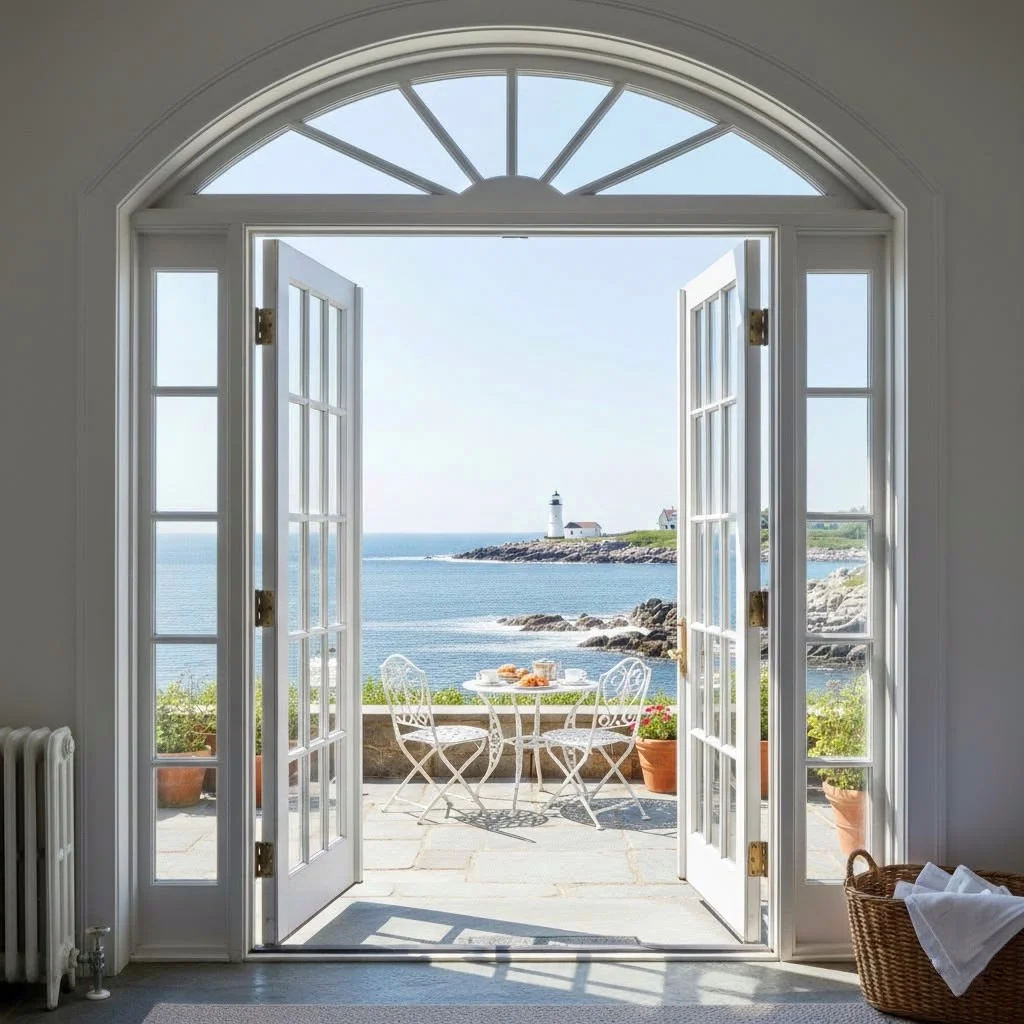
Arched French doors opening to a terrace where the interior extends outward, allowing gathering, light, and the rhythm of the ocean to shape daily life.
Where women return
When women become the village, the home becomes the hearth. A place of warmth, safety, and renewal. A place where inner rhythms are honored, and creativity is allowed to bloom again.
Over time, a home begins to shape us as much as we shape it. Structure offers steadiness. Light and openness invite breath. Ritual brings continuity. Together, these elements create spaces that do more than shelter. They reassure. They quiet what the world has unsettled.
This understanding did not arrive quickly. It was shaped over years of working, raising a family, carrying responsibility, and learning when to hold on and when to soften. Over time, I came to see how essential it is to create spaces, both physical and emotional, where women feel recognized rather than required, where gathering is not another obligation, but an invitation. Where care is shared, and presence is enough.
When women come home, they are not simply arriving at a place. They are returning to themselves and finding a chair where the body can soften. A room where the mind is not required to perform. A moment of stillness where thoughts are allowed to wander without purpose. This kind of tranquility is not indulgence. It is necessary.
Without rest, we lose access to our inner truth. Without quiet, creativity remains unreachable. It is only when the noise recedes, when the home holds us gently, that we can look inward and listen again. Creativity does not arrive through effort. It emerges when there is space for it to surface.
From this place of calm, women return to the world steadier, clearer, and whole. Not emptied by responsibility, but restored by presence.
Home, when lived this way, is not a backdrop. It is a companion. It holds experience, memory, work, love, and rest all at once. It reflects who we are and who we are becoming.
In a world that asks women to be many things at once, this kind of home matters more than ever. It is where women are seen, understood, and gently held. Where they are allowed to rest, to create, and to remember themselves
Design with your heart™️
“may your home be a place where friends meet, family gathers, and love grows.”
As with everything I post on my blogs, please feel free to comment, or if you have any questions, please email me through my contact page. I welcome your input anytime!
Happy entertaining, my friends!
Mary