Styling a Place Setting Around a Single Antique Piece
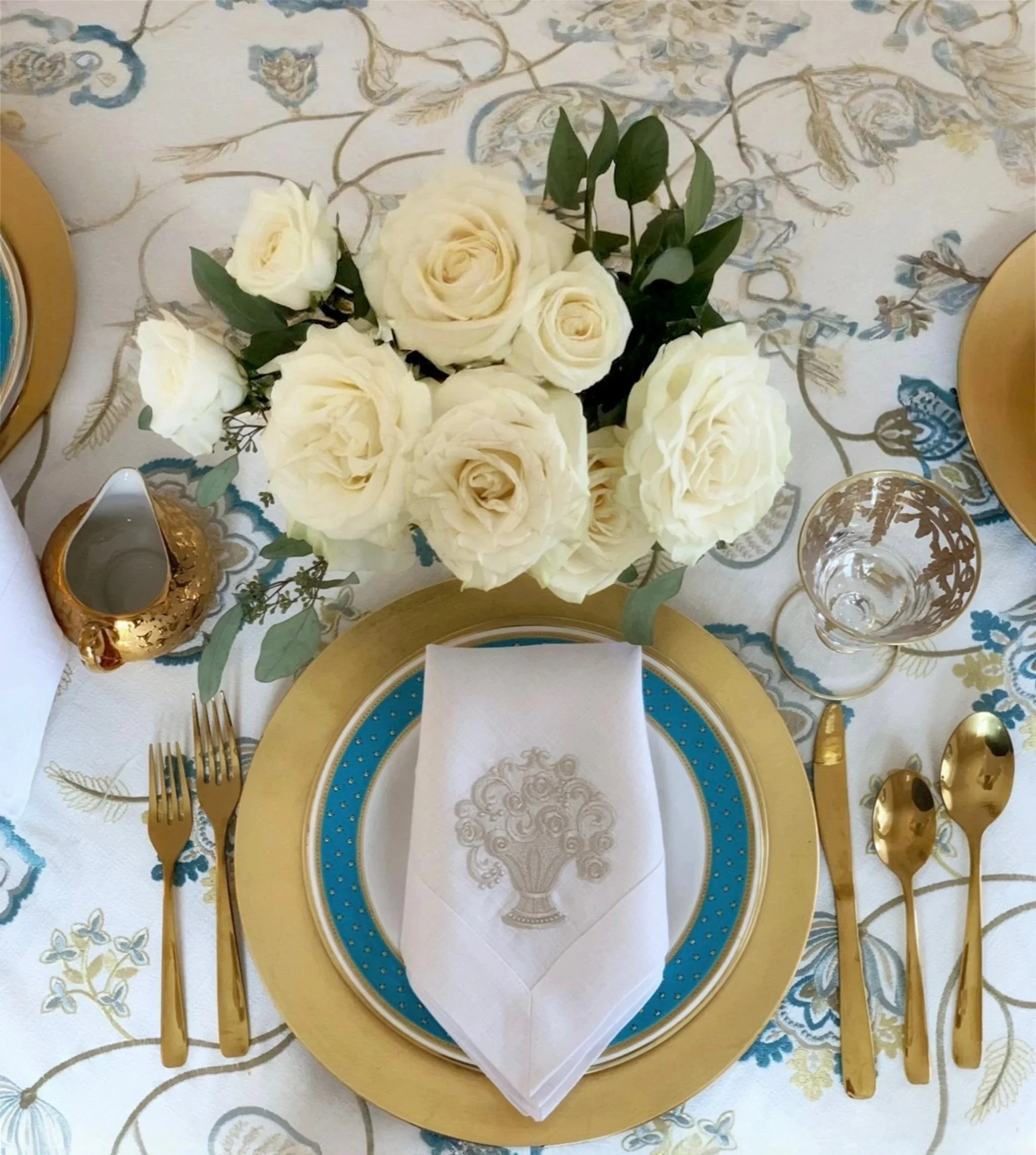
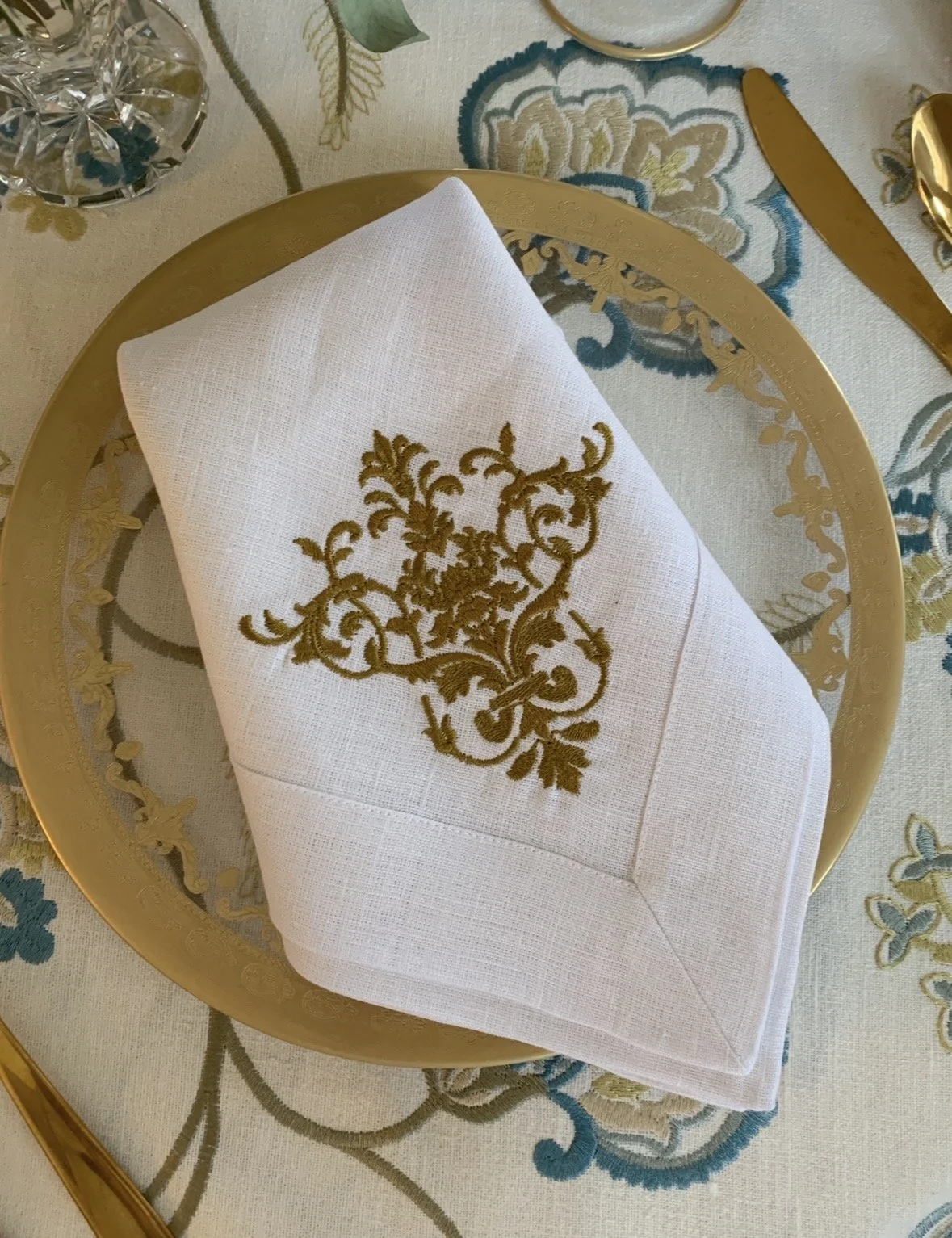
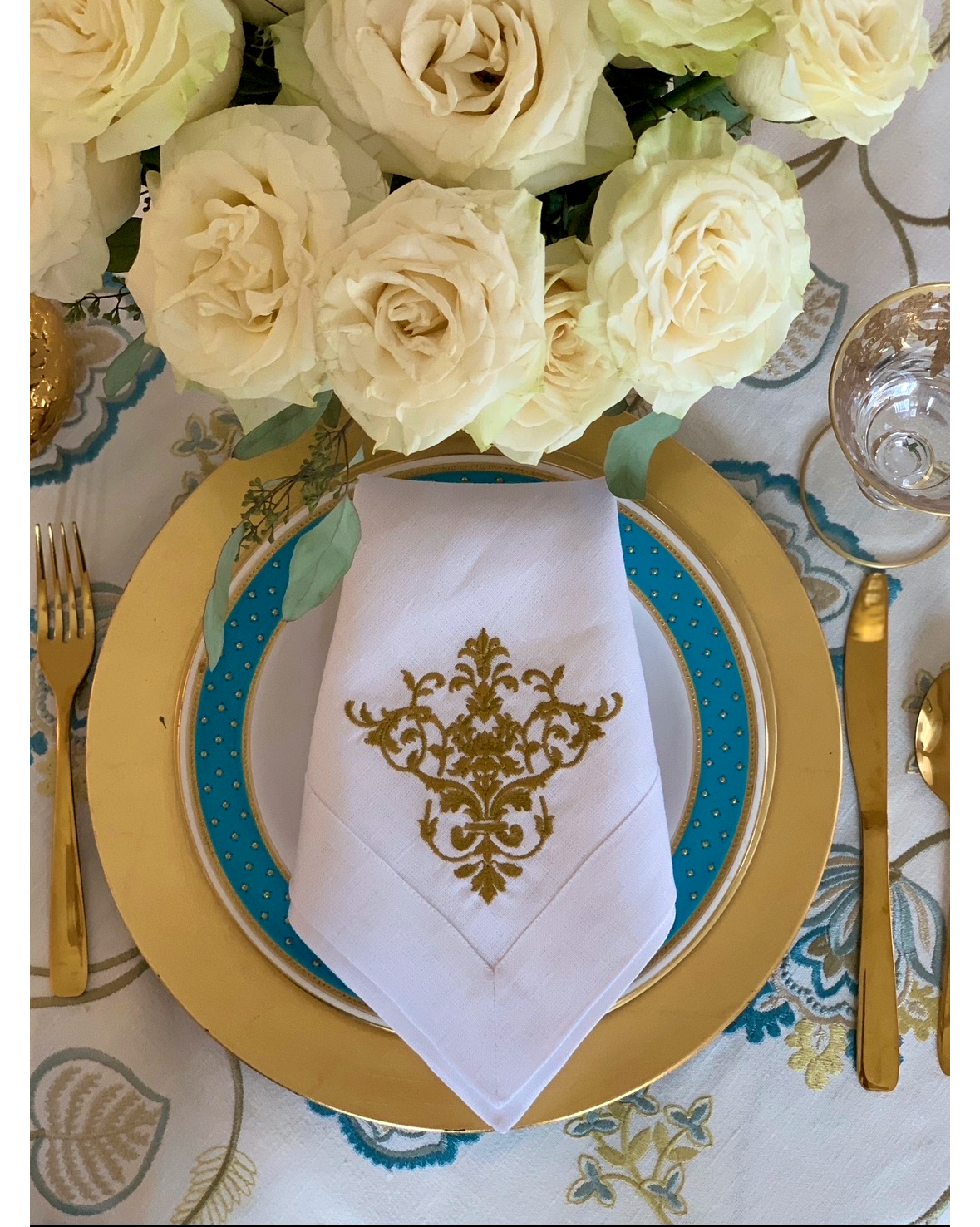
Overhead view of antique aqua and gold porcelain bowl place setting with linen napkin and etched gold glass.
Rather than waiting for a full service to appear, I chose to build a place setting around the bowl itself.
The foundation begins with a bold charger, followed by a glass-and-gold plate that reflects light upward. The porcelain bowl rests at the top of the stack, its aqua rim immediately drawing the eye.
A white linen napkin embroidered with a small gold crest sits gently inside the bowl. The softness of the linen introduces texture while its subtle embroidery echoes the gilded detailing of the porcelain.
Gold flatware continues the warm metallic tone of the table, while an etched wine glass finished with hand-painted twenty-four karat gold brings another layer of craftsmanship to the setting. The glass catches candlelight beautifully and adds a quiet elegance beside the porcelain.
Beneath it all, the tablecloth features embroidered abstract florals in tones that echo the bowl's palette. The background remains soft cream, allowing the colors to feel layered rather than bold.
Nearby, cream colored roses rest in a Waterford vase. Their form adds softness and balance without competing with the porcelain.
Together, the composition becomes a study in material and proportion: Aqua, gold, linen, glass, and porcelain work quietly together.
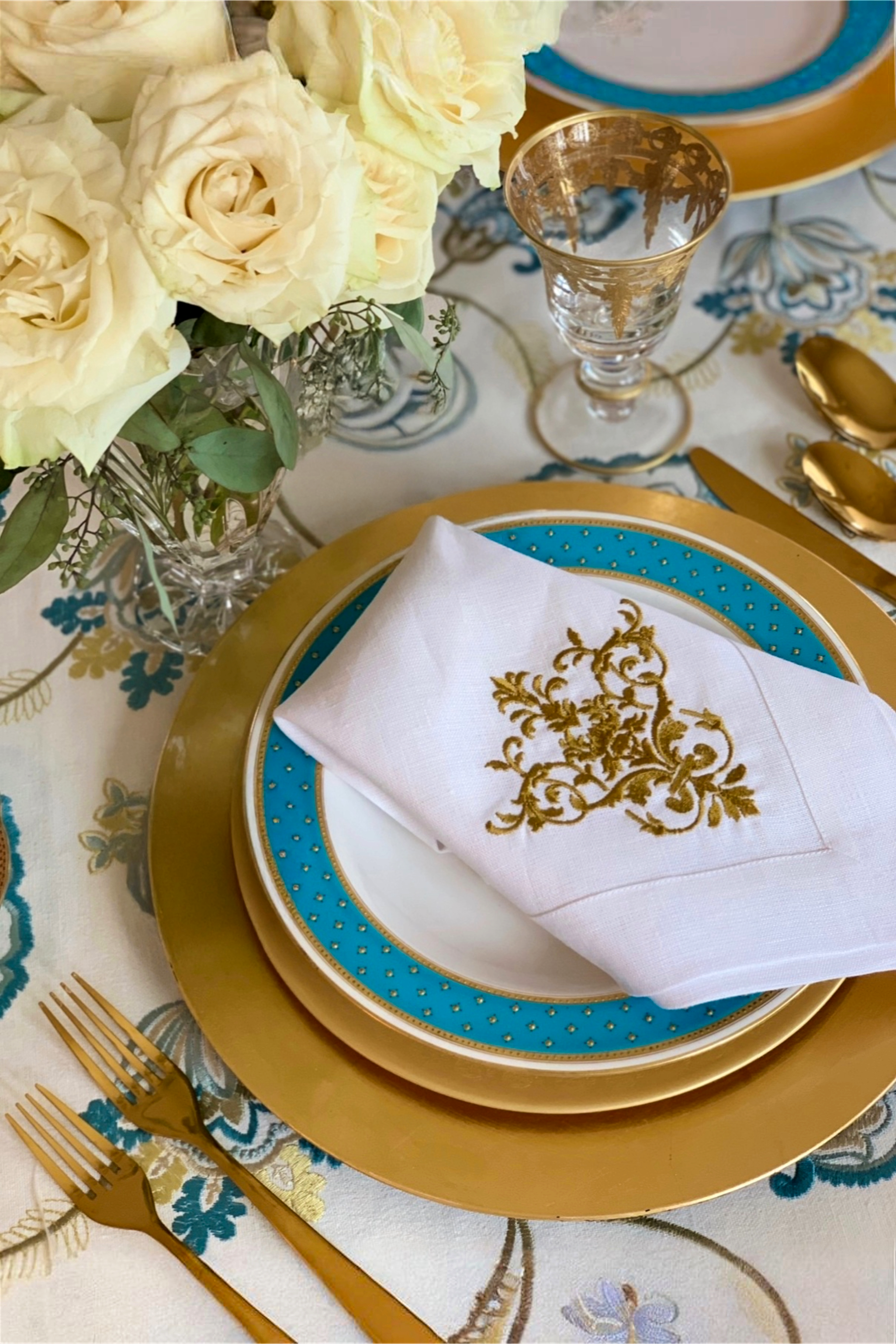
Side view of layered place setting with antique porcelain bowl, gold rimmed glass plate, and linen napkin.
The Beauty of an Incomplete Service
There is something particularly compelling about antique pieces that remain when the rest of a service has disappeared.
They remind us that tables change across generations. Pieces move from one home to another, sometimes separated, sometimes rediscovered. Yet the purpose of the object remains.
A bowl designed for a formal table more than a hundred years ago can still hold fruit, soup, or dessert today. It can still anchor a thoughtful place setting. It can still catch candlelight along its gilded rim.
The table may change. The hands that set it may change. The porcelain continues its quiet work.
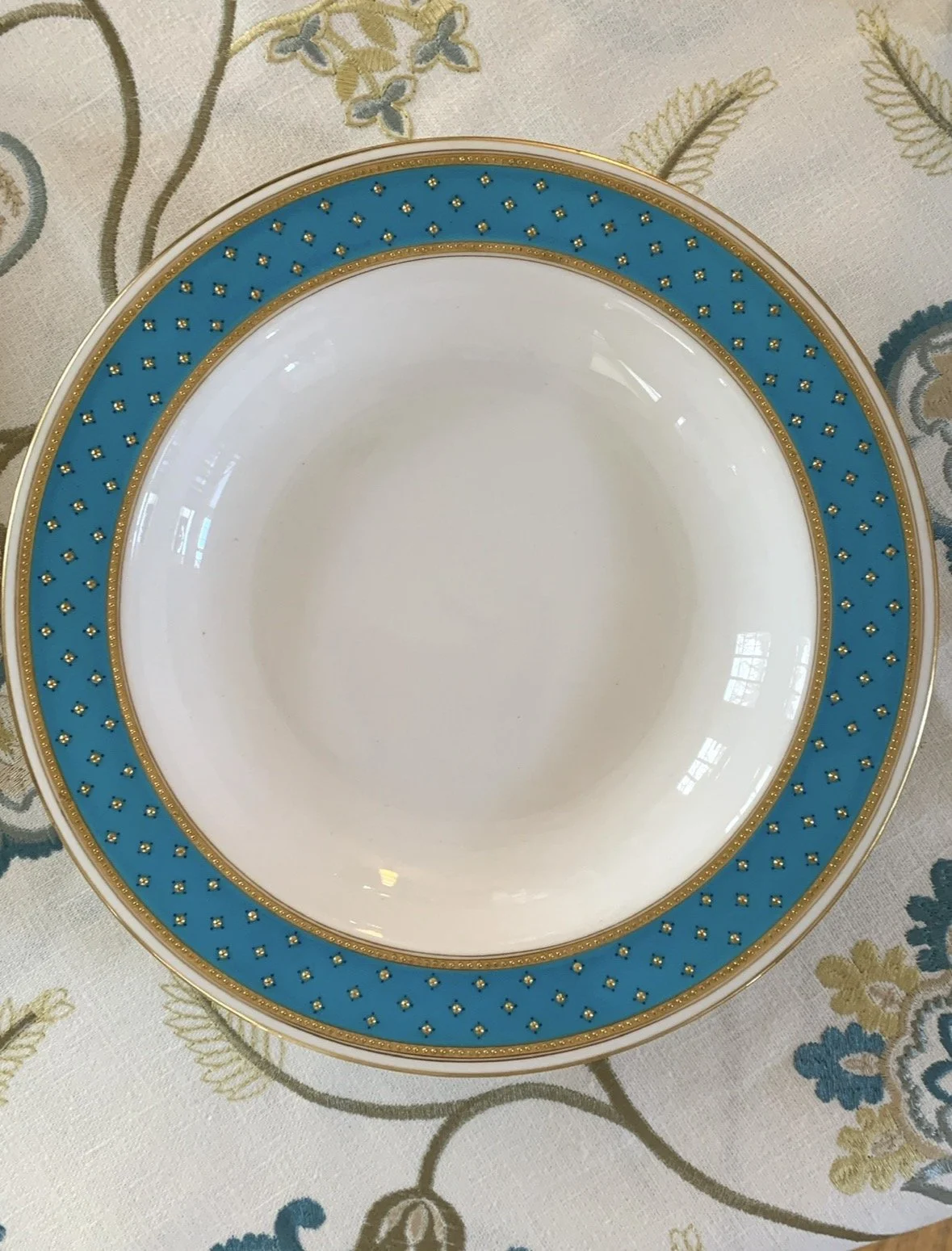
Close detail of antique aqua and gold porcelain bowl with raised gold dots.
Layering Antique and Contemporary Pieces
One of the pleasures of building a table over time is discovering how pieces from different eras speak to one another.
In this setting, the antique porcelain bowl rests comfortably among contemporary pieces that carry their own craftsmanship. The Florentine etched wine glass introduces delicate pattern and hand painted gold that echoes the gilded details of the bowl. The embroidered linen napkin adds softness and refinement, allowing porcelain, glass, and textile to form a balanced composition.
This kind of layering allows a table to feel personal rather than matched. Antique porcelain, handcrafted glass, and linen each carry their own history while creating harmony when brought together thoughtfully.
The result is not a table built from a single collection, but one assembled with intention over time.
Antique aqua and gold porcelain bowl place setting
Bringing Antique Pieces Forward
One of the pleasures of curating objects for Merze is discovering pieces that still carry the craftsmanship of another time. The antique aqua-and-gold porcelain bowl at the center of this setting is one such piece. Its generous proportions, soft aqua rim, and raised gold dots catch the light with a quiet luminosity that immediately draws the eye. Though the original service no longer survives in its entirety, the beauty of the bowl itself is more than enough to begin a table. Antique pieces such as these remind us that a table rarely arrives all at once. Often it begins with a single object that carries history forward.
From that starting point, the table gradually takes shape as other elements are layered around it. Florentine etched wine glasses finished with hand-painted gold bring warmth and reflection beside the porcelain, while a glass plate edged in gold introduces another luminous layer beneath the setting. Linen napkins complete the composition. The Victorian embroidered linen adds a note of quiet formality, while the Gathering Basket napkin introduces softness and texture. Each piece stands beautifully on its own, yet together they reflect the philosophy behind Merze, where antique and contemporary objects come together with intention to shape a memorable table.
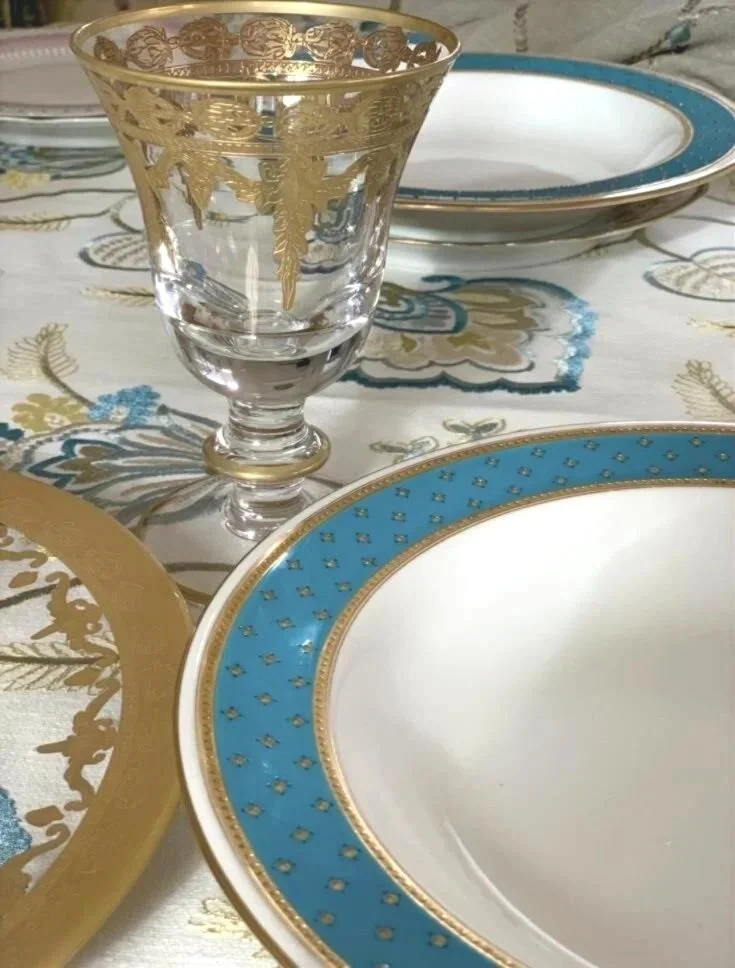
Antique aqua and gold porcelain bowl with raised gilded detailing.
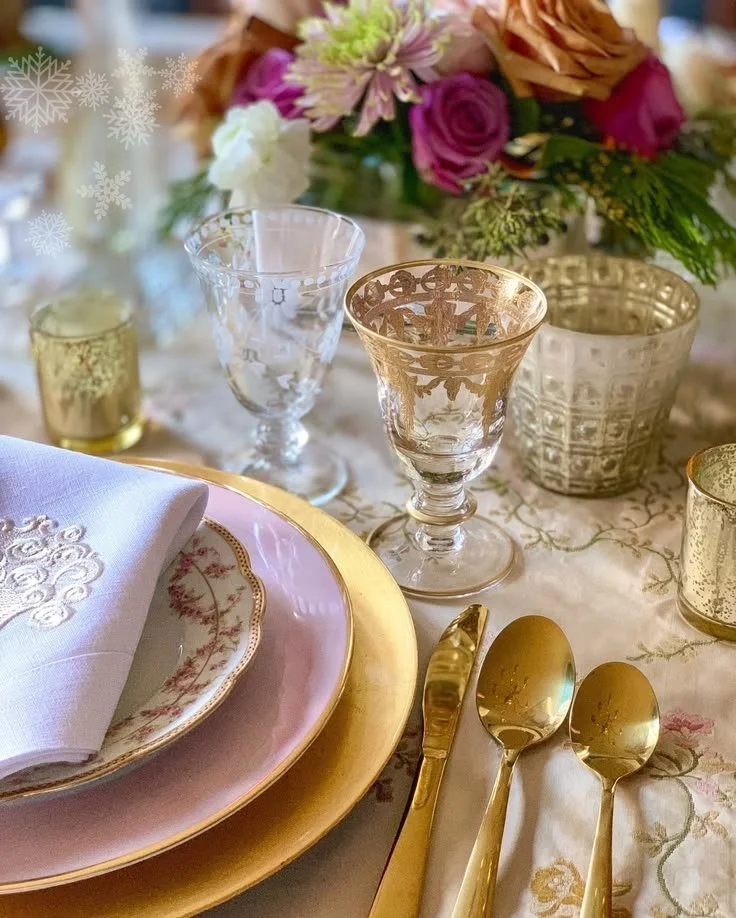
Florentine Vetro Gold wine glass with hand etched design and hand painted 24 karat gold accents.
Gold rimmed glass plate adding luminous layering beneath porcelain.
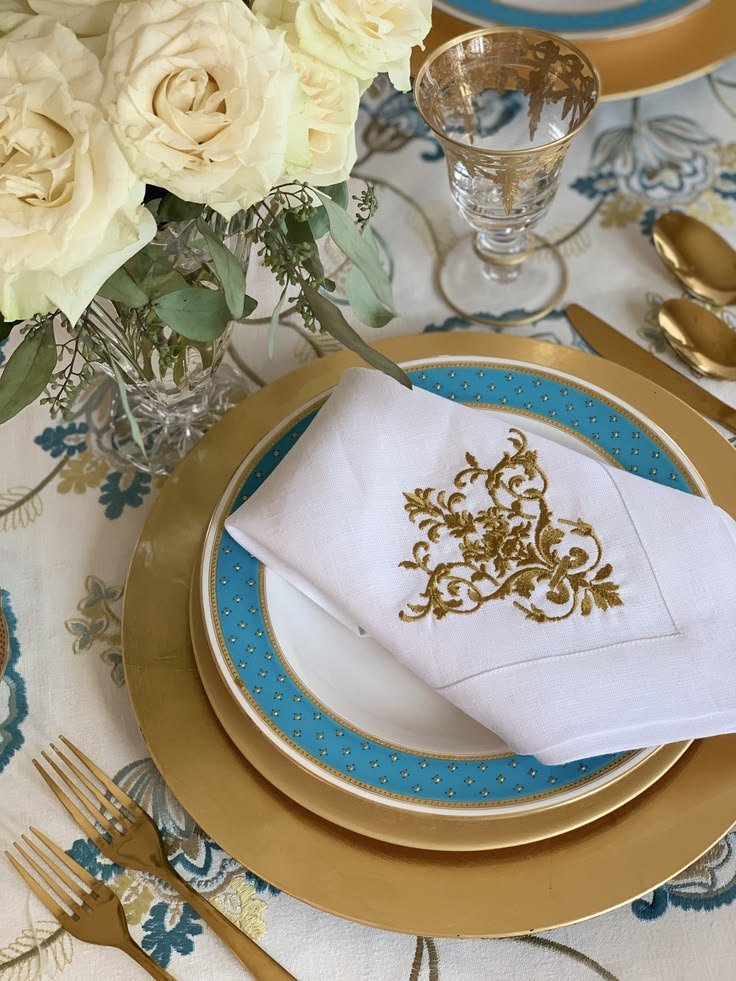
Victorian embroidered linen napkin adding quiet refinement to the place setting.
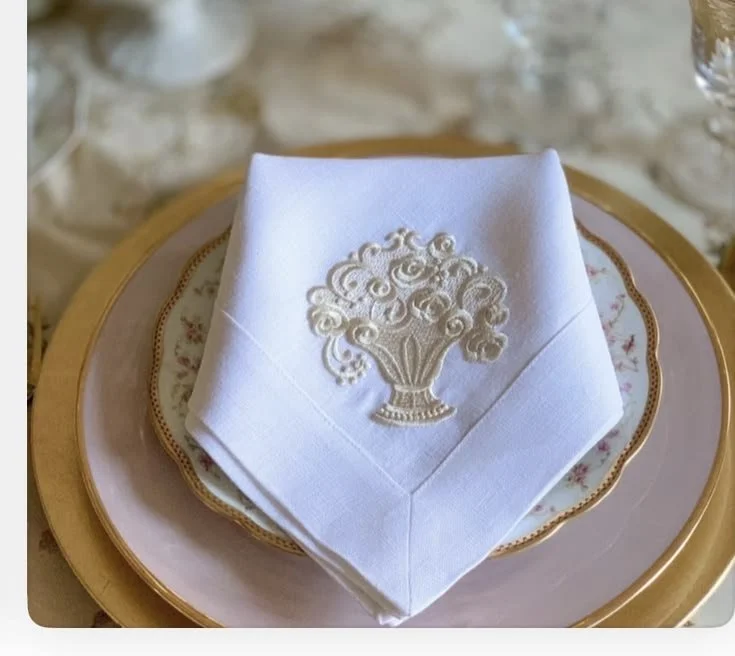
Gathering Basket linen napkin introducing texture and craftsmanship to the table.
Explore more reflections on intentional gathering in the Journal.
Design with the Heart™
À bientôt,
Mary