How to Create a Vignette: A Complete Guide to Styling Small Moments at Home
A vignette is one of the quiet ways a home reveals itself. It is rarely the first thing noticed, but it is often what lingers. A grouping on a table, a shelf, or a mantel can soften a space, bring intention to it, and quietly tell a story.
Many people ask what a vignette actually is, and why it seems to carry such mystique. The answer is simpler than it appears.
What Is a Vignette in Interior Design
A vignette is one of the quiet ways a home reveals itself. It is rarely the first thing noticed, but it is often what lingers. A grouping on a table, a shelf, or a mantel can soften a space, lend intention, and quietly tell a story.
Many people ask what a vignette actually is, and why it seems to carry such mystique. The answer is simpler than it appears.
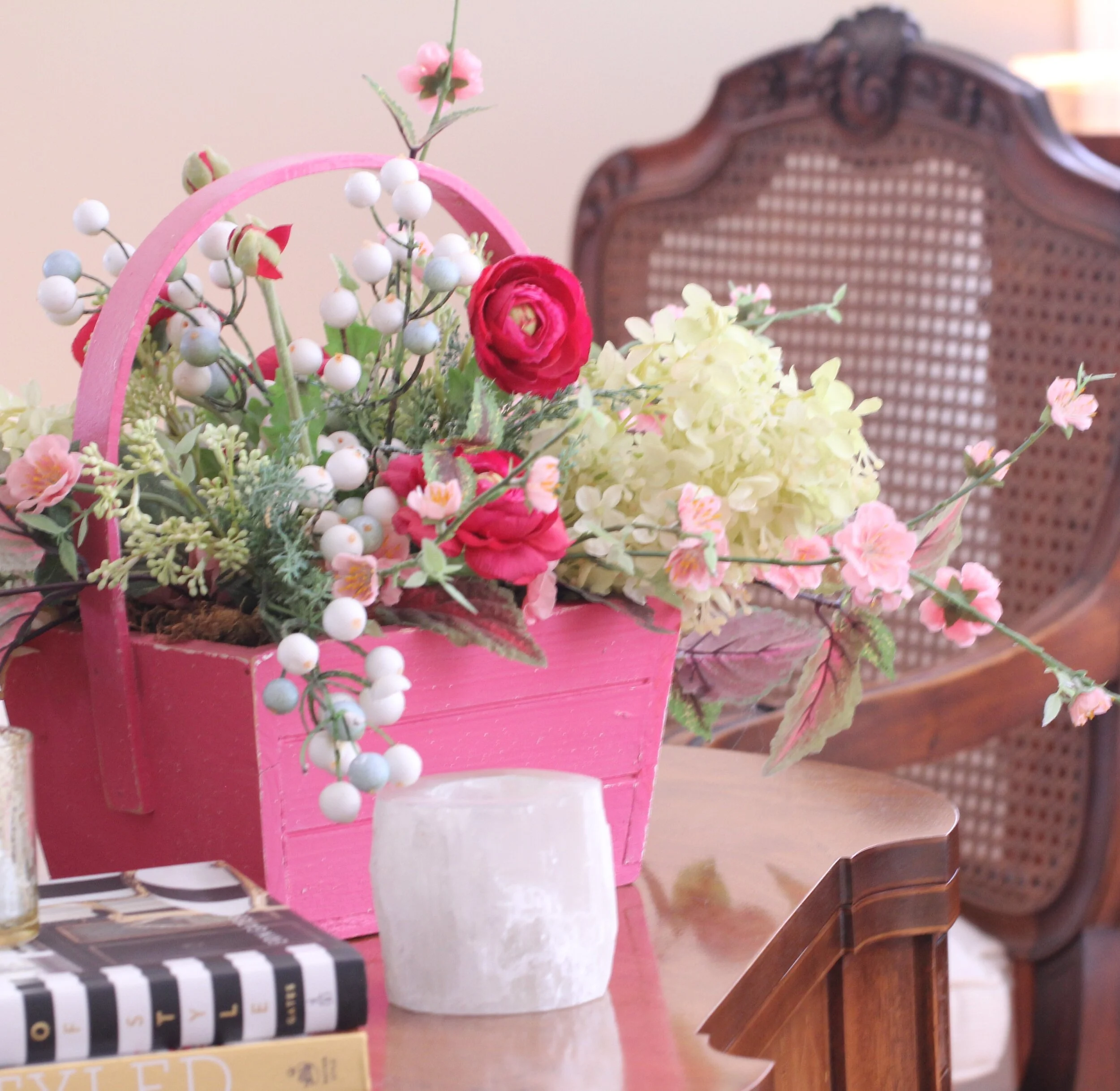
Vignette atop a living room sofa table
““An Interior is a natural projection of the soul”
”
Beginning with Intention
Every vignette begins with intention. Before gathering objects, pause and consider the story you want to tell. The story does not need to be complicated. It may be as simple as honoring your love of books, travel, flowers, or family history. What matters is that the grouping holds meaning rather than merely occupying space.
When I begin a vignette, I work loosely. I gather objects that speak to one another — books, vessels, votives, greenery, pieces that carry personal history. Nothing is final at this stage. The work is simply seeing how materials and textures relate to each other in conversation.
The surface itself matters. A sofa table holds a different kind of vignette than a mantel. A shelf asks for different proportions than a sideboard. Allow the surface to inform your choices rather than forcing the arrangement to fit a vision that the surface cannot hold
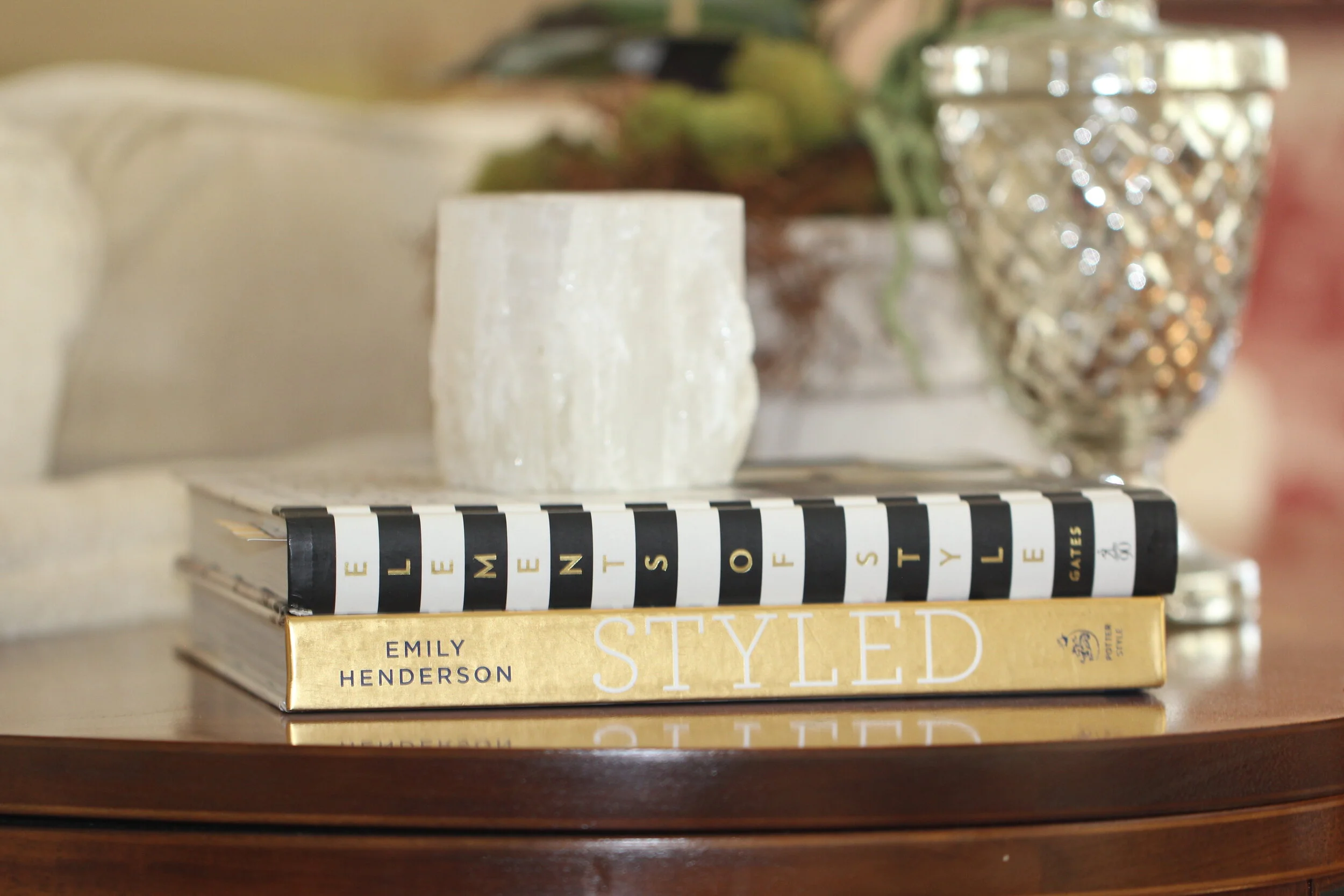
Here is the start of my creative process in developing a vignette. I brought in different mixed metals, votives, greenery together to see how they went together.
When I begin creating a vignette, I start loosely. I pull together objects that speak to one another, books, vessels, votives, greenery, or pieces that carry personal meaning. At this stage, nothing is final. It is simply about seeing how materials and textures relate.
Your surface matters as well. A sofa table, shelf, or mantel naturally guides scale and proportion, so allow the surface to inform your choices rather than forcing them.
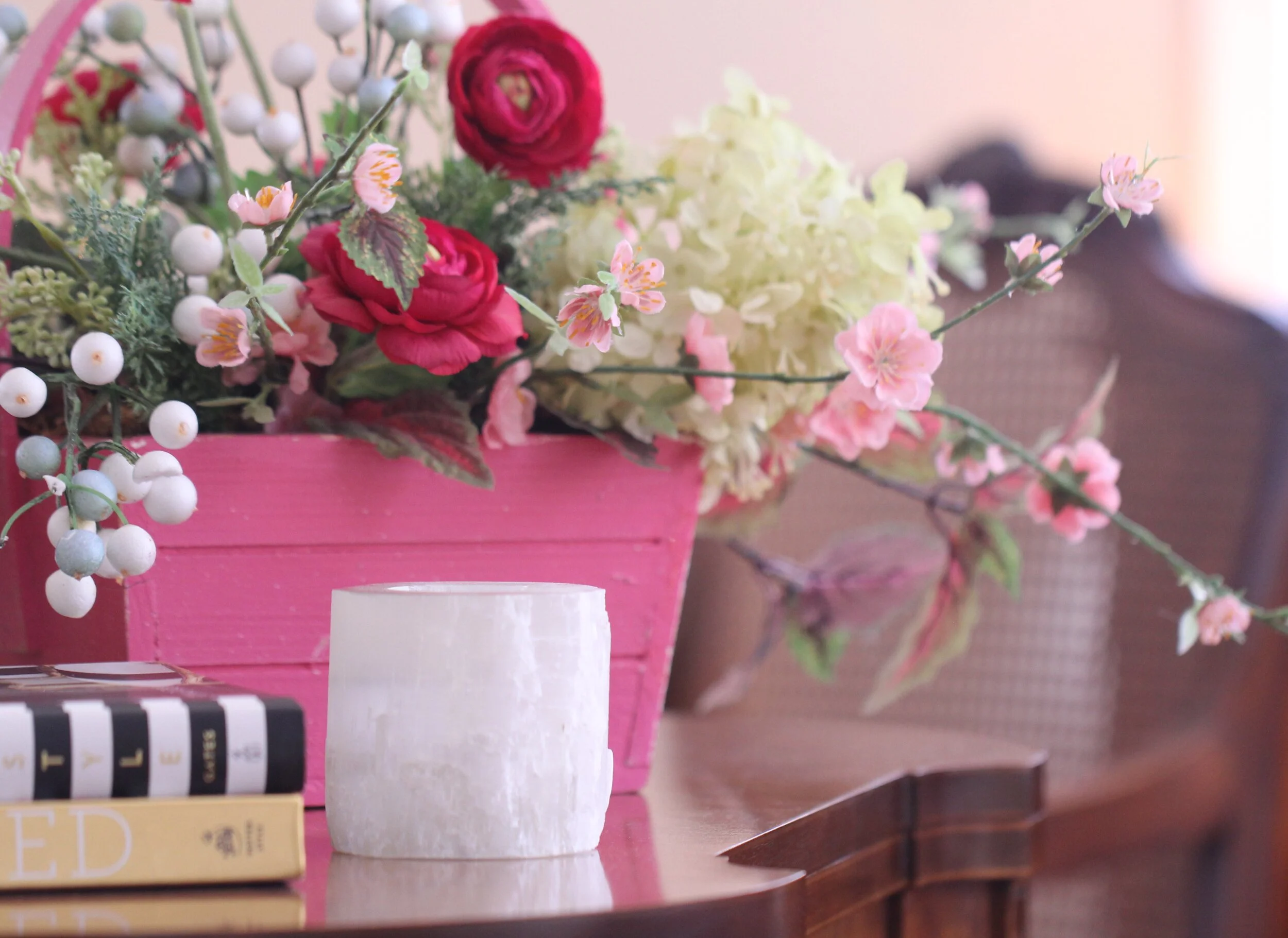
Color palette and focal point has been chosen
Choosing a Color Palette and an Anchor Piece
Once your objects are gathered, look for color harmony. A vignette should feel connected to the room it lives in rather than separate from it. This does not mean everything must match. The tones simply need to feel related.
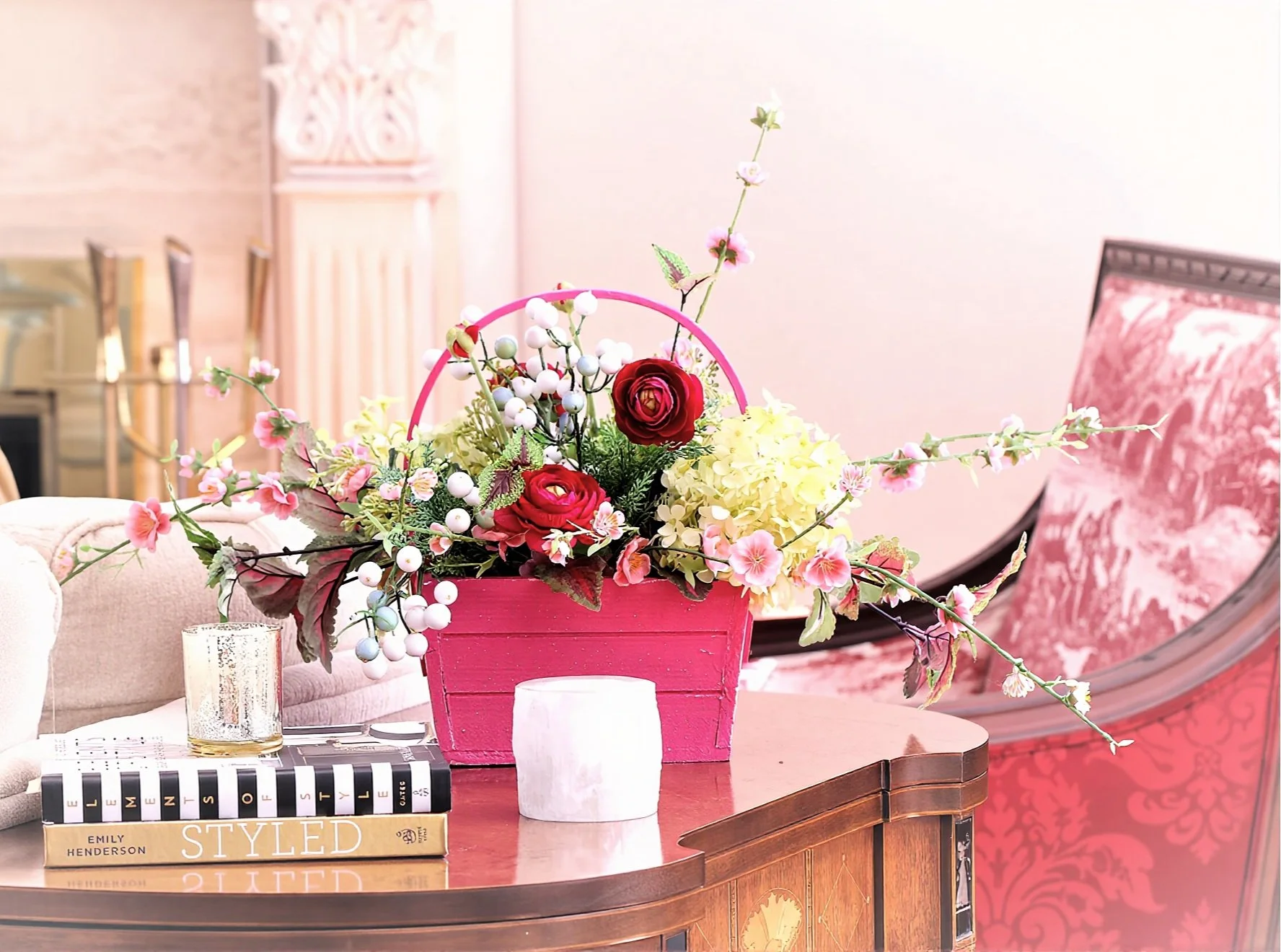
In this example, soft pinks and whites, warm browns, and touches of black were chosen because they echo the room's upholstery and artwork, which are already at home there. This kind of repetition is what allows a vignette to feel woven into the space rather than placed upon it.
From this palette, select an anchor piece. The anchor is the object that grounds the vignette and sets its tone. It may be a floral arrangement, a piece of artwork, a sculptural object, or a meaningful family piece. The anchor is usually the tallest or most visually commanding element in the grouping.
Everything else responds to it.
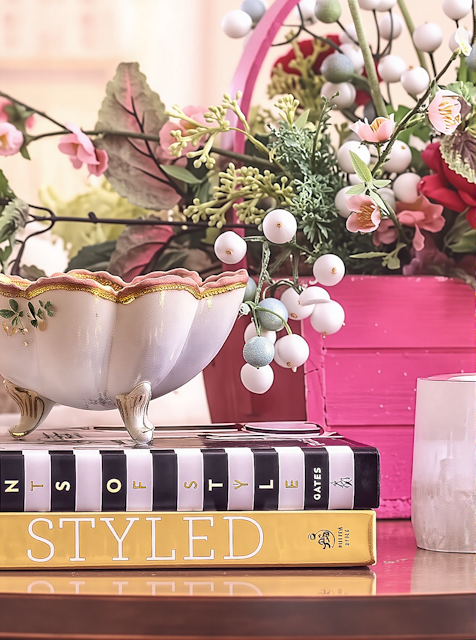
I used both vintage items and new quartz votives. I moved from the back to the front in designing the vignette.
Working in Odd Numbers and Designing Back to Front
Vignettes hold the eye most beautifully when objects are gathered in odd numbers — typically three or five. Odd groupings create visual movement and feel less rigid than pairs or quartets.
With the anchor in place, work from the back to the front. Taller pieces sit behind. Medium-height objects layer in front of them. The smallest elements come forward toward the viewer. This is how depth enters a vignette and how the arrangement avoids a flat feeling.
I think books are useful here. They provide height, structure, and a foundation for layering smaller objects. A small bowl or vessel placed on a stack of books introduces variation and keeps the eye moving through the grouping rather than landing in one place.
Metals can mix beautifully when the underlying palette is cohesive. Silver, brass, and iron all coexist in well-styled rooms. The key is to experiment and to step back often. Adjust. Step back again. Continue until the grouping feels balanced to your eye.
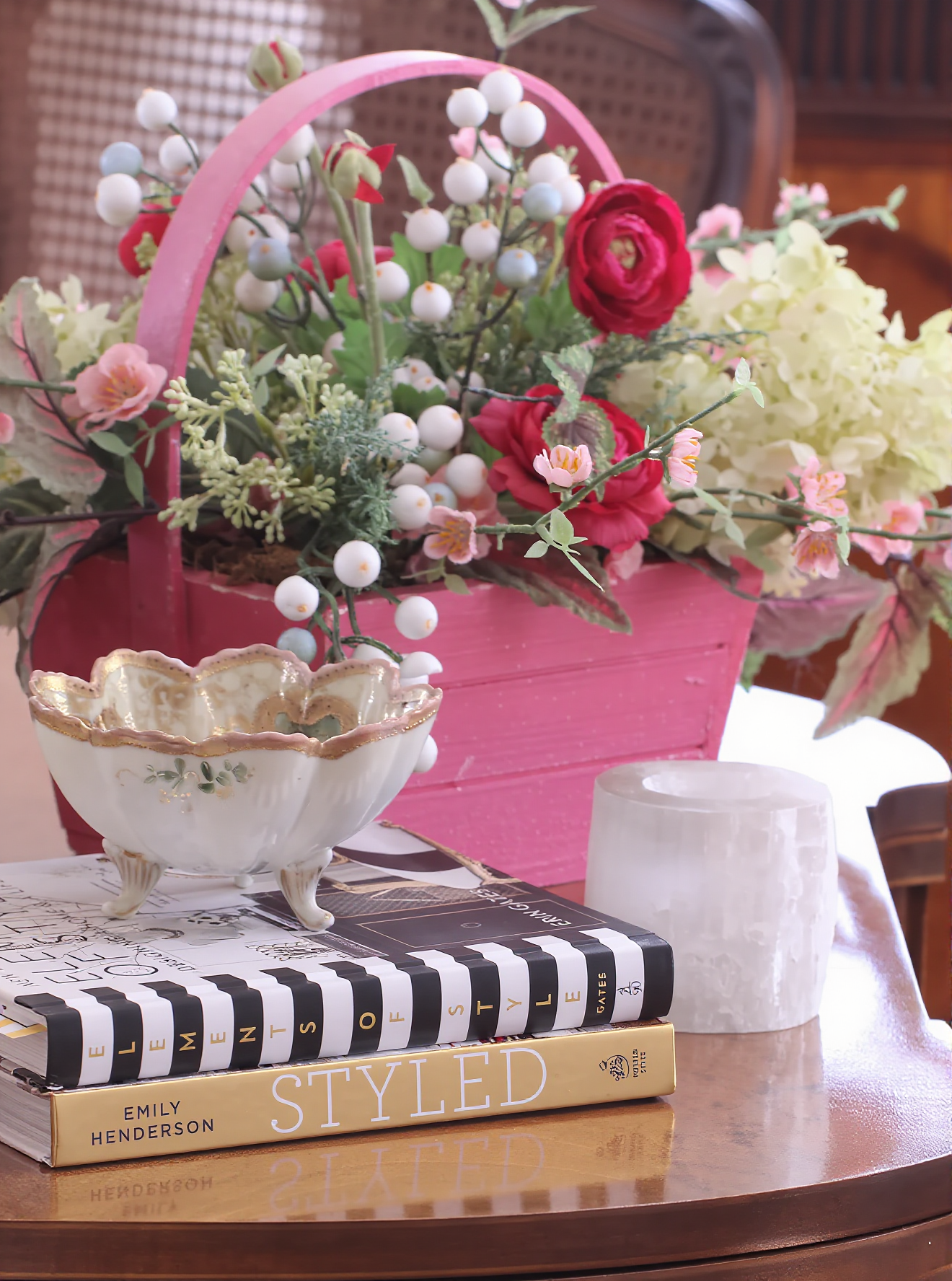
Varying Height and Texture
Height and texture are what give a vignette dimension. When everything sits at the same level, or when every surface shares the same finish, the arrangement becomes flat regardless of how thoughtfully the objects were chosen.
Introduce height through stacked books, through tall florals, through candlesticks. Bring texture forward with materials that touch differently — wood, ceramic, stone, glass, woven fibers. In this vignette, a quartz votive softens the grouping with light. A wooden basket filled with flowers brings warmth and contrast. The variation keeps the eye engaged without making the arrangement feel busy.
Letting the Vignette Feel Lived With
The final step is restraint. A vignette should feel lived with, not perfected. It is meant to evolve. Flowers change. Books are moved. Objects are added when they find their way to you and removed when their moment has passed.
If something feels forced, it likely is. You can trust your instinct. A vignette that feels right to you will almost always feel right in the space.
Creating a vignette is less about rules than about awareness. Once you understand a few guiding principles — intention, balance, scale, texture, restraint — the process becomes intuitive. With practice, these small groupings begin to appear naturally throughout your home.
A vignette is never just an arrangement of objects. It is a small declaration of how you want to live. Done with intention, these quiet groupings become the soul of a home — places where memory accumulates, where beauty serves comfort rather than competing with it, and where the spaces you move through each day feel yours genuinely.
“May your home be a place where friends meet, family gathers, and love grows. ”
Live beautifully. On purpose.
Design with the Heart™.
— Mary